
Maaseh Avot, Siman L’banim
Maaseh Avot, Siman L’banim
Chazal poignantly describe in Pirkei Avos 5:3 the ten trials that Avraham Avinu withstood to publicize how great was the love of Avraham. While there is a difference of opinion, notably between Rashi and Rambam, regarding the specifics of the list, all agree that they were profound tests of faith through which Avraham demonstrated his great love and unwavering dedication to Hashem. Nevertheless, they agreed on most of the list: 1) Lech Lecha, Hashem’s command to Avraham to leave his home in Charan, 2) the famine in Canaan, 3) Sarah being taken by Pharaoh, 4) Sarah being taken by Avimelech, 5) the War of Four Kings, 6) Circumcision, 7) The expulsion of Hagar and Yishmael, and 8) Akeidat Yitzchak, the Binding of Yitzchak.
Rashi includes the Midrash of King Nimrod throwing Avraham into the fiery furnace while also listing the Bris Bein Habetarim, the Covenant of the Pieces, while combining the expulsion of Hagar and Yishmael into one event. For his part, Rambam lists the marrying of Hagar, sending Hagar away, and the sending away of Yishmael as three separate tests.
No matter how you list the nisyonos (tests), any one of them would be enough to try the strength, patience, and sanity of any of us, yet Avraham went through all of them without a hint of an objection or complaint, with the sole exception of sending away Hagar and Yishmael.
I can imagine the conversations at Avram’s tent when he must have told his wife Sarai that Hashem had told them to leave their home:
Avram: “Sarai, Hashem told us to pack everything up, we’re leaving, and no—I don’t know where we’re going. But it’s going to be great! Hashem has blessed me!” And some time later: “Sarai, pack everything up, we’re starving, we’ve got to leave and go to Egypt.”
Sarai: “I thought you said it was going to be great, that you were blessed.”
Avram: “Please, no questions, and by the way when we get to Egypt, tell everyone you’re my sister.”
Later, Avram would say: “Sarai, do you remember my nephew Lot? He’s gotten into a little trouble, so I’m going to fight the First World War and get him. I’ll be back.”
Sarai: “Don’t forget to wear a sweater. Not everywhere is as hot as that fiery furnace when you were younger!”
Later, after Avram returned, he might have said: “I’m back, my dear. I won! No, I refused payment. And I had the strangest dream last night. Hashem came to me, promised me all this land as an inheritance, and said we’d have descendants more numerous than the stars! Yes, He knows we don’t have a son, but we will. Although, years from now they will be oppressed and enslaved in a foreign land for four hundred years, the good news is that the fourth generation will return and He promised they will inherit all the land from the river to the river!”
Sarai: “Are you sure He didn’t say ‘from the river to the sea’? I seem to be hearing that a lot lately.”
Later, Sarai might have said, “Look, Avram, sweetheart, I’m having trouble conceiving. Maybe you should take my maidservant Hagar as a wife.”
Despite Avram’s reluctance, he had a son by Hagar whom he named Yishmael. Then, 13 years later, Avram told Sarai that Hashem had spoken to him and made another covenant with Avram, telling him that all his descendants would inherit the land of Canaan for an eternal inheritance. Then He changed Avram’s name to Avraham and Sarai’s name to Sarah. And Hashem told him that all his descendants would come from Sarah, not Hagar. Hashem also told Avraham that he was due for a little “surgery.”
You get the idea. They’ve passed all these tests and haven’t even gotten to Akeidat Yitzchak.
This is Avraham Avinu, our incredible forefather. Despite the hardships, the difficulties, the tragedies, Avraham never wavered or complained. He never questioned or resisted. He put all his faith in Hashem, and he did this all with kindness and equanimity—an Ish Chesed—continually doing for others despite the hardship, putting his life on the line to save Lot, bringing Hashem’s message to the world despite being oppressed, suffering at the hands of Pharaoh and Avimelech, who stole Avraham’s wells. Avraham balanced his devotion to Hashem, prepared to sacrifice his only beloved son, and fulfilled Hashem’s mitzvos while being fully engaged in the world around him.
This is what Maaseh Avot Siman L’banim means, both for us as individual Jews, for our forefathers like Avraham, Yitzchak, and Yaakov, and as a nation. Whatever happened to our forefathers is a sign and a lesson for all of us.
Each of us has had trials and tribulations in life, some more severe than others. Whether illness or the loss of a loved one, financial constraints, lack of food, failure to find the right partner in life, inability to have children, loss of a home, falling victim to a crime, all of these tests were suffered personally by Avraham and Sarah. And as a people, we’ve also suffered these tests repeatedly in our 4,000-year history. And in the last three years, we have acutely felt all of these painful trials personally and nationally. How did Avraham and Sarah handle it? They kept their emunah, pushed forward, and maintained positivity in the power and promises that Hashem made to them. And they were rewarded! Avraham and Sarah received rechush gadol, for they had their long-awaited son, Yitzchak. And despite all the challenges we face today, Israel has been richly rewarded. It is one of the most advanced, wealthiest, and happiest nations on earth. Is that not exactly what Maaseh Avot Siman L’banim means? While it may not be easy, and at times it can be incredibly difficult, as Pirkei Avos (2:15) tells us: “Rabbi Tarfon said: the day is short, and the work is plentiful, and the laborers are indolent, and the reward is great, and the master of the house is insistent.”
Yes, the work is hard and Hashem is insistent, but as we’ve seen, the reward is great. Avraham and Sarah in their lifetimes showed us. Let’s keep at it.
Shabbat Shalom. n
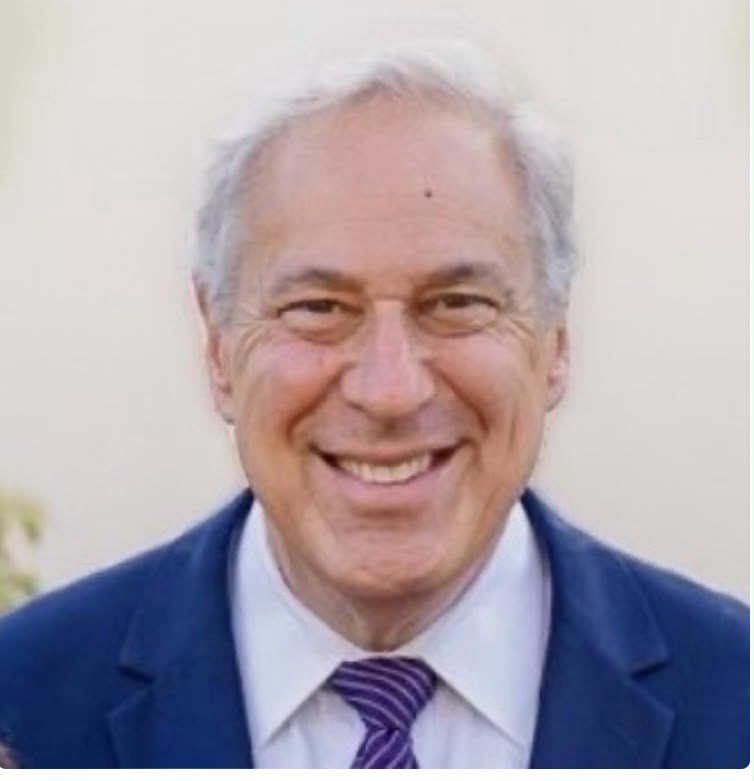
Dr. Alan A. Mazurek is a retired neurologist, living in Jerusalem and Florida. He is a former chairman of the ZOA.