



Israelis Versus Jews
By: Larry Gordon
When it comes to Jewish identity in the State of Israel, the Jewish population can be broken down into roughly two camps: Israelis who are openly and fervently Jewish and Israeli, and Israelis who distance themselves from religion and religious observance.
In the latter category, these are the secular Israelis, who view their identity primarily through a cultural and nationalistic lens rather than through traditional Jewish faith and practice.
Israel is home to about 7 million Jews—almost half of the global Jewish population—but Jewish identity in the Land of Israel is a complex blend of religion, ethnic identity, and national identity. Secular Israelis, who comprise 45% of the population (the majority), derive their identity from their language and national identity, not from the Judaism of their ancestors. Among religious Israelis, roughly 10% are Chareidi and 33% say they practice a traditional form of Judaism.
It might be difficult to explain, but that is the reality as it exists today. From our perspective it’s hard to understand. But to state it as briefly as possible: it’s a mess.
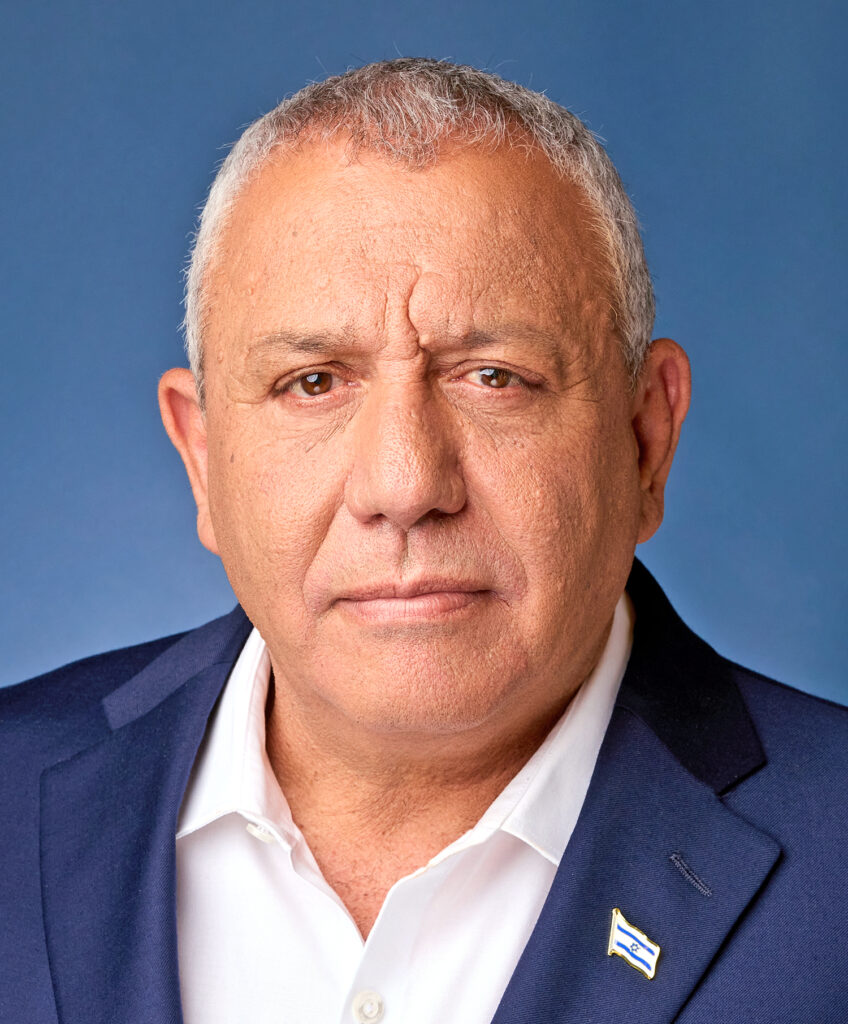
Gadi Eisenkot
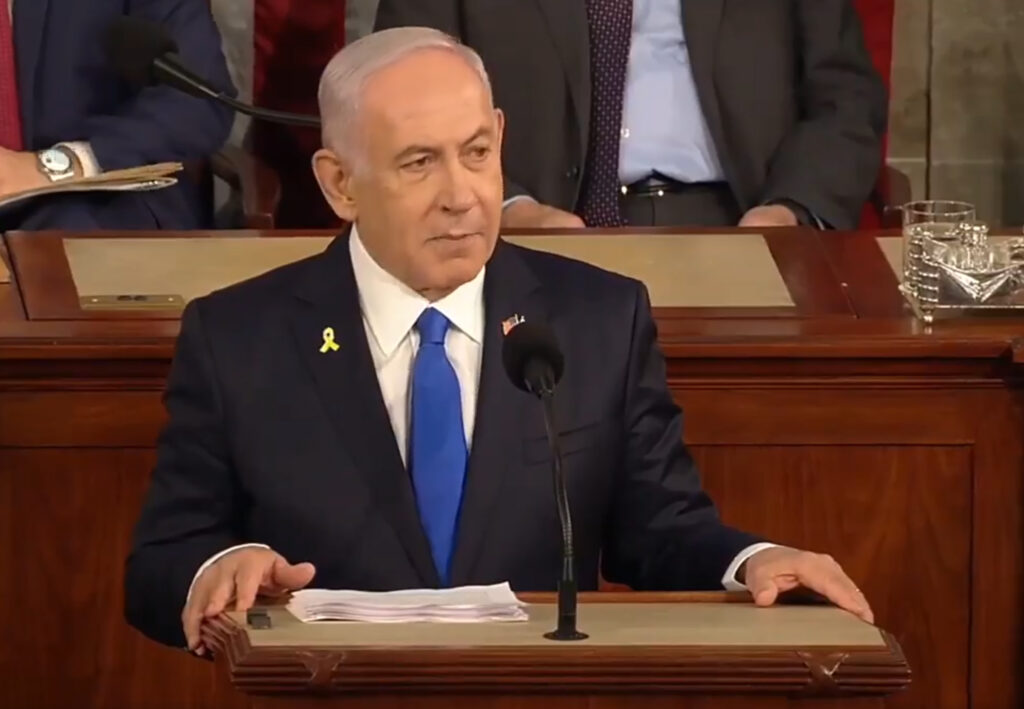
PM Netanyahu speaking to Congress in 2024
This was the ongoing situation in the months leading up to October 7, 2023. Before October 7, it was clear to the world and especially to Israel’s critics that the Jewish people were extremely divided. And it has been that way for many decades. But in the modern State of Israel, these divisions are especially deep, affecting almost every aspect of life, from political and social values to the role of religion in public life.
The age-old question is: How is this divide between religious and secular Jews being played out? Today, this scenario is especially visible in the political process, how the new ruling coalition will be formed, how political alliances will be made, and the policies the new government will adopt especially with regard to draft exemptions, marriage, divorce, conversion, and burial rules.
All of this is now being played out in real time through the country’s political process. Israel does not, as of yet, have a government that is run according to religious or halachic lines. That is mostly due to the fact that Israel was established to be both a Jewish and secular democratic state.
But is that really possible? Can it be both?
In the aftermath of the murders of six million Jews in the Holocaust, the world agreed that the survivors of that horror deserved a state of their own. Hence, the creation of the modern Jewish state of Israel.
But at the same time, it was important to these fair-minded people that this new entity also be a democracy similar to other democratic countries around the world.
That means that in a modern Jewish Democratic state, Christians and Muslims would not be treated any differently than Jews. As long as they abided by the law and were good citizens, they could reside wherever they wanted and take any jobs they wanted.
But unfortunately, the reverse is not true. Close to one million Jews were chased out of Muslim countries after the establishment of the State of Israel in 1948. Unlike the Israeli Knesset, which has Arab representatives, there are virtually no Jewish members of any government in more than 40 Muslim countries.
Yes, there are still about ten thousand Jews in Iran. They have a representative in the government and there may be one or two Jews serving in some capacity in Morocco and Tunisia. But it’s nothing like the 19 Arab members who were just elected to the Knesset in the recent election.
It’s clear that Jews are not welcome to set up home in any of these 40 Muslim countries or establish representation for the countries’ Jewish population, which in most cases is non-existent.
It’s easy to be reminded of several backward realities in Israel. Those who condemn Israel so vociferously as an “apartheid” state would be hard-pressed to explain how in such a system, 19 Arab members were voted into parliament.
At the same time, while Israel has been accused of committing a “genocide” in Gaza, a war crime that should have resulted in a shrinking Palestinian population, yet the Arab population in this region registered a growth of over half a million people. An observer pointed out recently that there are two things that Israel suffers a tremendous deficiency of, and those are apartheid and genocide.
Which brings us to the players jockeying for position in the new Israeli government. I don’t know if Bibi Netanyahu is more religiously observant then Gadi Eisenkot. Perhaps Netanyahu is more traditional and can speak the language the Chareidi parties better understand. This could be the reason why the various combinations of political parties are doing everything they can to exclude the religious parties from any coalition they form.
Certainly, there is a way to form a governing coalition without the Charedim, but that would mean including some of the 19 Arab seats in that coalition, a solution no one wants to do, neither Netanyahu nor Eisenkot. The 19 Arab members are against the State of Israel and are supporters of Hamas. That’s not the kind of people anyone in Israel wants in their “coalition.” There are elected officials like Naftali Bennett who tried this type of combination in the past, only to fail miserably after his coalition with the Arab Ra’am party lasted less than a year.
The process of forming a new Israeli government is highly complex, with the Chareidi parties now distancing themselves from Prime Minister Benjamin Netanyahu and even going so far as to attempt to rid Israel of a Netanyahu government. When Netanyahu’s government struggled to find a compromise between those who favored drafting Charedim and the Chareidi parties (who favor a lasting legal way to exempt Chareidi men from the draft) that led to Shas and United Torah Judaism (UTJ) to leave the Likud-led coalition in 2025.
One of the key factors here is getting people like PA leader Mahmoud Abbas and other Arab political leaders to recognize Israel as a Jewish state. Not only will the Arab leaders refuse to say that, but there are also many Jews who are reluctant to refer to Israel as a Jewish state.
There are many Israelis whose families immigrated to Israel a century ago, but insist on seeing Israel as a secular state and cannot connect the dots that this country is the same land that G-d gave to the Jewish people, where the Torah was given, and where the holy Temples once stood, and where one day, G-d willing, it will be filled once again with the presence of G-d’s holiness.
Too many of our Jewish brethren just can’t make that connection. They love the Hebrew language but can’t connect the dots that the language they speak is the same holy tongue that Hashem used to communicate with our forefathers, Moshe Rabbeinu, and David HaMelech.
I read recently that there are 6,000 Hebrew words in the Torah, but 60,000 words in the modern Hebrew language. I don’t know who made that observation, but it illustrates how modern Hebrew became the most successful instance of language revitalization in history.
But it’s more than that. Israelis like instant getaways to Crete, Cyprus, Greece, and so on. They like a place where they can speak Hebrew yet not have to worry about Jewish aspects like kosher food, separate beaches, and where they can find a minyan in the morning.
There are Israelis who observe tradition. Perhaps they light candles, eat a Shabbat meal, but then go out to a club. There are many Jews in America like that. And now there are many like that in Israel too. It’s the land of Israel and also the land of the Jewish people. We’d like to think like that, but we’re still not sure. Maybe we are getting there. n
Read more of Larry Gordon’s articles at 5TJT.com. Follow 5 Towns Jewish Times on Facebook, Instagram, and Twitter for updates and live videos. Comments, questions, and suggestions are welcome at 5TJT.com and on Facebook, Instagram, and Twitter.