
A Holocaust Survivor’s Lesson In Reframing
By: Norman B. Gildin
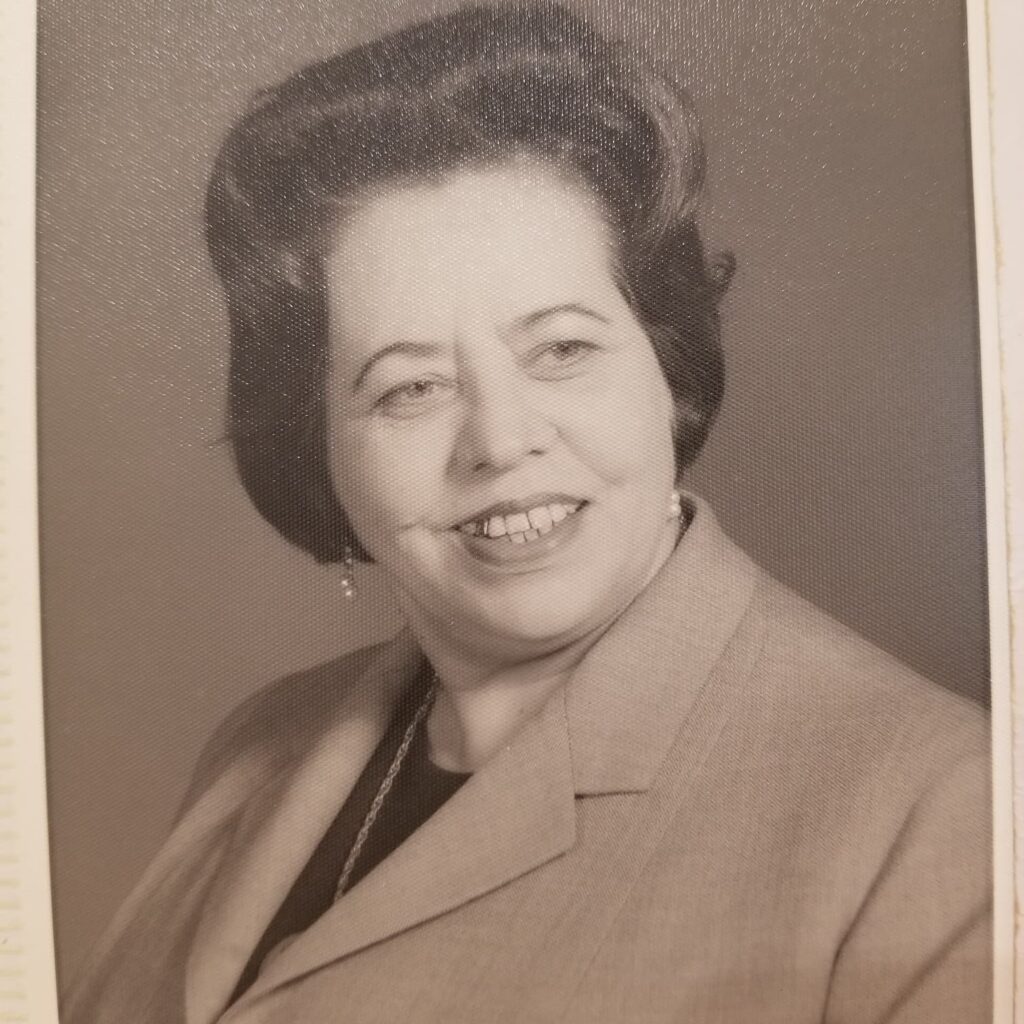
Charlotte (Lazar) Gildin
Several years ago, I heard a wonderful story about four sons who wanted to celebrate their mother’s 90th birthday.
One bought her a 22-room mansion.
Another bought her a Rolls-Royce with a chauffeur.
A third built her a private home theater.
The fourth son knew that his mother loved learning Torah but could no longer read easily. So, he purchased a remarkable parrot that had been trained to recite the entire Torah with Rashi.
A week later, the mother sent thank-you notes.
The mansion was too large. The Rolls-Royce was unnecessary. The home theater was wasted on someone whose hearing and eyesight were failing.
But to the son who sent the parrot, she wrote:
“You were the only one who truly understood what I wanted.
The chicken was delicious.”
Like many Jewish jokes, it is funny because it contains a truth. We often confuse the impressive thing with the meaningful thing.
That lesson came back to me recently during the 33rd yahrzeit of my mother, Charlotte (Lazar) Gildin, of blessed memory.
My mother survived Auschwitz. Upon arrival, she stood before Dr. Josef Mengele, who motioned her to the right rather than to the left. That single gesture spared her life and sent her to the barracks instead of the gas chambers.
Like many children of survivors, I grew up hearing fragments of her story. What I never fully understood was how she managed to rebuild her life afterward. How did someone emerge from such darkness without becoming consumed by bitterness?
Only years later did I begin to appreciate the answer.
Psychiatrist and Holocaust survivor Viktor Frankl wrote that human beings possess the ability to choose how they respond to circumstances. Even in the concentration camps, he observed that prisoners who could connect themselves to a future purpose often displayed remarkable resilience. Some looked forward to reuniting with loved ones. Others imagined completing unfinished work or fulfilling responsibilities that still awaited them.
Frankl himself later recalled how he mentally pictured standing before audiences after the war, teaching students about the psychology of life in the camps. By imagining a future beyond the barbed wire, he could view his suffering through a different lens. Frankl later described this ability to find meaning and purpose amid hardship as one of humanity’s greatest freedoms.
Today we might call it reframing.
I often wonder whether my mother practiced a similar form of reframing. She rarely spoke about how she endured each day in Auschwitz, so I cannot know for certain. But I do know that surviving relatives were waiting for her in the United States after the war. Perhaps part of her strength came from imagining the day she would see them again and begin a new chapter of life. If so, that vision of a future beyond the camp may have given her another reason to persevere when perseverance seemed almost impossible.
Reframing does not mean denying reality. It means refusing to let reality have the last word.
For many years, I thought of my mother primarily as a survivor. That description is certainly true. But it is incomplete.
One story illustrates why.
While working in a kitchen at Auschwitz, my mother managed to hide several small potatoes. She later gave one to a young woman who had befriended her in the barracks. A kapo discovered what she had done. As punishment, she was beaten severely.
Think about that for a moment.
A starving prisoner risked her own safety to help another starving prisoner.
There were no cameras.
No audience.
No recognition.
No expectation that anyone would ever know.
In a place deliberately designed to strip people of their humanity, she chose to remain human.
Looking back, I realize that this may have been her greatest act of reframing.
The Nazis wanted their victims to see only fear, deprivation, and survival. My mother somehow continued to see something else. She still saw another person who was hungry. She still saw an opportunity for kindness. She still believed that another human being mattered.
The circumstances did not change.
Her perspective did.
And that perspective shaped the rest of her life.
In a much smaller way, her example influenced my life as well. Looking back, I sometimes wonder whether my decision to leave healthcare administration and devote my career to nonprofit fundraising reflected the same lesson she lived every day: that changing one’s perspective can change one’s future.
After the war, she came to America. She married, raised a family, and built a future. She rarely spoke at length about her experiences. Yet she taught powerful lessons without intending to do so. She showed that suffering does not have to produce bitterness. She proved that dignity can survive humiliation and that kindness can survive cruelty.
As the years pass, I think less about what my mother endured and more about how she responded to what she endured.
That may be the most enduring lesson Holocaust survivors leave us.
Their lives remind us that while we cannot always choose our circumstances, we can choose how we interpret them. We can choose whether hardship narrows our vision or deepens it. We can choose whether pain becomes an excuse for indifference or a reason for greater compassion.
Viktor Frankl famously wrote that everything can be taken from a person except one thing: the freedom to choose one’s attitude in any given set of circumstances.
My mother never quoted Frankl. I do not know whether she ever read him.
But she lived his message.
And thirty-three years after her passing, that may be the greatest inheritance she left behind.
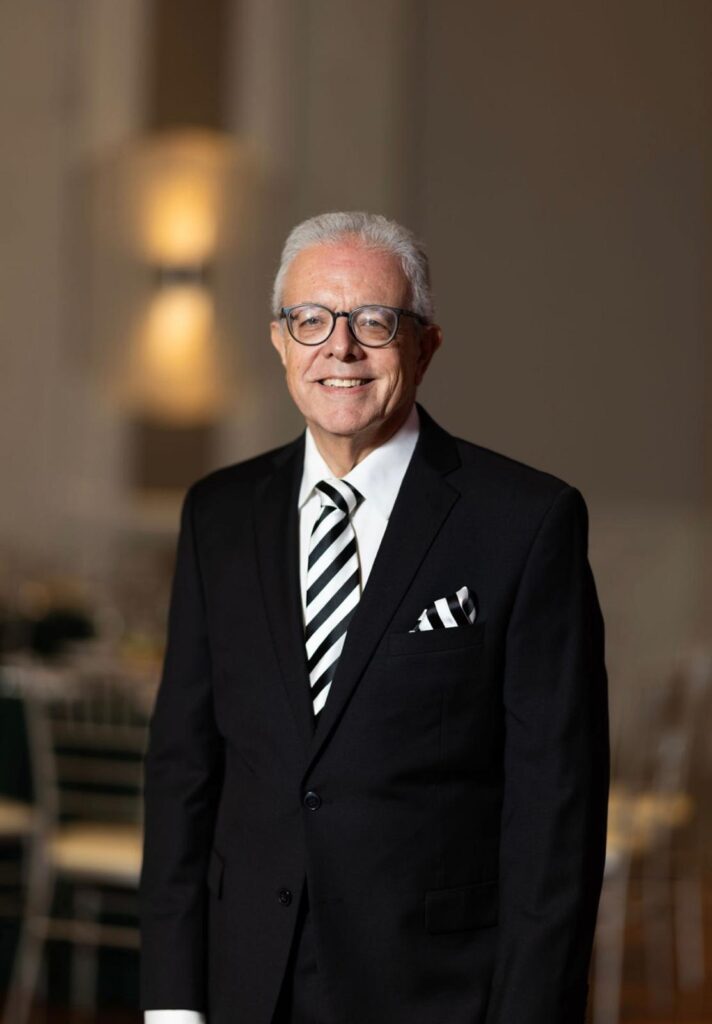
Norman B. Gildin is the author of his second book, Fundraising Insights for Nonprofits, available on all major online book sites. His popular book on nonprofit fundraising, Learn From My Experiences, is likewise available. Check his website at normangildin.com.