
Looking Forward At America 250: The Future of the American Jewish Community
By: Dr. Chaim Botwinick
Part I
Much has been written about the future of the American Jewish community. Historians, scholars, demographers, and well-respected rabbinic leaders all pose the most perplexing question of our time—What will our American Jewish community look like in the future?
This fascinating obsession with our community’s future is anchored in our rich heritage, DNA, and history which focus upon our past and present as strong predictors or indicators for our future.
As Jews, we dream and pray for a future that will be blessed with the coming of the geulah as well as with the hope and promise that the phrase B’shanah HaBah B’Yerushalayim (“Next Year in Jerusalem,”) will become a reality. This is not a hypothetical reality, but an aspiration that we truly and sincerely believe will come to fruition in our lifetime.
So, in light of what we now know and experience as American Jews, what does our future hold?
First, it is essential that we accept the notion that it is virtually impossible to predict the future. Having said that, there are communal and societal trends and realities that can in part inform our future.
Several of these characteristic include demography, religious practice, migration, antisemitism, Jewish education, the impact of technology and our relationship to Israel, to name a few.
Although one can write volumes regarding each of these characteristics, I will attempt to highlight how and why several of these may affect and inform our community’s future. Remember, if our past experience or history has in any way informed where we are today, then it is highly probable that today’s trends will also affect, inform, and shape our future.
According to the Jewish Federations of North America (JFNA), the American Jewish community is at a ‘complex inflection point, marked by a paradox of vulnerability and deep resilience.’
In their recent study they report that while major structural demographic and political changes loom, an unprecedented wave of communal reawakening is simultaneously reshaping Jewish life.
This powerful statement should not be taken lightly. In fact, it requires significant review, examination, exploration, and analysis.
For the first time in decades, this past academic year, we witnessed an across-the-board increase in Jewish day school pupil enrollment.
This finding suggests that Jewish day school enrollment is no longer an exclusively Orthodox phenomenon, (at least for the time being), but rather one which is now impacting other Jewish ideological and denominational movements.
Whether this trend continues into the future, remains to be seen. But it is important to note that these pupil enrollment increases, (according to the recent Study), are the result of a poor, failed and mediocre public education system as well as a significant increase in antisemitism.
Parenthetically, if these phenomena are indeed the factors that are driving pupil increases in non-Orthodox day schools, then I sincerely believe that the prognosis for the future will continue to include these same factors. Nevertheless, increases in pupil enrollment have and will continue to be primarily an Orthodox phenomenon. In fact, with the impressive meteoric growth of the Orthodox birthrate in the United States, it is almost certain that the majority of day school enrollment increases will continue to be found in our Orthodox day schools and yeshivot and will continue for the foreseeable future.
In addition to this higher birth rate, we are also seeing younger Orthodox couples marrying at an earlier age. Projections also suggest that over the next few decades, the proportion of American Jews identifying as Orthodox will more than double, and unaffiliation and assimilation in many segments of our community will increase. This will, according to many sociologists and demographers, eventually change our community’s theological and political center of gravity.
This demographic reality also suggests several major challenges and needs for our future. They include, affordability, the cost of tuition, education, Jewish living, housing, special social services and programs geared toward the Orthodox community as well as a variety of other specific Orthodox needs and exigencies.
At the risk of sounding arrogant, unless there are dramatic changes or shifts in our demographic landscape, this is no longer a prediction, but rather a demographic and societal reality.
Finally, in addition to formal Jewish education, we are currently experiencing a resurgence in spirituality, informal Jewish education, experiential programming and a yearning to rediscover our Jewish roots through new and exciting learning venues, Jewish practice, and Torah study opportunities—not necessarily through affiliation with institutions, but rather through the groups and communities which comprise these institutions,
This phenomenon, especially since October 7th, may be due in part to increased levels of ethnocentricity and Jewish identity, which force us to look more inwardly at our religious and spiritual relevance and raison d’etre. n
Read Part II next week.
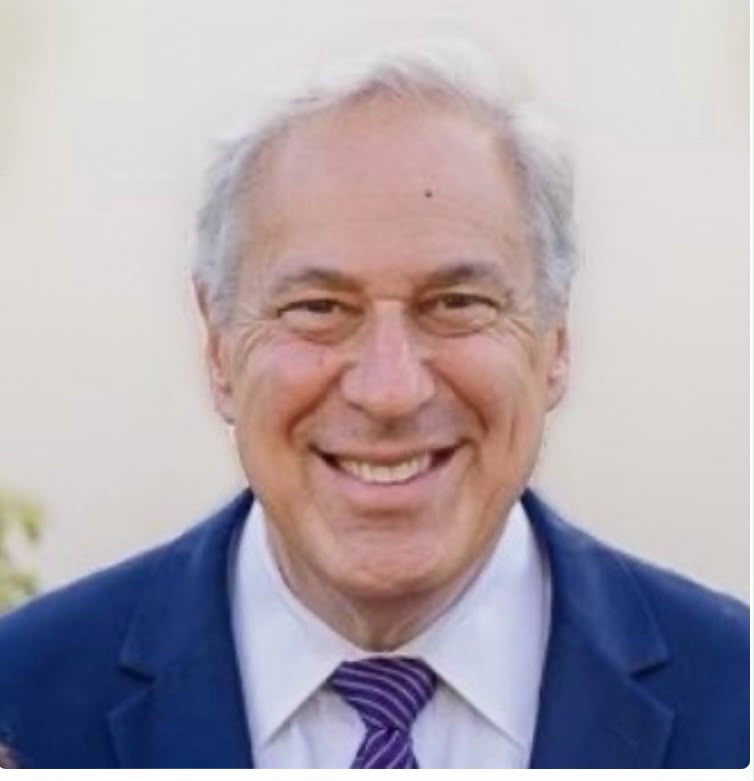
Dr. Chaim Botwinick is a senior executive coach and organizational consultant. He served as president and CEO of the central agency for Jewish education in Baltimore and in Miami; in addition to head of school and principal for several Jewish day schools and yeshivot. As an Influencer in education, he has published and lectured extensively on topics relating to education, resource development, strategic planning and leadership development. Dr. Botwinick is co-founder of LEV Consulting Associates and producer of the Chinuch Horizons podcast series. He is the author of “Think Excellence: Harnessing Your Power to Succeed Beyond Greatness”, Brown Books, 2011