
Building Boundaries By Setting Limits
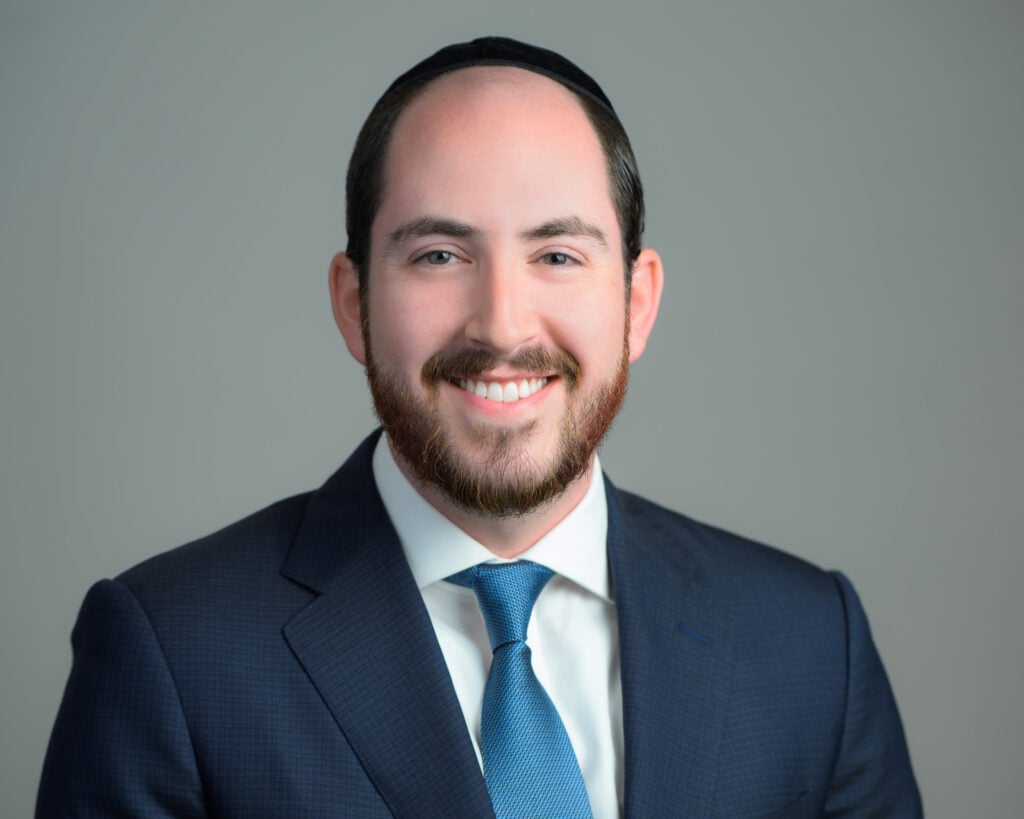
By: Dr. Dovid Fox
In last week’s article on the important topic of values and boundaries, I introduced the concept of conscience and the origins of one’s personal sense of right and wrong, and the ways in which this can shape our perception, our conduct, and our internal experience. One point which I addressed was that for some people, that internal guiding system is spawned by parents and family standards. I will now explore this premise and link it with our underlying interest in developing healthy boundaries and adhering to moral and interpersonal limits.
I am intrigued by the verse in Bereishis (45:8) in which Yosef in Egypt shares with his brothers, “So, it was not you who sent me here, but Hashem—who has made me a father to Pharaoh (Av le’Paro).”
Obviously, this cannot be taken literally based on the Biblical history, but instead, our Sages and early commentaries offer a framework for understanding this reference to being like a father to the king. Being an av, or father, can mean being a mentor. It can mean being a guide. A “father” can be one who advises or who directs and governs, or who rewards and punishes. He can also be the one who protects. All of those meanings can define the scope of being a father figure. As viceroy in Egypt, Yosef may have taken on each of those roles in consulting with the king of that land. He was expected to take on those roles because this is what Pharoah had appointed him to do.
Going back now to fathering or parenting, let’s take a close look at what roles a parent can take, ideally, in the life of the child. A parent can become a role model or mentor if they accept this responsibility. This means modeling for a child the values the parent lives by and wishes the child to emulate. Mentoring is an active process, not one by which a parent can assume that a child will automatically absorb through environmental osmosis merely by living in the same house as the parent. Of course, there are some unspoken practices that a parent might appear to follow which the child does take note of and automatically accept. I think of how, as a young man, I always had raisin challah Friday night, explaining to my wife and children that this was my father’s practice. Once, my wife mentioned to my father that we always have raisin challah because he always does, to which my father replied, “I do?” Apparently, I had an embedded memory, possibly because I had enjoyed raisin challah, that this was my father’s custom, when it turned out that if we had had raisin challah, it was a coincidence and not custom! But going back to the concept of a father as a mentor, this parental role includes active discussion, examining right and wrong, exploring with a child why some things are the way that they are because this is how they are supposed to be, even when a child does not yet fathom the reason or the value.
Parents are also ideal guides. This means that when a child struggles, the response is not necessarily: “Tough, just deal with it” or “You got yourself into this, now get yourself out of it.” Ideally, a parent should guide their child by identifying what contributed to the dilemma and what might be useful problem-solving tools or solutions to their problem—or if they should just learn to tolerate the disappointment. This is not the same thing as the parent fixing the problem; rather, it is the essence of chinuch, guiding the child towards a more adaptive future by figuring out solutions to their problems.
Parents also direct, which means they set limits with children. Discipline, which includes both delineating consequences for maladaptive behavior, and being an applauding audience by rewarding adaptive behavior, imparts to a child that life requires setting limits: the “dos” and “don’ts” of reality, and the need for consequences when a child does not yet appreciate the boundary between egoism and altruism. In other words, children must learn to set limits between acknowledging when their needs should come first (egoism), and when it is more appropriate to acknowledge the wishes and needs of others (altruism).
Parents also protect. Protection can mean that a parent shields the child from destructive influences and inappropriate exposures, and it also means preventing a child from straying into unbridled pursuit of impulses and urges. I frequently meet with parents who do not accept the necessity of saying “no” to a child, and view limit-setting as a cruel means of stifling a child’s hubris and their alleged need to define themselves. Those children grow up with no internal structure, no real respect for external structure, including authority, and quite often, no deference or reverence for the parents who allowed them to determine what they believe in or value. I have had several professional consultations where a parent is perturbed that their child calls them by first name (i.e. the father is no longer “dad” but is “Bradley”). In each instance, the parent revealed that they had raised their child to have an equal say in family matters, including the right to overrule the parents and disagree with the rules and requests set by them. To paraphrase an old joke, those parents did not believe in the Ten Commandments; rather, they considered them merely the “Ten Suggestions.” Years later, the child who is free to reject structure will not abide by any structure.
The bottom line is that parents, teachers, and mentors must clarify their own personal values and live by them, and then determine if their children or students need to adhere to those values as well. If a parent lives by wholesome standards, they must impart these standards to their family through discussion, through example, through defining personal and interpersonal boundaries, and by setting limits. Ideally, we are guides, mentors, directors, governors, and protectors. Our values are the ingredients which can help shape a child’s conscience and which will, in turn, act as their own internal guide and protector.
Rabbi Dr. Dovid Fox is a forensic and clinical psychologist, and director of Chai Lifeline Crisis Services. To contact Chai Lifeline’s 24-hour crisis helpline, call 855-3-CRISIS or email [email protected]. Learn more at ChaiLifeline.org/crisis.