
Matos-Masei: Word is Bond
Rav Yaakov Kamenetsky, zt’l, beloved rosh yeshiva of Torah Vodaas and one of the Gedolei haDor, was respected for his wisdom, sensitivity, and yashrus, unwavering commitment to honesty and truth. During his last visit to Eretz Yisrael, when he was 90 years old, relatives were surprised to see the Rav taking off his tefillin at the end of davening and putting on tefillin of Rabbeinu Tam (today worn mostly by Chasidim and Kabbalists in addition to the standard tefillin of Rashi).
R’ Yaakov’s family members knew that it had never been his custom to wear Rabbeinu Tam tefillin, and wondered aloud why the rosh yeshiva was doing so now. “You see,” he said, “about fifty years ago, Reb Shraga Feivel Mendlowitz, zy”a (the founder of Torah Vodaas) encouraged me to add the donning of Rabbeinu Tam tefillin, and to strengthen his case, he mentioned that the Chofetz Chaim had also added this practice in his later years. During the conversation, I told Reb Shraga Feivel, ‘The Chofetz Chaim started donning Rabbeinu Tam tefillin when he turned 90—when I reach 90, I’ll put them on.’ That was a long time ago—50 years. But since I gave my word to Reb Shraga Feivel, on my 90th birthday I started putting them on.”
n n n
Our double sidrah begins with the parashah of Nedarim, or “vows,” referring to a voluntary verbal declaration of an intention to make an additional offering to Hashem. This declaration not only expresses a desire to do something more to draw closer to Hashem, but creates an obligation to perform that action:
“Ish ki yidor neder, if a person makes a vow to Hashem or makes an oath to prohibit himself something that the Torah permits, lo yachel devaro, he may not violate his word, k’chol hayotzei m’piv yaaseh—and whatever has come out of his mouth he must do (30:3).
Rashi clarifies that through speech, we have the opportunity to draw down kedushah, holiness, to illuminate and sanctify. Lo yachel devaro—our words shouldn’t be chulin, mundane. Lo yechaleil devaro—we must not profane our words, nor treat them as being “unholy.” Through our speech we are empowered to create new realities. We have the ability le’esor issar, to make an object or activity which is permitted into one that is forbidden. We can also elevate a mundane act into a holy act.
From the phrase in our pasuk, k’chol hayotzei m’piv, yaaseh, Chazal deduced that there is both a mitzvas aseh (a positive commandment) to fulfill what one has said, and a negative commandment to not desecrate one’s word.
In Yiddishkeit, the power of speech is paramount. The legally binding power of nedarim is considered so strong that many have the practice of saying bli neder (without a vow) after stating their intention to do something. This is to ensure that if they are unable to fulfill their pledge due to unforeseen circumstances, their words did not constitute a halachic vow.
This week marks Rosh Chodesh Menachem Av, and the loss of our Temple and exile is at the forefront of our thoughts and practice. The Sefas Emes, Rebbe Yehudah Aryeh Leib Alter of Gur, zy”a, points out that the semichas haparshiyos, the juxtaposition of the end of the previous parashah and the beginning of our parashah, is significant. The previous parashah (Pinchas) concludes with a discussion of the Korbanos, the sacrificial offerings and libations of the Yamim Tovim, and our parashah begins with the sugya, the topic, of nedarim. This is to show that a Jew’s speech, when reciting the Torah’s verses of the Korbanos in prayer has the power to bring re’ach nichoach, “a pleasing fragrance” to the Creator even in times when the Temple is destroyed.
Indeed, our words of Torah and tefillah are the highest manifestation of elevated speech: K’chu imachem devarim, v’shuvu el Hashem—take words with you and return to Hashem. V’neshalma Parim Sefaseinu—and let us render for bulls the offering of our lips” (Hoshea 14:3).
May we be zocheh to honor our commitments and fulfill all that we pronounce, and to believe in the power of our words and prayers. And may Hashem fulfill His promise that the Beis HaMikdash be rebuilt, speedily in our days. n
Excerpted from Baderech: Along the Path of the Torah, forthcoming (Mosaica Press, Elul 5786).
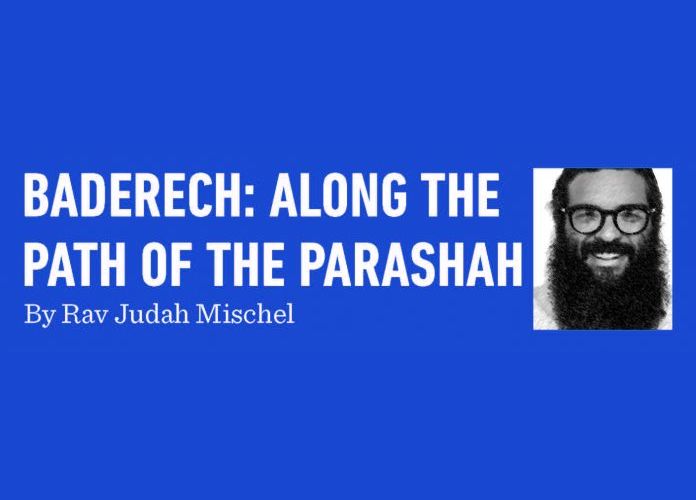
Rabbi Judah Mischel is Executive Director of Camp HASC, and Mashpiah of OU-NCSY.