
Musings Of A Shliach From Montana
By: Rabbi Chaim Bruk
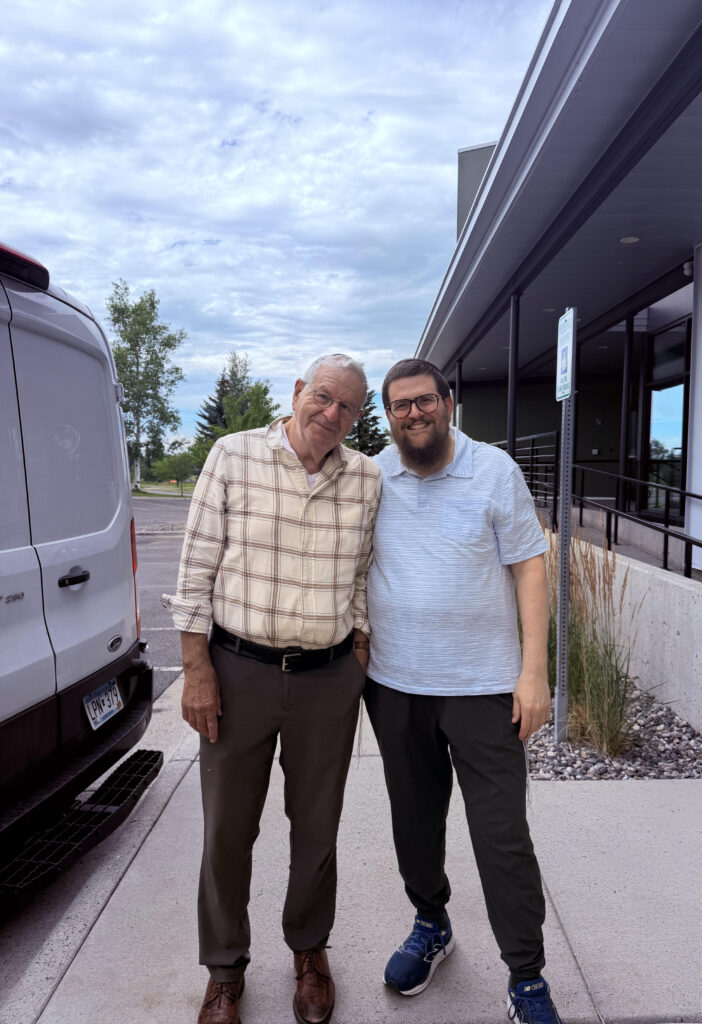
Rabbi Chaim and Yanky Roberts, who drove the kosher food truck
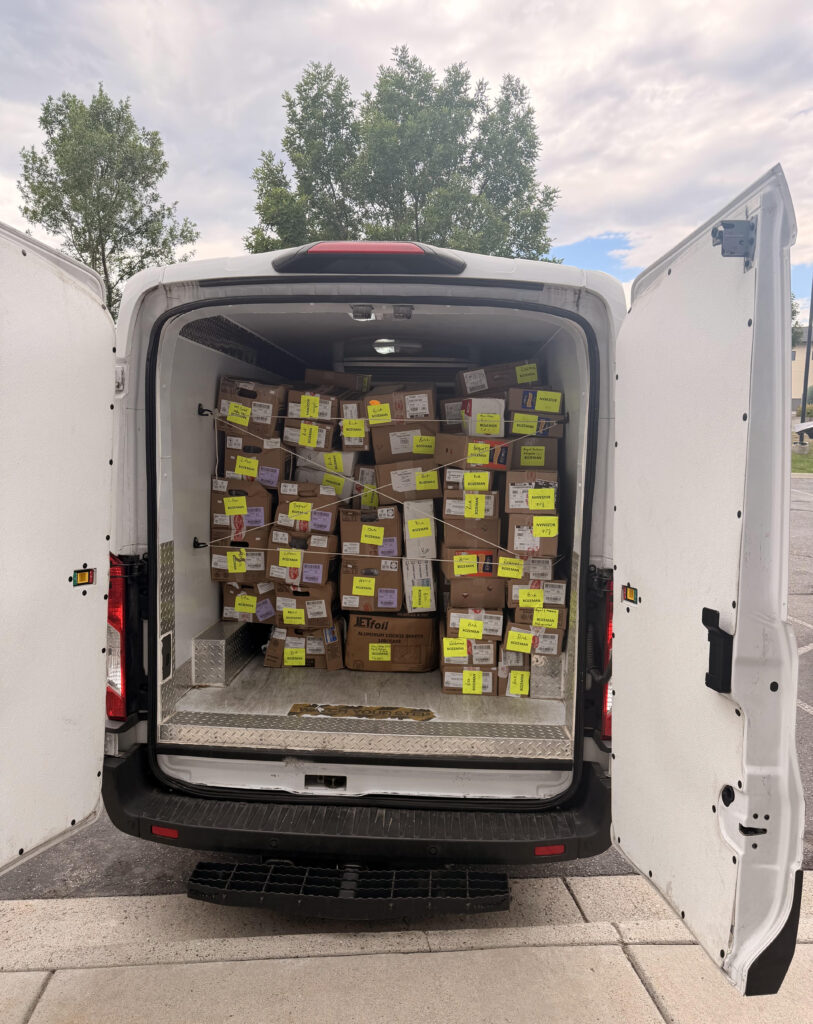
The truck with the kosher food in Bozeman before heading to the Flathead Valley
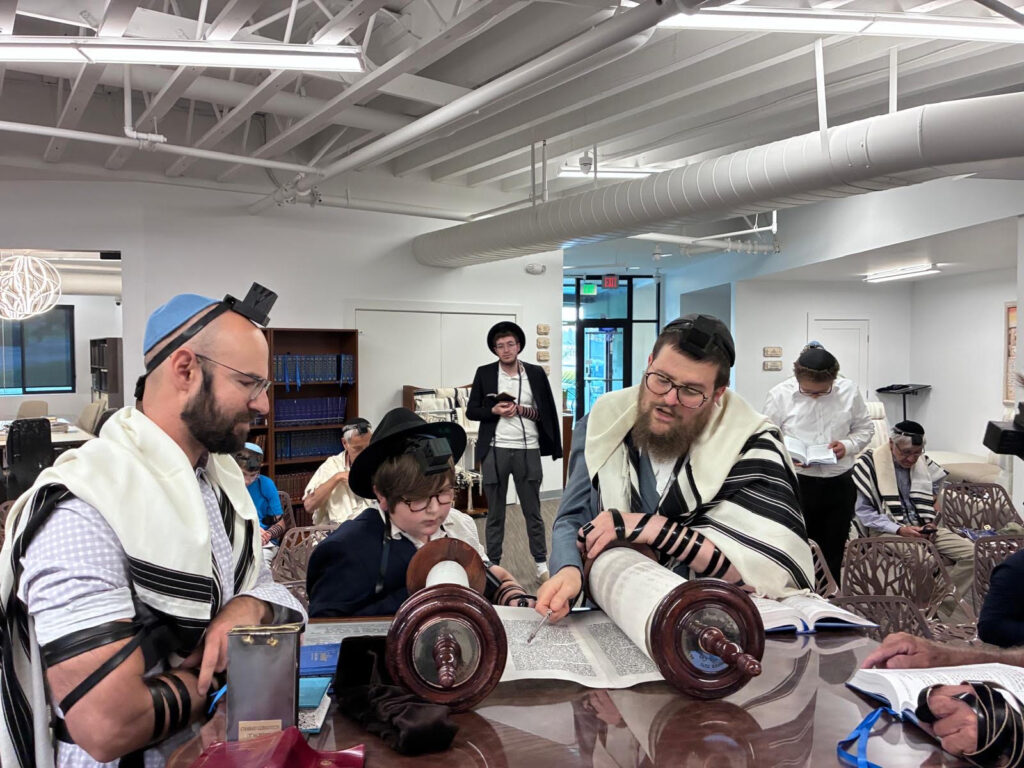
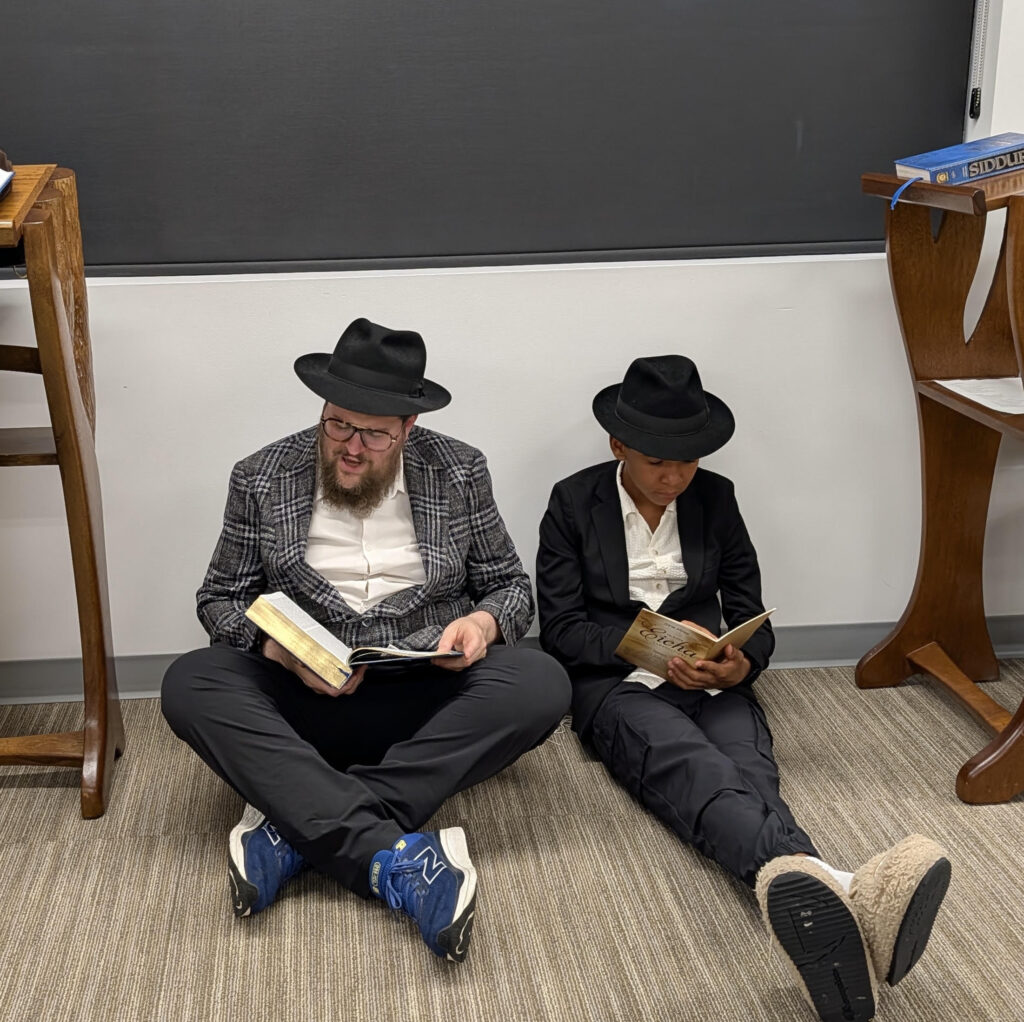
Ezra’s aliyah at Minchah on Tishah B’Av
“I’m just not in the mood.”
It’s a reality that we all experience at times, when serving Hashem feels like a burden for one reason or another. For me, Tishah B’Av is certainly one of those days. While I appreciate Eichah (Lamentations) on a deep level and it reminds me that the pain and the consequences of the struggle are real—and Hashem still loves us eternally—yet the morning Kinnos and the length of the fast are not my favorite moments of the year. Despite my personal feelings, I show up for Hashem in all the practices of the day, even if it’s hard and even if it’s lacking passion.
I also don’t want to seek distraction from the meaning and focus of the day. Even though I’m not super excited about how it plays out for me, I want to feel the Churban, want to feel the horror, and I want to feel a yearning somehow for the third Beis HaMikdash that we await with the coming of Mashiach. I’m not a kid anymore who needs entertainments like “E.T.” or “Mary Poppins” to help me pass time on the fast. Somehow, over the past decade or two, Tishah B’Av has turned into a movie production industry, with film after film produced to bring great messages to the Jewish world to keep us busy on the fast. I guess it’s good because Jews are watching meaningful content instead of Hollywood shmaltz, but it also distorts the actual Churbaninternalization that is meant to nourish us during the Nine Days and Tishah B’Av.
All this is to say that it’s a day of inner conflict.
I read a beautiful teaching from Rav Shaul Alter, shlita, quoting my maternal Zayde, the ChiddusheiHaRim: The Mishnah tells us in Berachos that when it says in the Shema: “bechol meodecha,” which means we are to love Hashem with all our might, it means “bechol mamonecha,” with all our money, even if serving Hashem causes us to be broke. It’s worth it. It also says: “bechol nafshecha,” which means with all your soul, meaning that even if you must give up your life for Hashem, it’s worth it. The Gerrer Rebbe, zt’l, added that “bechol levavcha,” with all your heart, teaches us that even when you don’t have your heart in something, i.e., if you don’t feel any passion in your service of Hashem, Afilu Notel es Levavecha: We should serve Him even without the interest or will.
Just do it.
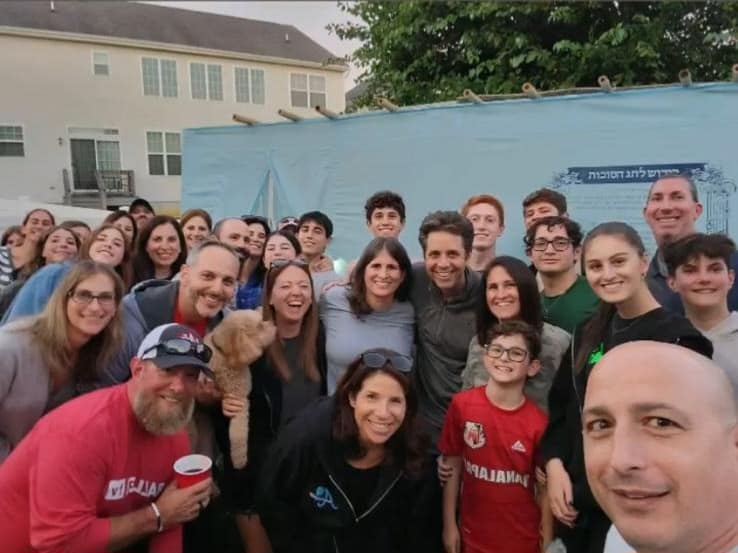
Interestingly, despite feeling blah, when I showed up at shul for Minchah with tefillin, it was a sight to behold. Jews from Lakewood, Brooklyn, Monsey, Beersheba, Silver Spring, San Diego, New York, and Miami gathered along with our locals to daven. Though most of our local Yidden grew up without even hearing of a day called Tishah B’Av, they are learning about the importance of the day and one fellow fasted this year for the first time in his life! Even though this time last year he hadn’t heard of it at all. Suddenly, my blah feelings started shifting. I felt my heart swelling with Yiddishe nachas. We are an incredible nation that gathers to mourn, never forgetting who we are and where we come from, and we’re always yearning for the coming of Mashiach.
To sweeten the pot, we had a special simcha. A young boy from Crown Heights, whose dad is a park ranger for the national park service, chose to have his bar mitzvah aliyah and kriah in Bozeman. As his birthday is zayin Av, his first chance for an aliyah was on Tishah B’Av. So, amid the mourning, we witnessed a young Jew beginning his journey into manhood, carrying the torch forward with devotion to Hashem and His Torah. He, his beautiful parents, and extended relatives and friends joined us for Shabbos Nachamu as well, where he read two aliyos, received the Aseres Hadibros Aliyah and celebrated his simcha with our Bozeman community.
Occasionally, someone asks me, “Chaim, do you think your work is a waste of time? You’ve been in Montana for 19 years and yet so many of your chevra don’t get it yet as it relates to our holy days, fast days, and even Shabbos to some degree…” I never think it’s a waste of time. The beautiful souls in our community: my friends and congregants, may not all be fasting, but they know more of our Jewish story and history than ever before. They may not be fully Shomer Shabbos, but Shabbos is now an active part of their lives. They may not fully keep kosher, but they aren’t eating shrimp, lobster, and cheeseburgers. The nachas that Hashem garners from these neshamos who are inching closer to Him is unimaginable. Would I like the journey to move quicker? Sure, and I’d also like to lose weight quicker, but that doesn’t mean that each healthy choice doesn’t make a huge difference.
I was learning a maamar (a Chassidic discourse) over Shabbos. It’s a maamar from 1960 shared by the Rebbe, zt’l, at a Purim farbrengen that took place at a hall located at 585 Albany Avenue near Rutland, in which he discussed the relationship between Hashem and the Jew. While reading the words in this discourse, I felt like the Rebbe was reassuring me and the rest of his shluchim about the importance of our holy work. Here is the nekudah, the gist of what I learned:
“By opening ourselves up to Hashem, the very act, even if as small as the eye of a needle, will cause Hashem to respond with an opening as wide as a doorway that wagons can pass through.” This Midrashrepresents the foundational idea that if we do our part with sincerity, even a small act in the right direction, Hashem will show up for us big time. Yet, the Rebbe goes on to explain that sometimes the Jew does nothing, they don’t show up at all, and the angels tell Hashem, quoting from Shir Hashirim: “I have taken off my tunic, how can I put it on?” We are so far gone, we are so checked out that our clothing, the garments of mitzvos that beautify us, are off and we don’t know how to show up for Hashem at all. So much so that the angels say, “I have bathed my feet, how can I soil them?” The angels are telling Hashem that because the world is so soiled, because the Jew is so checked out, Hashem cannot shine His infinite presence in the world anymore, because we aren’t worthy; we haven’t shown up for Him at all.
The Malachim are done with us.
And Hashem responds with these romantic words: “My beloved stretched forth his hand from the hole, and my insides stirred because of him.” There are times when Hashem asks us to “open for me, my sister, my beloved, my dove, my perfect one” and there are times that we don’t do it and yet Hashem still reaches out to us to bring us in. When we don’t come to him, He comes to us. When we stay out late at night with the wrong crowd, he comes and meets us in the dark to take us home. Those who attended that farbrengen remember the Rebbe choking with tears while teaching this idea. It hurts when a Jew is so distant, but it’s also heartwarming to know that our Father in Heaven will reach out and find us, inspire us, pluck us out of the abyss, and bring us home, or at least a little closer to home.
This past Sunday we received our kosher order from Weinberg Brothers in Minneapolis. They are an incredible group of Jews who care about our community and have provided us with our provisions for over fifteen years. When Yanky Roberts, the angel of Minneapolis, pulled up with the refrigerated truck and my local team started unloading, it hit me: I saw people a group of Jews all dressed differently, on different stages of their Jewish journey or conversion to Judaism, all delighted to bring kosher food into their home. They are making the effort and Hashem will certainly open huge doors for them to grow higher and higher.
It’s easy to give up and only serve Hashem when we’re in the mood. Then there’s the right way, which is to push ourselves to show up even when we don’t want to, realizing that one way or another Hashem will come from His Throne of Glory to find us and bring us back home.
Rabbi Chaim Bruk is co-CEO of Chabad Lubavitch of Montana and spiritual leader of The Shul of Bozeman. For comments or to partner in our holy work, e-mail [email protected] or visit JewishMontana.com/Donate.