
Country Roads
By: Larry Gordon
Fifty years ago, I knew the Catskills roads so well that I was able to drive them at high speeds at night with my headlamps off. I knew all the twists and turns and curves, and my hands could navigate the car as if by instinct.
I was adept at Lake House Road and the route to Greenfield Park, and could probably have driven those roads with my eyes closed. But why subject yourself to a hasty meeting with a magistrate late at night in a basement courtroom to face charges of driving while stupid?
It was a classic country weekend spent where so many of our people spend it—mostly standing on line to hear your number called, which means your pizza, soda, Slurpee, or milk shake is ready and it’s time to take them home for the Saturday night melavah malkah.
Some people can’t start their day without imbibing a cup of morning java. And if you’re unusually tired and sluggish, nothing can wake you up like a taste of that earthy, rustic, full-bodied coffee bean as it winds its way down your digestive tract, giving you a jolt of caffeine so you can keep your eyes open and alert, at least for a few minutes.
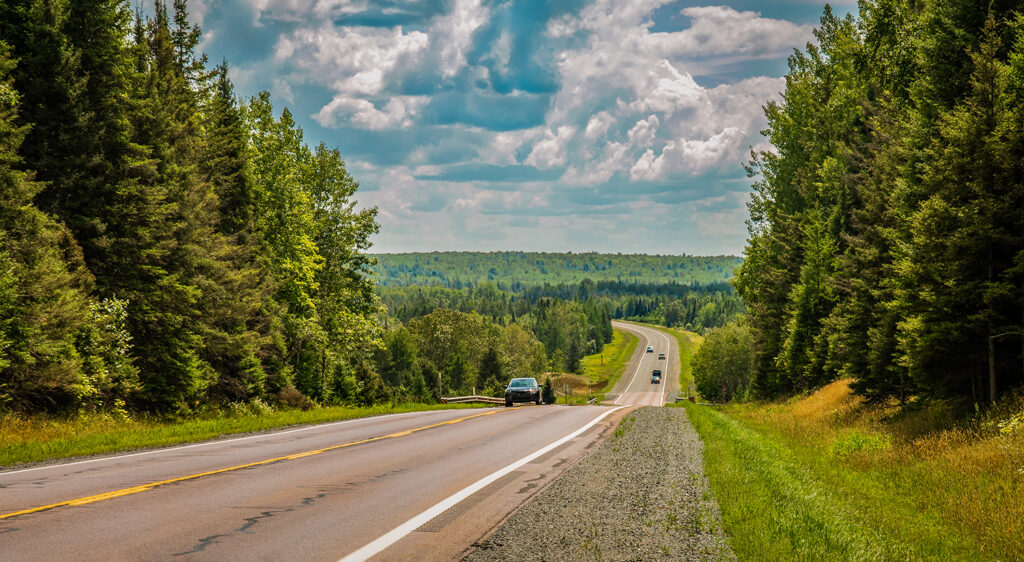
I love these Catskills country roads and how one way or another they are able to take you where you want to go. There are crossroads and intersections where the best you can do is guess where you’ll end up. Whoever developed this road map over the decades had a plan, but I guess most of it consisted of people losing their way and making turns in the hope that they’ll at least get close to where they want to go.
Bear in mind that when these roads were developed, it was years before Waze, GPS, or any global positioning technology to help you navigate rural, mountainous terrain. For the novice driver, the roads up in the Catskills are learned mostly by trial and error. For my part, I had them memorized at an early age and I just knew where Route 42 and 52 merged and how best to get from Point A to Point B by imagining the route in my mind’s eye.
This past week, I was determined to once again experience the “country” as my parents and grandparents used to call it decades ago.
I’m sitting in the Bethel Creamery Café on Happy Avenue somewhere between Swan Lake and Bethel. Scores of people are streaming in to partake of a creative menu that features the flavorful new Bethel Ice Cream, parfaits, waffles, hummus, pita chips, salads, and more. The Bethel Café has become the rave of the Catskills these past two summers and they are doing better and are busier than ever.
If you’re so disposed, just across the road from the creamery is Pelleh Poultry, which features all types of organic cold cuts, turkey legs, duck parts, and so on. Emporiums like these were not around in the 1970s or ’80s, but they are very much around today and are there to accentuate the flavor and variety of your Shabbos table.
A great deal of the Catskills is the same as it has always been. It’s mostly a collection of old, broken down, dilapidated buildings, some of which are former hotels that are determined to hang on to their former glory of years past, yet they’re slowly and surely fading away, despite all efforts to the contrary.
Case in point is Woodbourne, New York, where pizza and ice cream are staples. No matter what type of diet pills or injections you’re on, somehow your ability to ingest some pizza and ice cream on a Saturday night will always be possible.
So, I was at the Bethel farm this past Shabbos and over Shabbos there were several opportunities to negotiate a rather steep Catskills hill in order to make it to shul at a nearby bungalow colony. The bungalow colony known as Dubin’s was probably named for a family that owned the place going back eighty years or more.
Walking to shul in the morning was all downhill. There was indeed a momentum to that walk down to the shul. Needless to say, the walk back home was quite the opposite. It involved some huffing and puffing and was something of a workout until the pavement evened out and you were able to casually walk back to your bungalow, kick off your shoes, and relax.
Those country roads were indeed relatively quiet on a Shabbos afternoon. But every once in a while, a speeding car would zip past at a cool 70 to 80 mph. At one end of the road was Camp Maaminim and at the other end was Old Route 17, so where were the people going in such a hurry?
The bungalow colony was of the Satmar brand with a mix of older and younger men. Over kiddush, I talked with some of them about the experience of attending the Satmar Rebbe’s levayah all those years ago. And also, about the time I met one of the Rebbe’s brothers, Zalman Leib. Whether the men were younger or older, they all knew my father’s name, Nison Gordon, and how he would journalistically face off over any number of issues that were the subject of the day in our communities.
I shared with them what I remembered as a teenager and many of them wanted to hear more and got a kick out of the stories I told. They were intrigued that my father was Nison Gordon and the people I spoke with seemed familiar with his essays and the differences of opinion that he had with them, mostly over the subject of Israel and where it fits into modern Jewish life.
These highly politicized matters play themselves out inside the bungalow colonies that dot the Catskills landscape. The politics are just a smattering of the activities that people all ages participate in. Then there were the wives of the men, whom I was able to observe standing around in the early morning talking about whatever was of interest; trailing them were the kids playing with scooters and Lego and toys while getting ready for day camp.
My initial impression was that these were mostly businesspeople. They all had long beards and payos. Aside from that, the young people probably represented the fourth or fifth generation of their respective families to spend their summers in the Catskills.
On my way to the building that housed the shul, I passed through the parking lot which housed all the families’ cars. These were Honda Odysseys, Dodge Caravans, and others types of minivans—not the kind of car you would normally use to race at 80 mph on a country road. More like the type of car you use to go Shabbos food shopping on a Thursday night or Friday morning.
Regardless of how you look at it, summer is more than half over now. The young men and women who are planning to attend yeshiva or seminary in Israel are beginning to eye their suitcases. Some of the flights are already leaving next week. And here at the local Walmarts and Targets, school supplies are already on full display. Everyone is getting ready. It’s the month of Elul. Let’s hope and pray for a good year, and while we’re at it, a happy and healthy one too.
Read more of Larry Gordon’s articles at 5TJT.com. Follow 5 Towns Jewish Times on Facebook, Instagram, and Twitter for updates and live videos. Comments, questions, and suggestions are welcome at 5TJT.com and on Facebook, Instagram, and Twitter.