
Musings Of A Shliach From Montana
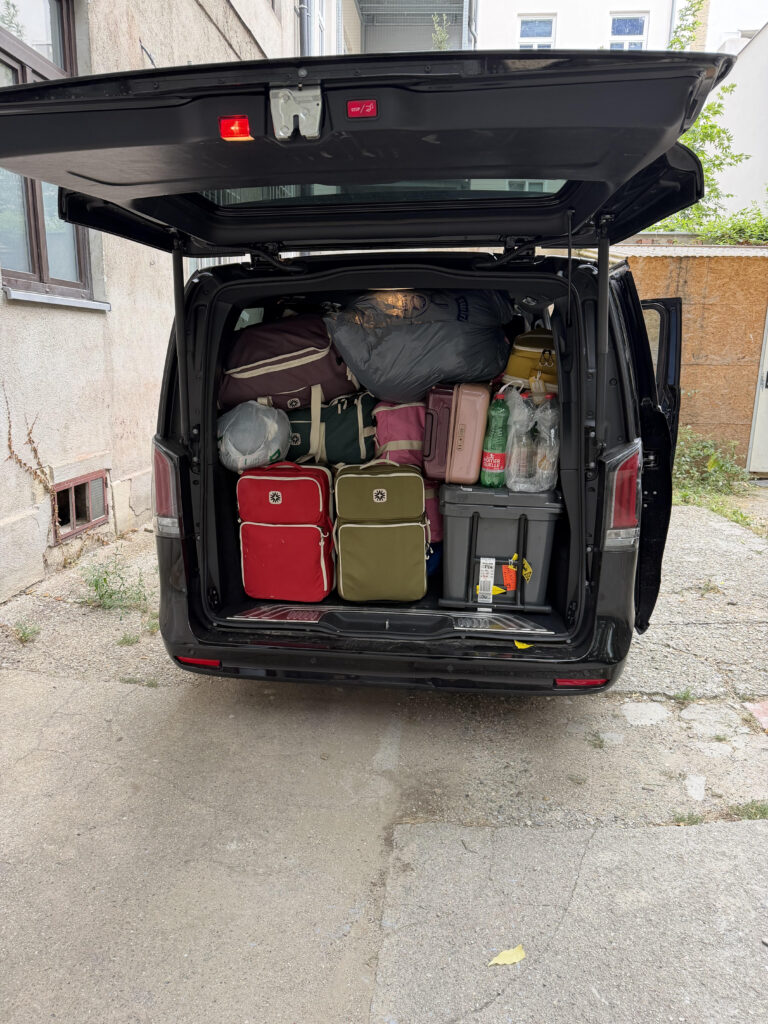
Rabbi Chaim Bruk’s van that he used to travel throughout central Europe
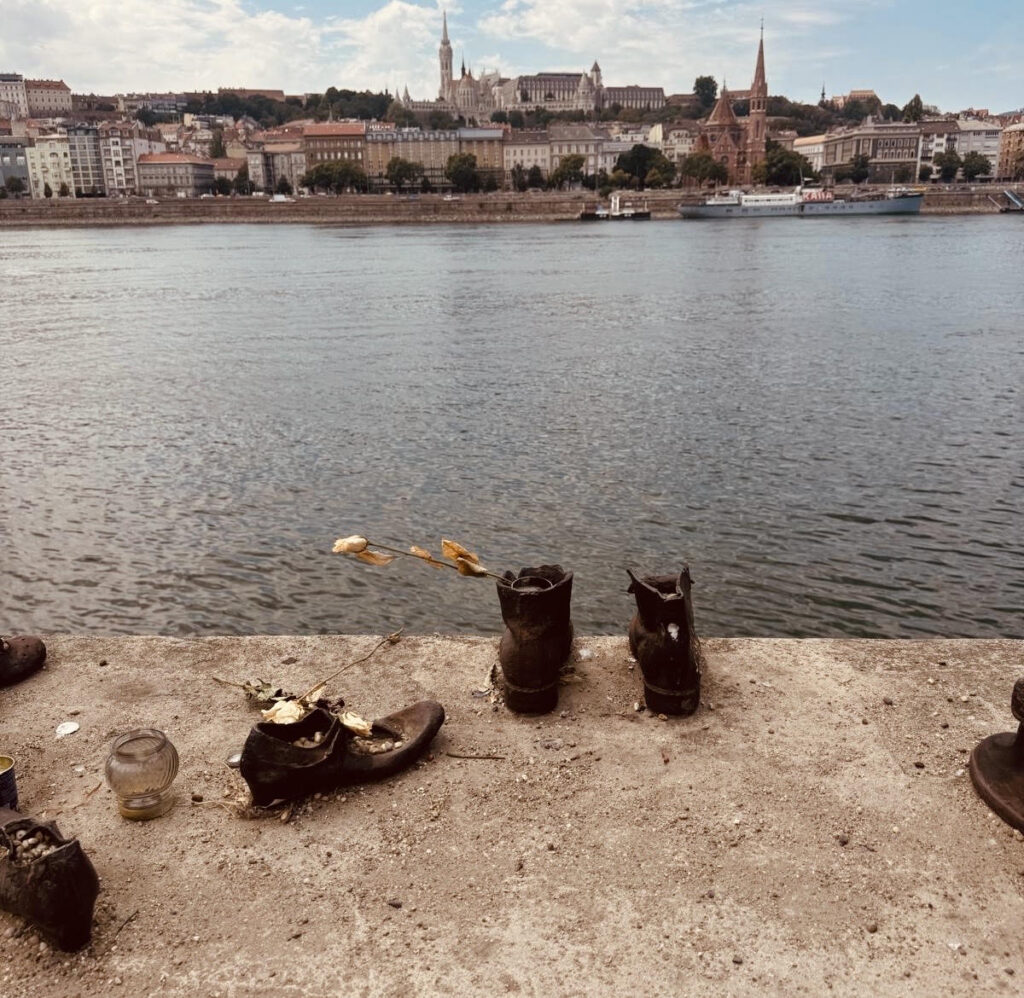
The Shoes on the Danube Memorial
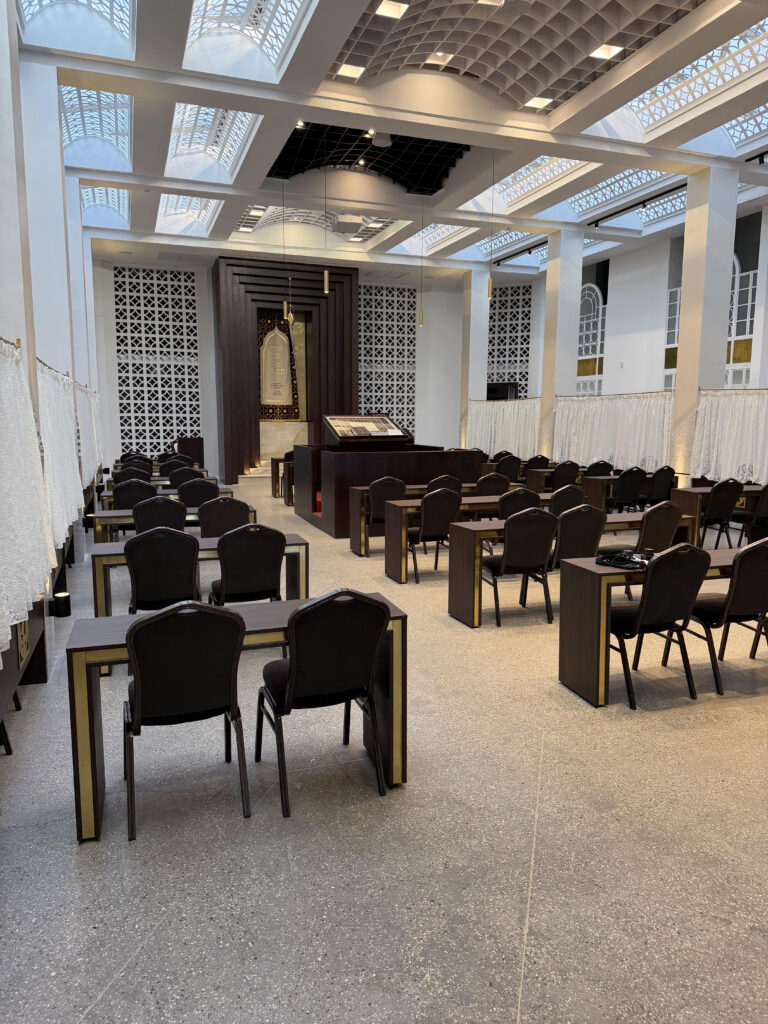
The sanctuary of the beautiful Zsilip Synagogue in Hungary
I’m writing this column on a flight from Budapest to Amsterdam, the first of our three flights from Hungary back to Montana. It’s summer and after the busy tourist season (which doesn’t really end anymore), we headed out as a family to spend some time away, leaving the Chabad operation in the hands of my capable brother-in-law.
Two weeks ago, we flew from Bozeman to Munich and drove to our chalet high atop the mountains outside of Salzburg, Austria. We enjoyed the beauty of northwest Austria and then headed to Vienna where we spent five days in this magnificent city. After that we headed to Budapest via Bratislava, where we visited the holy resting places of the Chasam Sofer and his son, the Ksav Sofer, who taught my great-grandfather, Rav Yosef Chaim Sonnefeld, during his teenage years in Pressburg.
Budapest is a fascinating city, and Hungary is a historically rich country. While most Jews travel to Hungary to visit Kivrei Tzaddikim, most notably the resting place of Reb Shaya’la of Kerestir, zt’l, we mustn’t forget that there are dozens of shuls that have re-opened around the country, mostly by the dozens of Chabad shluchim serving in Hungary. There are multiple kosher eateries, an epic ice cream shop, mikvaos, a vibrant Chabad Cheder, an Israeli center for the thousands of Israeli tourists, and the ability for any visitor to roam the streets as a proud Jew and be welcomed by the locals.
Before I get back to the Budapest experience, I want to pause to share an important side point. Menny and I both travel with our yarmulkes and tzitzis and our travels took us through many towns and villages, hikes and parks, stores and public venues and though we were in five European countries we experienced no negativity at all. Chana Laya had her 9th birthday while in Europe, so to honor it, we drove to Aqualand Moravia, a massive water park outside of Brno in the Czech Republic, about an hour north of Vienna. Let’s just say we were the only non-locals at this water park for the three hours that we enjoyed the pools and slides. Curiosity? Sure. Double takes? Naturally. But the kids had a blast with no issues and again no negative interactions. So next time you see self-proclaimed Jewish advocates who find antisemites on every corner and create video clips of those interactions, it’s okay to wonder if those “advocates” are creating the antisemites with their unbecoming behavior, just saying.
Back to Budapest. A highlight for me was spending time with the Rav Boruch Oberlander, shlita, the Av Beis Din of Hungary, and his Rebbetzin Batsheva (daughter of Rabbi & Mrs. Moshe Lazar of Milan, Italy, and sister of Rav Berel Lazar Shlita of Russia) who were sent by the Rebbe, zt’l, to Hungary in 1989 to be his shluchim at a time when Jewish life in the country was almost non-existent, having never really come back to life after the horrors of the Holocaust.
In the 37 years since their arrival, they, along with the current leader of the EMIH (Unified Hungarian Israelite Community) Rabbi Shlomo Köves, who is an ordained Hungarian-born Rav, have revolutionized Jewish life. Hungary is a holier, more G-dly place, and to see what one couple can accomplish when determined to bring light into the world, is inspiring even for someone like myself who is attempting to do the same in Montana.
On Shabbos I decided to daven at the Chevra Shas-Lubavitch Synagogue (AKA Pesti Yeshiva) where Rabbi Oberlander serves as Rav. Great crowds, beautiful atmosphere, joyful Jews, and delicious kiddush on Shabbos day. Yet, what inspired me personally is not the grandiose growth of Jewish life and the full pews in the shul, but the Rabbi and Rebbetzin themselves. I’ll explain.
On Friday night, the Rabbi, who is a world renowned talmid chacham, author of sefarim, and a preeminent posek for European Jewry, sat down in shul between Minchah and Kabbalas Shabbos with about seven locals and gave a parashah shiur in Hungarian like it was his first year on the job, sharing Torah with vibrancy and exuberance. The only words I understood were “Eidim Zomemim” about false witnesses, which was discussed in last week’s parashah. But what happened next hit me in the neshamah. It was a moment I merited to capture that will remain etched in my memory forever. In the middle of davening, the Rabbi, who was the chazzan, turned around and saw a local Hungarian Jew who had just walked into shul and his face lit up. He embraced this local Yid, gave him a Siddur, and showed him where he could sit.
Thirty-seven years of shlichus and he still has joy in his eyes when he sees one of his local neshamos coming to shul. Not a gvir, not a popular fellow, a somewhat disheveled fellow, but a Yid, a child of Hashem, and the love he shared with this fellow was palpable.
In this week’s parashah, Ki Teitzei, the Torah tells us about the importance of returning lost items to their rightful owner. In the words of the pasuk: “You must not see your brother’s work-bull or sheep straying and ignore it. You must return it to your brother…. So must you do with his donkey, and so must you do with his garment, and so must you do with any lost article of your brother that he has lost and that you have found. You cannot ignore it…. You must not see your brother’s donkey or his work-bull fallen under its load on the road and ignore it. You must pick up the load with him.”
There’s a long teaching of Ohr HaChaim HaKadosh on the topic of returning a lost item, and he explains that the mitzvah includes the obligation to bring neshamos, souls who have drifted away from having a healthy bond with their Creator, back to their righteous owner Hashem. Hashavat Aveidah is hard; it’s hard to return lost items, especially when we are obligated to figure out who the owners are, but it’s even harder when dealing with a person who is lost and needs to be returned to his proper home. During the month of Elul, as we yearn and work to come closer to Hashem, it’s an opportunity to not only blow the shofar for ourselves, but to blow the instrument of return for all those who need to come home, and help to make it happen.
When I saw Rabbi Oberlander greet that Yid, I realized that this is what it’s all about, bringing the lost children back to their Father in Heaven. What could be a greater nachas ruach? On Shabbos afternoon, while visiting the Oberlanders’ home, six young women from Israel came marching in. I asked the Rebbetzin who they were and she said that they were stranded on Friday with no place to go, so they’re staying with them. Ensuring that every Jew knows that they belong and that Hashem always wants them to come home.
The Oberlanders spent many years dealing with the illness of their son, Mendel, who passed away in 2012 at the young age of 20. They traveled the world seeking his cure. They brought him to Camp Simcha for that special experience. They did everything in their power to find him the berachah of refuah and to ensure that he was cared for 24/7, yet they never abdicated their post, never said “Enough with Hungary, let’s move to New York or Miami.” Their devotion to Hungarian Jewry, despite the challenges, was non-negotiable. It’s a devotion instilled in them by the Rebbe, zt’l, which they carry forth courageously, and the Jewish world is better for it.
I’m glad I went to Hungary; the castles are magnificent, but the return of Jewish life was awe-inspiring.
Rabbi Chaim Bruk is co-CEO of Chabad Lubavitch of Montana and spiritual leader of The Shul of Bozeman. For comments or to partner in our holy work, e-mail [email protected] or visit JewishMontana.com/Donate.