
Bringing Torah Into the Most Complex Questions of Modern Fertility
By: Rabbi Shaya Winiarz
A Recent PUAH Rabbinic Training Seminar in Deal, NJ
Every generation of Klal Yisrael is called upon to meet the unique challenges of its time. Ours is a generation of extraordinary medical advancement, unprecedented access to information, and remarkable organizations to support one another in ways that were once unimaginable.
PUAH is one such organization.
PUAH’s mission is to help individuals and couples navigate fertility, reproductive health, genetics, and related areas through the combined lens of halacha, medicine, and mental health support. Its rabbinic team works alongside leading physicians and medical professionals to understand rapidly evolving reproductive technologies while remaining firmly grounded in halacha.
What most don’t know is that PUAH’s work extends beyond the individuals and couples who call in. A critical part of its mission is working behind the scenes, educating the rabbanim, kallah teachers, and communal leaders who are often the first people families turn to when confronting sensitive questions of fertility and reproductive health.
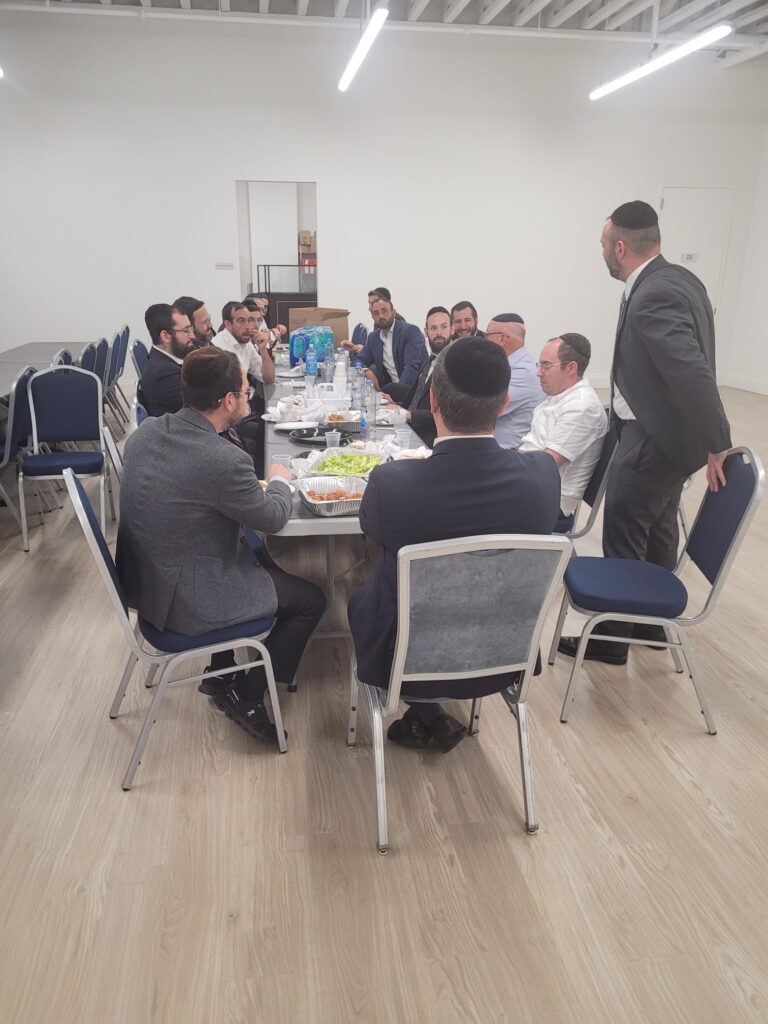
That mission was on full display recently in Deal, New Jersey, where PUAH conducted an intensive three-day rabbinic training seminar at the Sephardic Rabbinical College. Approximately twenty rabbis from across the tri-state area gathered to learn from two of PUAH’s leading rabbinic authorities: Rabbi Elan Segelman, Rabbinic Director of PUAH, and Rabbi Eliezer Krohn, Rabbinic Advisor at PUAH.
The seminar was designed to be intensely practical. Rather than discussing fertility medicine in the abstract, Rabbi Segelman and Rabbi Krohn walked participants through the complex medical, halachic, and emotional realities they encounter every day.
Among the subjects addressed was third-party reproduction, including egg donation. Participants explored not only the relevant halachic questions, but also the medical processes surrounding fertility treatment and the information a rav needs to understand and guide a couple’s situation properly. The discussion expanded into surrogacy and gestational carriers, an increasingly complex area in which advances in reproductive medicine continue to create new practical and halachic questions. For a community rav, understanding these developments is essential. Couples facing these decisions need a rav who understands the medical process, recognizes the emotional weight of the experience, and knows when a case requires consultation with greater halachic authorities.
The seminar also included an in-depth exploration of male-factor infertility, including azoospermia and the medical procedures that may be available in such cases. The rabbanim were introduced to the practical realities behind these diagnoses and the halachic questions that can arise as couples pursue treatment.
Additional sessions addressed contraception and family planning, with an emphasis on how rabbanim can approach these highly personal questions with halachic depth, medical awareness, and emotional sensitivity.
Throughout the three days, Rabbi Segelman and Rabbi Krohn demonstrated a deep command of both the halachic sources and the medical terminology under discussion. At the same time, they repeatedly emphasized the importance of recognizing the limits of one’s own authority and consulting the leading poskim with whom PUAH maintains close relationships.
“These are big topics,” Rabbi Krohn told the group. “I’ll do my part, but we can’t do it without the gedolim. And they’re there for us, ready to answer each call.”
That sense of responsibility was on full display at the seminar.
During a lunch break, generously sponsored by the Sephardic Rabbinical College, Rabbi Krohn could be seen answering fertility-related shailos on his phone. When he returned to the table, one participant jokingly asked, “How many calls do you field a day?”
Rabbi Krohn smiled. “Too many to count.”
At another point, Rabbi Segelman stepped out in the middle of a session to respond to an urgent shaileh. Indeed, many of the real-life cases he shared throughout the seminar seemed to begin with the same words: “It happened last week…”
That may be one of the most powerful aspects of being guided under PUAH’s expertise. The rabbis’ breadth of knowledge has been shaped by the thousands of real questions, cases, treatments, decisions, and conversations its team encounters while guiding families through fertility challenges.
In addition to the depth of knowledge is the empathy behind it.
When Rabbi Krohn recounted an experience in which a distressed couple had lashed out at him while he was trying to help them, Rabbi Segelman immediately reframed the encounter.
“What do we see from here?” he asked. “We see that people are in pain, and we need to learn more so we can help them.”
That message captured the purpose of the entire seminar.
For rabbanim, knowing the halacha is essential. But when dealing with infertility and reproductive medicine, knowledge must be paired with an understanding of what a couple is experiencing: the disappointment of another failed cycle, the uncertainty surrounding a diagnosis, the complexity of treatment decisions, and the enormous emotional and financial strain that often accompanies the journey.
One participating rabbi reflected on the difference the training made for him:
“My years in yeshiva and kollel taught me how to learn Torah. PUAH is helping me bring that Torah into the practical world.”
Another attendee put it simply:
“PUAH walked us through some of the most complicated and sensitive topics. They walked us through it all so that we can now walk others through it as well.”
That is ultimately the significance of PUAH’s rabbinic education.
Every rabbi who leaves a training like this is better equipped to answer a question, recognize a medical issue, understand a treatment, consult the appropriate posek, or respond more sensitively, and become another resource for the families in his community.
And behind every question is a person or a couple looking for clarity, compassion, and hope that they will one day be able to have a family.
Our generation faces medical and halachic questions that previous generations could scarcely have imagined. We are fortunate to have organizations like PUAH working to ensure that as medicine advances, halachic guidance advances alongside it.
May Hashem continue to grant PUAH success in its avodat kodesh, and may the families it serves be blessed to build healthy Jewish homes for generations to come.
Rabbi Shaya Winiarz is a rav, lecturer, author, and columnist. He can be reached at [email protected].