


Simply A Sukkah
By: Sivan Rahav Meir
My friend, Chani Lifshitz, who served for 25 years as the Chabad emissary to Kathmandu, once remarked, “By now, everyone knows that people plan ahead and come to Chabad Houses for the holidays. But on Sukkot, we also take the sukkah out into the world, into the Himalayas. There is even a sukkah now along the Annapurna trek, probably one of the highest sukkahs in the world.
“What amazes me is that there are also travelers in the middle of their journey who don’t always realize that it’s Sukkot. But the moment they see us and remember, they get excited. They step inside the sukkah and immediately ask for a lulav and etrog. A moment before, they barely knew it was Sukkos, but once the soul remembers, it remembers in a big way.”
Have you already had the chance to sit in a sukkah this year? If so, don’t take it for granted. Three years ago, my friend Stephanie Sokol of New York excitedly sent me photos of different kinds of people sitting in sukkahs. At first, I didn’t understand what was so remarkable about the photos. Then she explained.
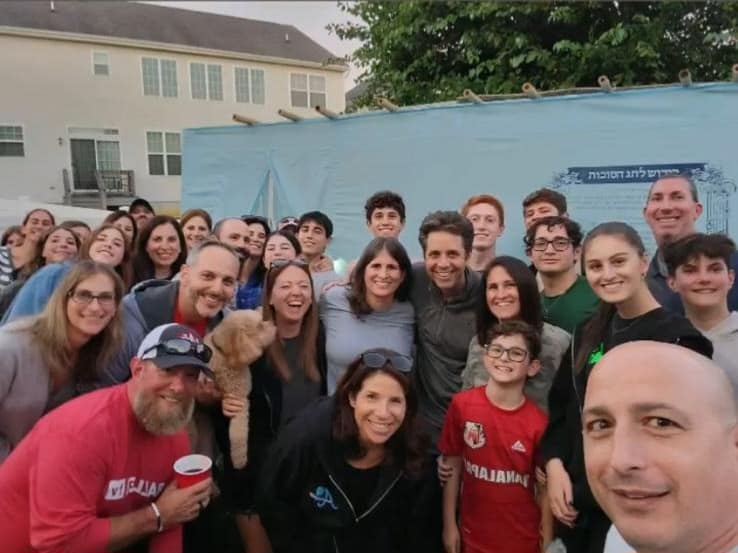
Through an initiative of NCSY and TJJ in New York, Jewish families who had never built a sukkahbefore were given one of their own along with a set of the Arba Minim.
“In Israel, children grow up knowing all about Sukkot,” Stephanie told me. “But here, we are talking about second- and third-generation American Jews who never had that childhood experience. Some simply don’t know what a sukkah is. We explain it to them, help them build one, and it’s amazing to see adults becoming as excited as children when the holiday arrives.”
She told me about men proudly building their first sukkah and posting pictures of it, families inviting friends and relatives to join them there for the first time, a 50-year-old woman making sukkah decorations because she never had the chance to make them as a child, and a grandmother inviting all her grandchildren over to experience something she herself never experienced at their age.
“For years, we invited people into our sukkah,” Stephanie said. “This turns the idea around. They receive a sukkah of their own and suddenly they become the ones taking the initiative.”
I thought about that story again this year when I heard about a national organization called The Sukkah Foundation. It was founded by the family behind The Sukkah Project after 30 years of building sukkahs free of charge for Jewish families across the United States. In its first year, it hopes to reach 40 to 50 families, sending each of them not only a sukkah that can be used for years, but also simple materials to help them begin celebrating the holiday in their own homes.
There’s a great deal to say about American Jewry and the challenges they face. We often discuss assimilation, Jewish identity, education, and continuity, enormous issues with no simple solutions. But maybe there’s also a lesson here about where to start.
Sometimes a Jewish family does not need another lecture about Jewish identity; they need the experience of building something together. Of decorating it. Of inviting grandparents and grandchildren inside. Of making a blessing for the first time.
Sometimes one positive Jewish experience can open a door—or in this case, build one. A sukkah.
{A Story for Sukkot
A tiny sukkah, just one meter by one meter, was set up before the holiday in a park in Jerusalem’s Gilo neighborhood.
David Michael Cohen, who built it, posted the story behind it inside the sukkah:
“A little over two years ago, during summer vacation, my father was visiting the U.S. when he suffered a severe heart attack. I flew to be with him thinking I would stay only a short time. Sadly, his condition did not improve, and I remained there for several months, including through the High Holidays.
“On the final day of Sukkot, I was at his side. His condition was serious. I ate some of my meals next to him in the hospital, but it was important to me to eat in a sukkah as well. Late that evening, when things had calmed down a little, I left the hospital carrying some food and began searching the neighborhood for a sukkah I could use.
“I searched and searched until I finally found a tiny sukkah on the street, just one yard by one yard. It was exactly what I needed.
“I knocked on the door of the house beside it and asked permission to use the sukkah. The woman who answered told me it belonged to them and that I was more than welcome to use it.
“I sat down to eat. I tried to sing a few holiday songs to myself, and to tell the truth, I also cried as I thought about my father’s condition.
“Suddenly, I saw a man peering into the sukkah. Then he stepped inside.
“It was the husband of the lady who had given me permission to enter. He asked me why I was crying and I started to tell him about my father in the hospital, about everything we were going through, and about the food that I had saved because it mattered so much to me to eat it in a sukkah.
“As I spoke, I could see him becoming more and more emotional.
“When I finished, he said, ‘Now it’s my turn to tell you a story.
“‘Before Sukkot, there was a flood in our neighborhood, and many homes were flooded. Every year I build a large sukkah that fills our entire yard, but this year it was impossible. There was nowhere to build it; everything was still flooded. So, we spent most of the holiday at the home of my wife’s parents.
“‘Still, I had this strange feeling that I absolutely had to build some kind of sukkah here. I managed to find just enough schach for a three-foot-by-three-foot sukkah. I built the walls on the sidewalk next to our front door. As the holiday approached, my wife kept urging me to leave already for her parents’ house. I couldn’t understand why it mattered so much to me that there should still be a sukkah here. But now I understand. I built it especially for you.’”
David concludes: “This year, I built this tiny sukkah in Levona Park in Jerusalem’s Gilo Aleph neighborhood. It is there for anyone who finds himself stuck without a sukkah or simply needs one.
“May all the blessings recited and mitzvot performed there be in memory of my father, Ephraim benShlomo and Sultana.”
Translated by Yehoshua Siskin and Janine Muller Sherr. Read more by Sivan Rahav Meir at SivanRahavMeir.com.