
Musings Of A Shliach From Montana
By: Rabbi Chaim Bruk
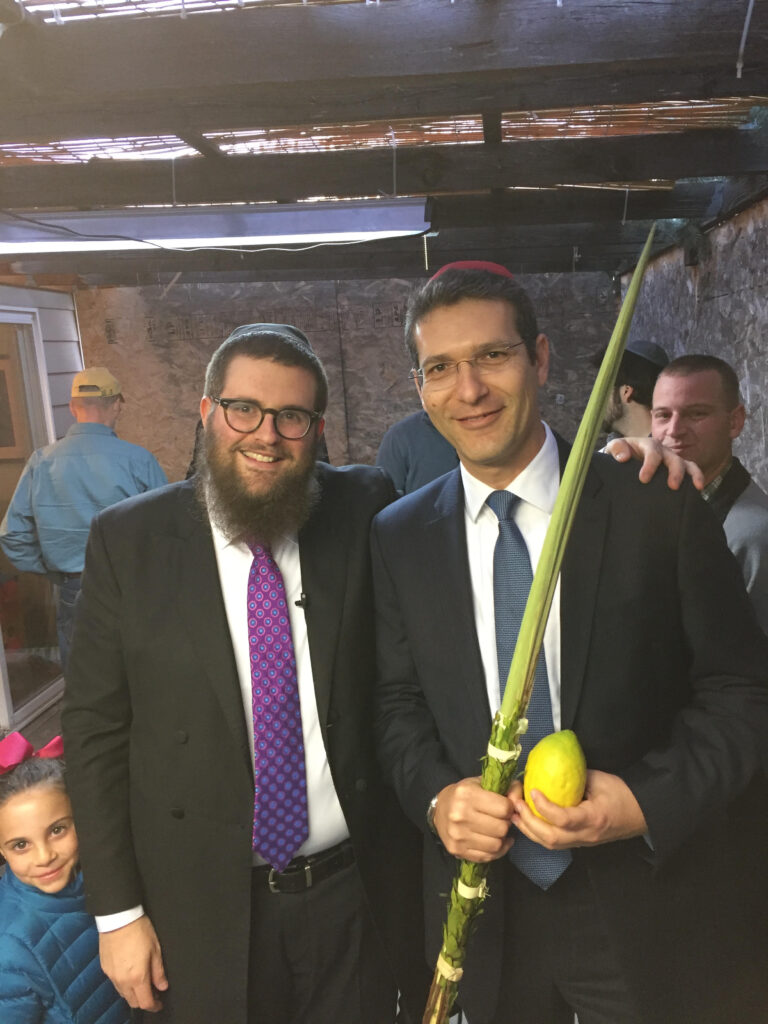
Dr. Andy David, former Israeli Consul to the Pacific NW, shaking lulav in the sukkah in 2016
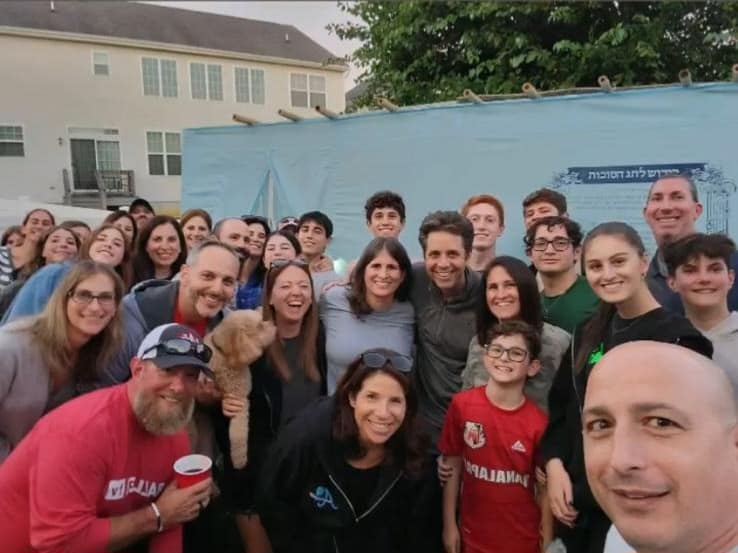
September Mensch Club in Bozeman
This morning it was 37 degrees, so I look forward to seeing what Sukkos has in store for us. The mountains are snowcapped, many leaves are falling, the remaining leaves are changing colors, and the bears are out. In other words, it’s a beautiful fall in Montana.
We’ve had a busy week, to say the least. In Jewish terminology it’s “bein keseh l’asor,” which refers to the days between Rosh Hashanah, when the moon is covered, and the 10th of the month, Yom Kippur. We fasted on Tzom Gedalia, and enjoyed the opportunity of saying Avinu Malkeinu and Shir HaMaalos in davening. We’ve been preparing for Shabbos Shuvah and Yom Kippur when our shul will be full, and we’ve also spent all week answering questions like “My ex won’t bring the kids to shul on Yom Kippur. Shall I put up a fight or let it go?” or “Rabbi, as I’m going through the conversion process, I’ve been saying “blessed are you Hashem who has made me a gentile” instead of “not made me a gentile,” is that correct or what shall I say?” and “Do we fast three weeks after giving birth?”
I love the holy and innocent way my congregants pose these questions. They come from a deep place of wanting to do it right, wanting to give Hashem what He’s asked for, and wanting to lead a life in sync with Torah values. I love that my community feels comfortable coming to me for guidance on complicated, yet simple matters. Yes, there’s a beauty in those who are seeking to understand the debate between the Ritva and the Rashba on an issue in Kiddushin as explained by Reb Baruch Ber and the GRaCh (Gaon Reb Chaim Soloveitchik of Brisk), and there’s a special loveliness in the soul of those who want to know which door takes preference for a mezuzah when they can’t afford them for every door in the house.
This appreciation for simplistic holiness is found in a touching expression said by the Rebbe Rashab, the fifth Lubavitcher Rebbe. His remark revolves around two places in the Old Country, Kremenchug and Nevel, which for generations came to signify two distinct types of Chassidim. The Chassidim of the Ukrainian city of Kremenchug were revered by their colleagues as Maskilim. In the insiders’ jargon of Lubavitch, that term implies that they were experts in the philosophical intricacies of the scholarly literature of Chabad Chassidus, but they were somewhat lacking in the passion that should characterize the Divine service of a Yid. Yet, the simpler Chassidim of the Belorussian village of Nevel, whose candid farbrengens have become legendary, were different. These warmhearted Chassidim were commonly regarded as being earthier, less intellectually sophisticated, but possessing a faith that was simple, soulful, and fiery.
The Rebbe Rashab, who was known for his philosophical scholarship, once remarked, “I cherish more a butcher from Nevel than a scholarly Maskil from Kremenchug.”
Judaism needs both approaches. I appreciate the wise scholars, who (like me) spend every extra minute in the library learning about another minhag, searching for the deeper meaning of a halacha, spending hours engrossed in a blatt of Gemara, or understanding a psak in the Rambam. But I also love with every fiber of my being the purity of a Jewish soul who reaches out to grow, and that they should know that their rabbi is available for them to stand shoulder to shoulder in their journey.
Just the other day a local homeless woman (whom I’ve written about before) messaged me: “Is it possible you can meet with me to discuss how I can obtain a small Siddur that I can carry with me? Is it possible you can bentsch me with a suitcase and/or some tzedakah money for food? It’s a 3-day shlep…” When I told her that I would bring the money to her, she responded, “Oh, you rock Rabbi. Look, the bus leaves at like 1:00 a.m. on Shabbos. Right now, I’m again at the Lowe’s loading dock where I have Wi-Fi.” The implication is clear: She’s going to travel on Shabbos, she doesn’t have the mental capacity for me to change her mind, but she knows that when all else fails you can find the local Jewish community that will care for you.
In my daily learning of Gemara, I’m towards the end of Sanhedrin which includes so much Aggadata(stories, anecdotes, and biblical interpretation of the Talmud). Reading about the crimes of the kings of Israel made me really happy. I’ve been screaming from the rooftops forever that the Jews today are inherently good, even if misguided. When reading about the sins of Menashe, including killing his grandfather Yeshaya (Isaiah), and having relations with his mother, reading about Achav and Yeravam ben Nevat and even reading about the kings who placed idols in the Holy of Holies, I become more in love with the Jews of today. Yes, many may be sinning, but it’s not in spite; they aren’t running away from Hashem, even if they are running away from frumkeit. There’s a huge difference between someone running to secularism because they think it’s “better” and someone who wants to rebel against Hashem out of spite.
Chavie and I know the pain of a child who chooses a path outside of our beautiful frum world, so I don’t want you to think I’m minimizing the pain. What I am saying is that despite the pain, in contrast to historical sinning of the Jews, we are rocking it. The Jews of today, even those who checked out of our beloved Torah lifestyle, are precious and connected a thousand times more than the checked-out Jews of the past. As we approach the yom tov of Sukkos, my favorite holiday of the year, I think about all the Jews that Chavie and I welcome into our sukkah and my heart is warmed, because there’s no greater way to celebrate the festival of unity than by actually welcoming every kind of Jew into our sukkah with the Daled Minim, the four species, that represent the four primary types of Jews, binding them all together as one.
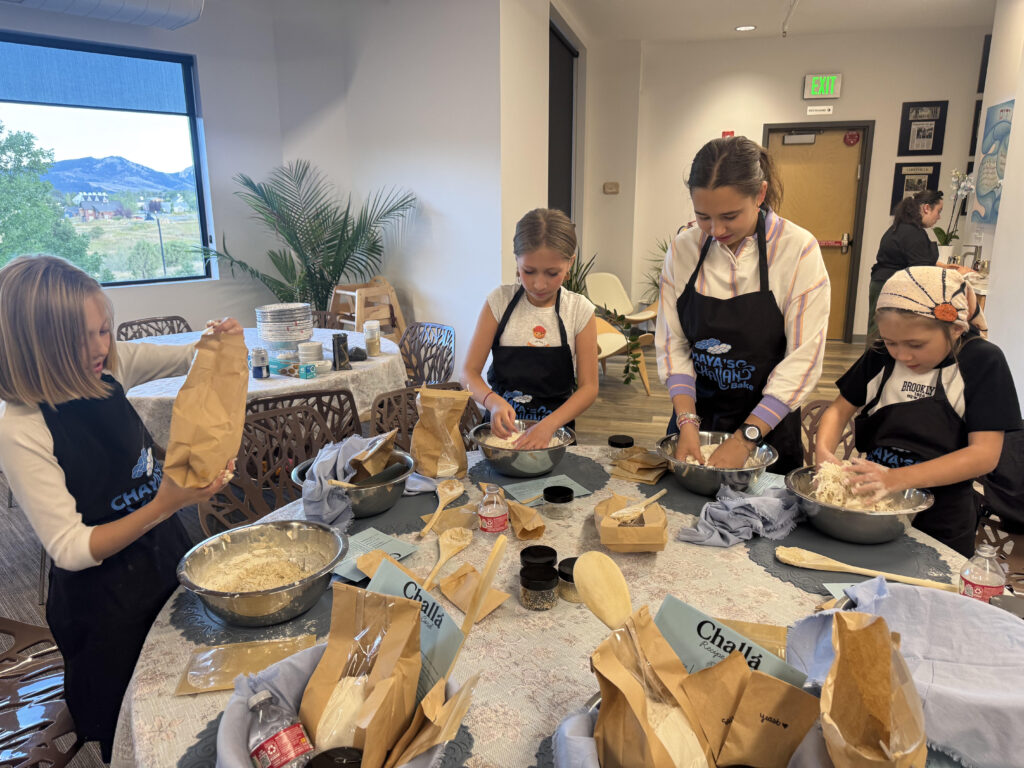
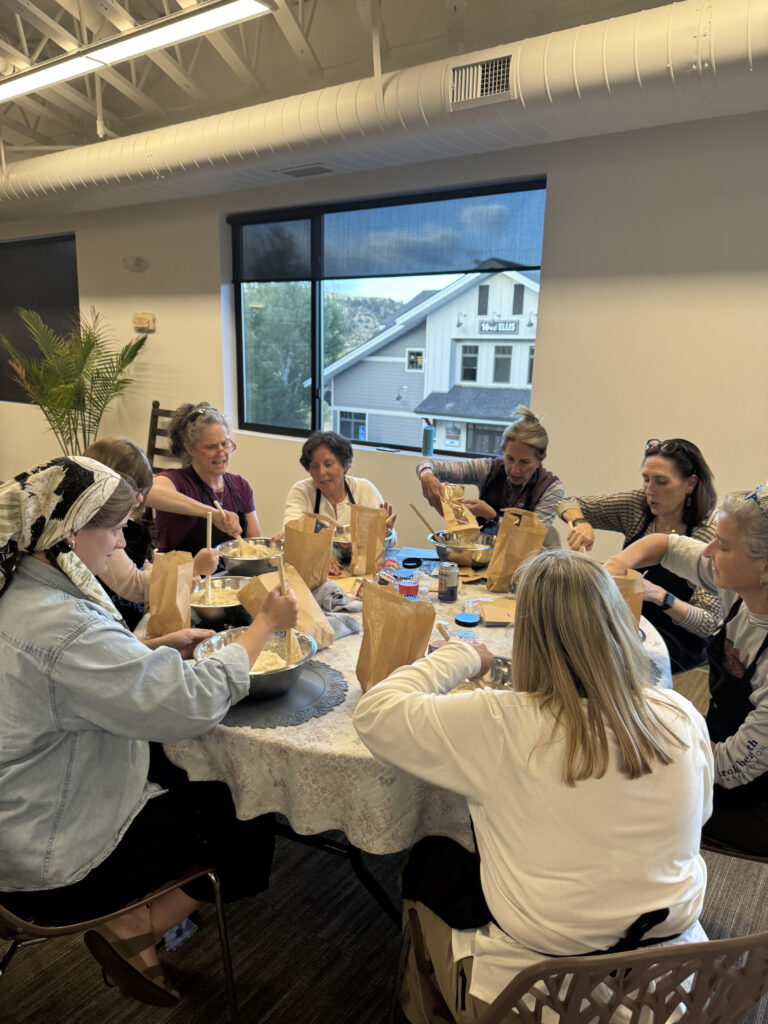
During Aseres Yemei Teshuvah we hosted two powerful events. Chavie hosted a women and girls challah bake and I hosted the September Mensch Club at the home of our friends, the Lifsons. To see women and girls joining in the magnificent mitzvah of taking and baking challah was so special. Seeing members of the local Reform temple alongside members of our shul, seeing people bring their young daughters and locals bringing relatives visiting from Argentina, was so special. Especially as this coincides with Vav Tishrei, the 6th of Tishrei, which is the yahrzeit of the Rebbe, zt’l’s mother Rebbetzin Chana, who passed away in 1964. The Rebbe would speak about his mother’s name and how Chana is the acronym for the three foundational mitzvos connected to women, which is challah, niddah, and hadlakas neiros (lighting the Shabbos candles). Having this empowering feminine experience during this auspicious time was great.
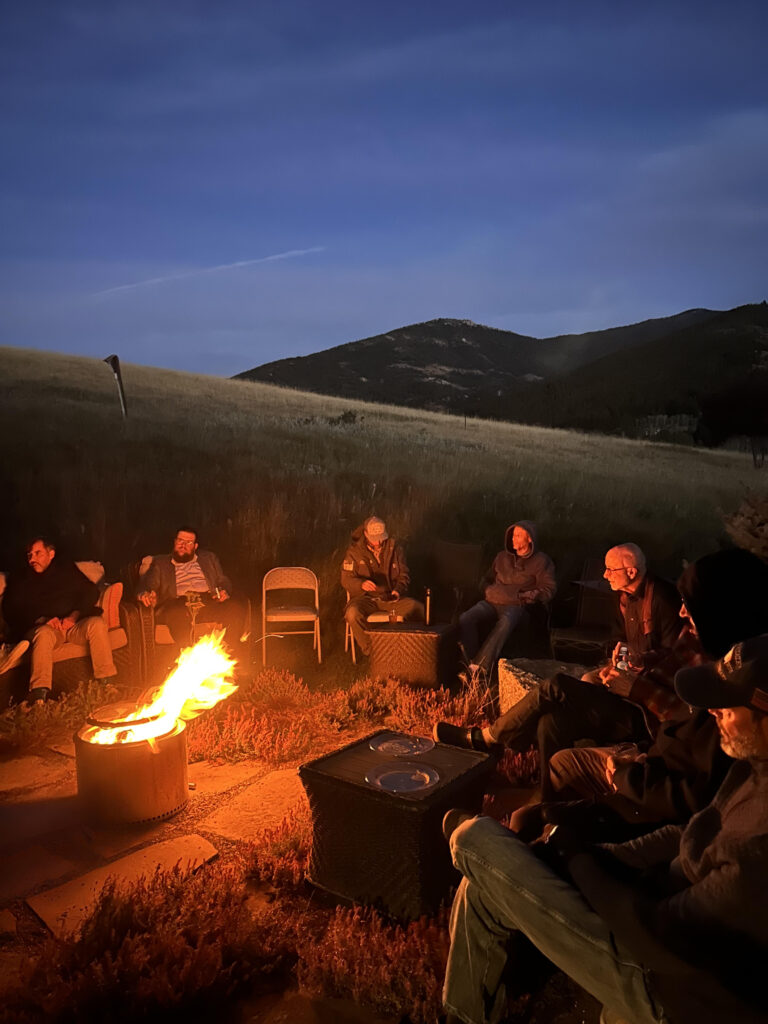
And the Mensch Club—wow! For three hours, 20 men sat around the fire pit enjoying whisky, cigars, and smoked meat, while our new team member Rabbi Sholom Ceitlin, shared the Jewish view on incarceration, which resulted in an almost three-hour farbrengen about prison reform, mental illness, drug abuse, and so much more. It’s clear to me that the Jewish world is thirsty to hear the Torah’s view on modern dilemmas, and it’s our role to make it available to them.
In a talk from the Rebbe of Acharon Shel Pesach 1960, he quotes the verse in Tehillim (66:6), “He turned the sea into dry land, and they passed through the river on foot.” The Rebbe explained an idea from Chassidus that this verse refers to the time of Mashiach when the Euphrates River (Nehar Pras) will split so the Jews can head home to Israel and it specifically says “on foot” because in this generation, before Mashiach’s arrival, we need to be super down to earth, with our feet on the ground, able to bring Judaism down to the most practical levels to the Jews who are most earthly.
This is the mission of our generation, this is Chassidus, this is Mashiach, and this is Sukkos. Finding every last neshamah, bringing them home, uplifting their inner spark, and bringing our world closer to the Divinity of Mashiach—may it be speedily in our days!
Rabbi Chaim Bruk is co-CEO of Chabad Lubavitch of Montana and spiritual leader of The Shul of Bozeman. For comments or to partner in our holy work, e-mail [email protected] or visit JewishMontana.com/Donate.