



Changing The World
By: Larry Gordon
Sometimes all it takes is one person, one idea, and one extraordinary vision to change the face of an entire nation.
Israel’s history is filled with such individuals. Think of David Ben-Gurion, Golda Meir, and Benjamin Netanyahu. Then there are the Nobel Prize winners, high-tech entrepreneurs, brilliant innovators, and battlefield heroes who have helped transform a small country into one of the most remarkable and dynamic nations in the world.
And then there’s Eli Beer.
His idea wasn’t about politics, technology, or military strategy. It was about something considerably more fundamental: saving lives.
What began as a simple concept has revolutionized the way emergency medical services are delivered throughout Israel. Today, United Hatzalah, the organization Beer founded, has become one of the country’s most extraordinary lifesaving institutions.
And next week, on November 12, that remarkable story will be celebrated right here in the Five Towns.
United Hatzalah will host a gala dinner on Long Island, bringing together an impressive collection of community leaders, philanthropists, and personalities whose commitment to Israel and the Jewish people has made a meaningful difference. The dinner location will be provided upon reservation.
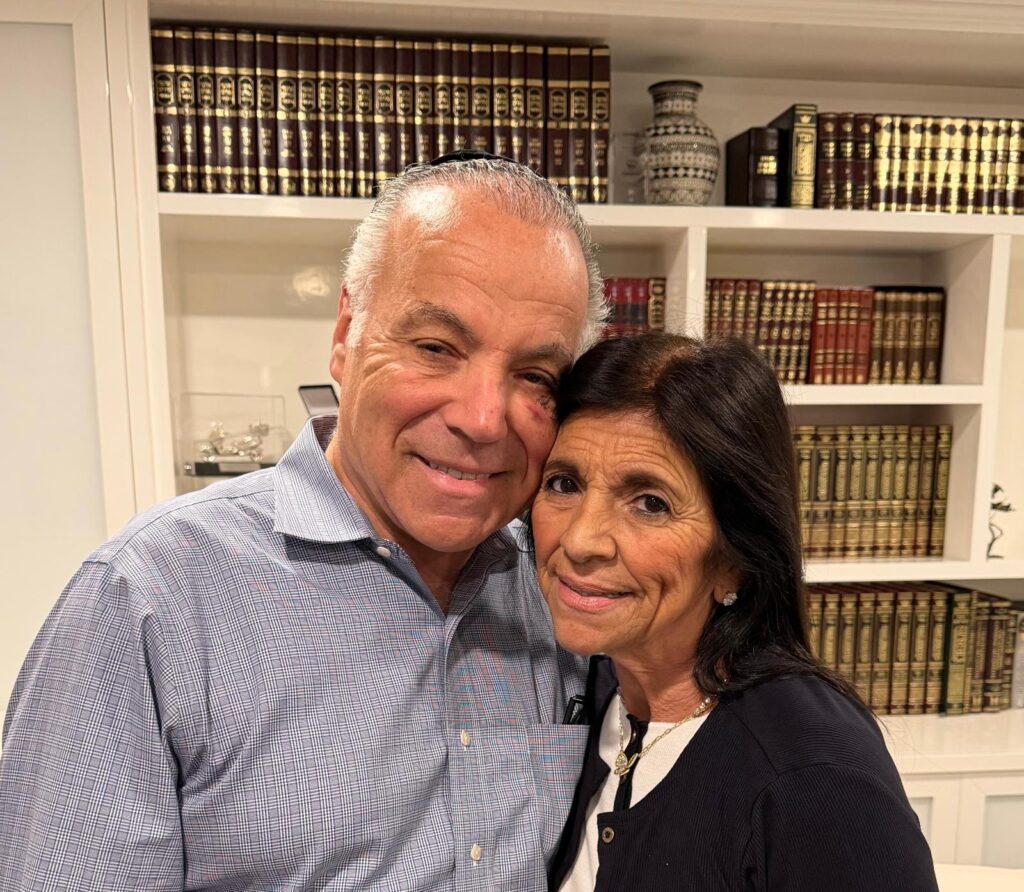
The evening will honor Nicole and Marc Gleitman, two individuals whose generosity, hospitality, and devotion to Jewish communal life have become well-known throughout the Five Towns and beyond.
For Nicole and Marc, supporting United Hatzalah isn’t simply another philanthropic undertaking. It’s a personal commitment to an organization they believe has become one of the most important developments in Jewish communal life over the last two decades.
And when you consider what United Hatzalah actually does, it’s difficult to argue with that assessment.
Eli Beer, the organization’s founder and president, oversees a remarkable network of thousands of volunteers who respond to medical emergencies around the clock.
The genius of United Hatzalah lies in their ability to recognize that when someone is experiencing a medical emergency, the difference between life and death can be a matter of minutes—even seconds.
In Israel’s major cities, where traffic congestion can turn a relatively short drive into an extended ordeal, those minutes are especially precious.
Enter the ambucycle.
The concept is brilliantly simple: a motorcycle equipped with lifesaving medical equipment, allowing trained emergency responders to maneuver through traffic that would otherwise leave conventional ambulances sitting helplessly in long lines of cars.
The equipment carried on these motorcycles enables volunteers to begin emergency treatment almost immediately, often well before an ambulance can reach the scene.
Over the years, this innovation has helped save countless lives.
And like any organization that refuses to stand still, United Hatzalah continues to innovate.
During a recent dinner with Nicole and Marc Gleitman, I learned that in addition to the familiar ambucycles, some emergency responders are now using bicycles.
They’re smaller, narrower, and capable of navigating crowded streets and congested areas with even greater precision.
It’s another example of the organization’s philosophy: if there’s a faster way to reach someone who needs help, find it.
But the story of United Hatzalah’s upcoming Five Towns dinner isn’t only about motorcycles, bicycles, and medical equipment.
It’s also about a family.
And, as is so often the case in Jewish communal life, it began with a little hospitality.
The relationship between the Gleitmans and United Hatzalah developed through several connections, including their daughter and son-in-law, Danielle and Eli Renov, who live in Jerusalem with their family.
When United Hatzalah personnel began visiting Atlantic Beach, it seemed natural for Eli Beer and others associated with the organization to stay at the Gleitman home.
At first, the arrangement was modest.
“They just asked if they could stay overnight at our house and have their meals elsewhere in the community,” Nicole recalled.
That sounded simple enough.
But anyone familiar with Jewish hospitality knows how these things tend to develop.
On the next visit, there were a few more guests.
And then a few more.
Eventually, one Shabbos the number reached 46.
Forty-six guests.
At that point, the Gleitmans did what any generous and resourceful Jewish family might do.
They put up a tent on their property and made room for everyone.
What began as a few overnight accommodations had evolved into something resembling a small convention.
But for Nicole and Marc, it was all part of the pleasure of being involved.
Those early visits created a lasting bond between the family and United Hatzalah, a relationship that has now developed into the organization’s inaugural Long Island gala dinner.
And judging by the response, the event is already shaping up to be something special.
With more than a week remaining before the November 12 dinner, hundreds of reservations have already been received.
That speaks not only to the extraordinary reputation of United Hatzalah, but also to the affection and respect the Gleitmans have earned throughout the community.
The evening will feature an impressive lineup of speakers and participants.
Among them will be Rear Admiral Daniel Hagari, the former IDF spokesman who became one of the most recognizable faces of Israel during the Gaza war.
For months, Hagari appeared before the cameras, providing updates on military operations, the war against Hamas, and the agonizing situation involving more than 200 hostages abducted into Gaza.
His daily briefings became essential viewing for Israelis and Jews around the world seeking reliable information during one of the most difficult periods in Israel’s history.
Also participating will be Bar Kupershtein, who endured 738 days in Hamas captivity in Gaza.
His presence will serve as a powerful reminder of the suffering endured by the hostages and the extraordinary resilience demonstrated by those who survived.
To see and hear someone who lived through that nightmare is to encounter a living testament to the strength of the human spirit.
Other participants will include dinner chairpersons Miriam and Sam Mayer; Young Leadership Chair Helaina Kaufman; Matthew Rahmani, who tragically lost his wife and will offer words of hope; and Nachi Gordon, host of “Meaningful People,” who will deliver special remarks.
Eli Beer himself will also address the gathering, sharing his vision and the remarkable story of an organization that continues to redefine emergency medical response in Israel.
And behind the scenes, the Gleitman family is working together to make the evening a success.
In addition to Danielle and Eli Renov, Eric and Amanda Gleitman, along with Benjamin and Stephanie Gleitman are all deeply involved in preparing for the event. Eric and Benjamin Gleitman serve on the board of United Hatzalah as well.
It’s a family affair in the finest sense of the expression.
And perhaps that’s especially appropriate for an organization whose entire mission revolves around one fundamental Jewish principle: the extraordinary value of every human life.
“I think United Hatzalah is at the top of the list of important organizations in Israel,” Marc told me during our recent dinner.
He pointed to the enormous logistical challenge of coordinating approximately 8,000 volunteers, 24 hours a day, seven days a week.
But what impressed him just as much was something that doesn’t always receive the attention it deserves.
United Hatzalah brings together Jews, Christians, and Muslims, all working side by side toward a common goal.
Saving lives.
There are no religious distinctions when an emergency call comes in.
No political affiliations to consider.
No questions about whether the person in need shares the responder’s beliefs.
Someone needs help, and a volunteer responds.
For Marc and Nicole, that aspect of the organization carries a particularly important message for Israel.
At a time when the country faces extraordinary internal and external challenges, United Hatzalah demonstrates that people of different backgrounds can work together successfully when they share a common purpose.
Marc believes that kind of cooperation is precisely what Israel needs more than ever.
In his and Nicole’s estimation, it represents an essential part of the country’s path forward.
And yet, amid all the discussion of unity, innovation, and community, Marc is quick to bring the conversation back to the organization’s central mission.
Saving lives.
Whether the emergency involves a traffic accident, a heart attack, a terrorist attack, or any number of other potentially life-threatening situations, United Hatzalah volunteers are prepared to respond.
And there is another remarkable element to the story.
The responders are volunteers.
They don’t receive salaries for answering emergency calls, and the people receiving their assistance are not charged for the service. United Hatzalah services are provided to people in Israel absolutely free of charge. There are no service charges or medical charges—everything is paid for by donors from around the world.
Think about that for a moment.
Thousands of individuals throughout Israel are prepared to interrupt their work, leave their homes, step away from family gatherings, or get out of bed in the middle of the night because someone, somewhere, needs medical assistance.
They do it because they believe that saving another person’s life is worth the inconvenience, the sacrifice, and sometimes even the personal risk.
That kind of commitment is difficult to measure in dollars.
But keeping the organization operating certainly requires them.
United Hatzalah faces the ongoing challenge of raising approximately $75 million annually to maintain and expand its lifesaving operations.
Motorcycles, medical equipment, communications systems, training programs, and the infrastructure necessary to coordinate thousands of volunteers all require substantial financial resources.
And those resources don’t appear by themselves.
They come from people who recognize the importance of the mission and are willing to help sustain it.
Marc acknowledges that the fundraising demands are considerable.
But he also points to the remarkable leadership of Eli Beer, whose approach to challenges is characterized by creativity, innovation, and an unwillingness to believe that something can’t be accomplished.
Where others see obstacles, Beer sees a problem waiting for a solution.
Where others might say something is impossible, his response is to find another way.
That attitude helped create United Hatzalah, and it continues to drive the organization forward.
Which brings us back to the upcoming dinner and the Gleitman family.
There is something especially meaningful about the way this relationship developed.
It didn’t begin with a formal fundraising campaign or a carefully planned philanthropic initiative.
It began with opening the door to a few guests who needed a place to stay.
Those few guests became more guests.
The overnight accommodations became Shabbos hospitality.
The hospitality became a friendship.
And the friendship eventually developed into a major communal undertaking that will help support lifesaving work throughout Israel.
Sometimes the most important things begin in the simplest ways.
For those of us living on Long Island, particularly in the Five Towns, the November 12 dinner represents a unique opportunity to participate in something that has fundamentally changed emergency medical care in Israel.
United Hatzalah is more than an organization with an impressive fleet of motorcycles and thousands of dedicated volunteers.
It’s a symbol of what can happen when one individual refuses to accept that the way things have always been done is the way they should continue.
Eli Beer saw a problem.
He developed an idea.
And then he built an organization that has saved countless lives.
Nicole and Marc Gleitman saw something extraordinary in that achievement and decided they wanted to be part of it.
Now they’re inviting the rest of us to join them.
There are many ways to make a difference in this world.
Sometimes it begins with a revolutionary idea.
Sometimes it begins with a motorcycle.
And sometimes it begins by opening your home to a few guests for Shabbos.
The remarkable thing is that you never really know how far a simple act of kindness can travel.
In this case, it traveled all the way from a home in Atlantic Beach to the streets of Jerusalem, Tel Aviv, and communities throughout Israel.
And somewhere along the way, it helped change the world.
The United Hatzalah Long Island gala dinner will take place on November 12. The location will be provided upon reservation.
Please be there.
Read more of Larry Gordon’s articles at 5TJT.com. Follow 5 Towns Jewish Times on Facebook, Instagram, and Twitter for updates and live videos. Comments, questions, and suggestions are welcome at 5TJT.com and on Facebook, Instagram, and Twitter.