
Torat Chesed: From Inspiration to Impact
Four Jewish communal leaders share their journeys with Stern College students
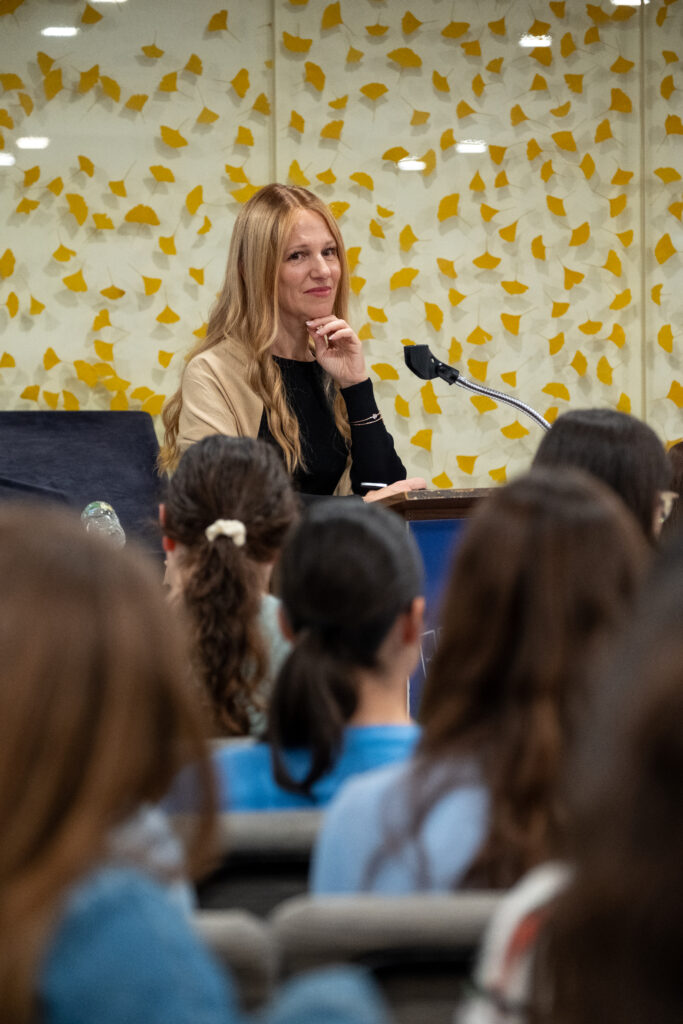
Dr. Raizi Chechik, Pava Center Director, addressing students and guests at Torat Chesed: From Inspiration to Impact
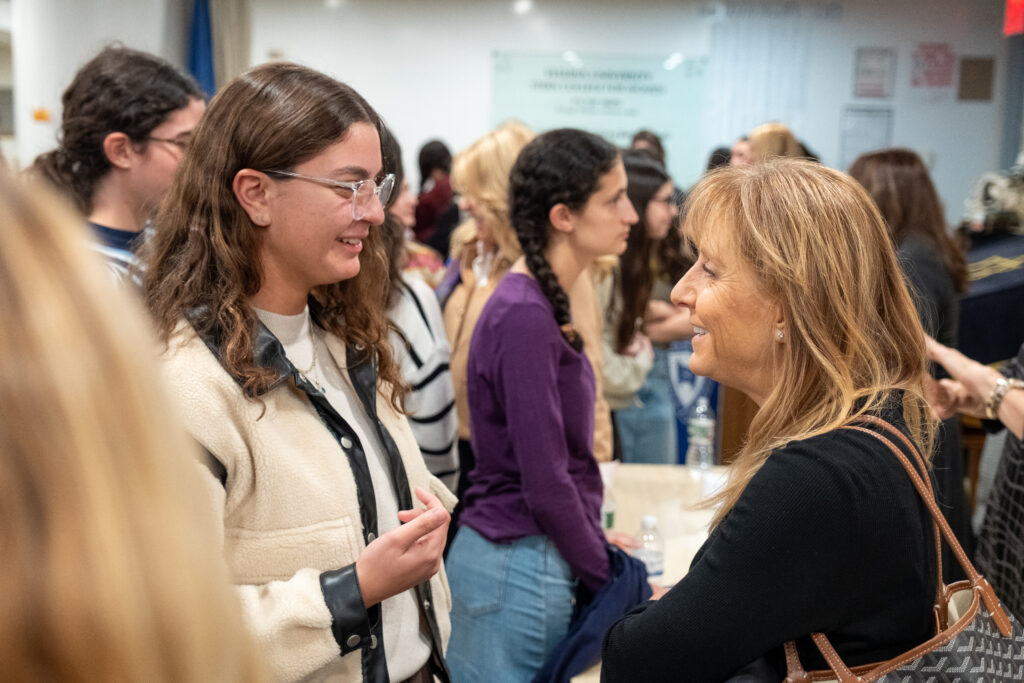
Elana Silber, Executive Director of Sharsheret (right) answering student questions.
On November 3, nearly 100 Stern College students gathered in Yeshiva University’s Beren Campus Beit Midrash for Torat Chesed: From Inspiration to Impact, an evening of conversation with four women whose work has shaped the landscape of Jewish communal life: Dr. Aimee Baron, founder of I Was Supposed to Have a Baby; Chantal Belzberg, founder of OneFamily Fund; Marie Rosenthal, founder of Achoteinu; and Elana Silber, Executive Director of Sharsheret.
Presented by the Pava Center for Women’s Torah Scholarship in partnership with the Office of Torah and Spiritual Life, the program explored how four women transformed their visions into organizations that have impacted thousands of lives, offering students compelling models of leadership rooted in Yeshiva University’s pillar of Torat Chayyim.
Opening the evening, Dr. Raizi Chechik, Director of the Pava Center, situated the conversation within YU’s pillar of Torat Chayyim, which emphasizes the integration of Torah learning and Jewish values into every dimension of lived experience.
Drawing upon a teaching in Sotah 14a, Chechik observed that the Torah begins with an act of kindness, when G-d clothes Adam and Eve, and ends with one, when G-d buries Moshe Rabbeinu. She reflected that the Torah, encompassing a vast body of knowledge, wisdom, and law, is deliberately framed by these acts of chesed, underscoring the responsibility to translate Torah learning into care for others.
Turning to the panelists, she emphasized the significance of the students gathered before them. “As excited as I am to introduce them to you, I am equally excited to introduce you to them,” she said. “There are organizations yet to be born, institutions of Torah and chesed yet to be founded by the exceptional young women sitting here.”
The panelists shared the experiences that inspired their work and the challenges of transforming their visions into enduring communal institutions. Their conversation explored the importance of recognizing unmet needs, responding to personal and communal challenges, and building organizations capable of providing sustained support to thousands of individuals and families.
The evening marked the first joint community initiative of the Pava Center, established through the generosity of Ann and Jeremy Pava to advance women’s Torah scholarship, and the Office of Torah and Spiritual Life. Led by Dean Shoshana Schechter and Rabbi Azi Fine, the Office fosters a vibrant Beit Midrashatmosphere through daily programming, learning opportunities, and personalized spiritual guidance.
“We are grateful to Ann and Jeremy Pava for their vision and generosity, and to the dedicated Stern faculty and staff who make these opportunities possible,” said Dr. Rebecca Cypess, Vice Provost for Undergraduate Education and Dean of Undergraduate Arts and Sciences.
Reflecting on the evening, Pava Scholar Sima Ross (SCW ‘29) shared, “I found it really impactful that these women took a passion and talent that they had and transformed it into a tool to help the broader Jewish community. This panel was a reminder that the strengths aren’t ours to keep; rather, they are presents we are given in order to help the broader world. It left me feeling empowered and is really making me think about what I can do for the Jewish people.”