
Bo: The World Catches Up
The night finally arrived.
After more than two centuries of slavery, the moment of liberation was at hand. For a year, the Mitzrimhad suffered a series of devastating blows. We watched, waited, and prepared. Now it was time to leave.
But there was one final task at hand, one last instruction we were commanded to carry out. We were told to “borrow” gold, silver, and clothing from the Egyptians. We were instructed to ask for them, not to seize them, despite generations of unpaid labor and abuse. Redemption would not arrive through force or vengeance, but through request.
When slavery began, we were cast as a threat to society. Pharaoh could only sell his genocidal policy to the broader public of Mitzrayim by turning us into a symbol of danger. We were portrayed as a fifth column, living apart, culturally insulated, clustered in our own enclave, allegedly poised to align with the enemies of Mitzrayim and displace the native population. We were depicted as a ticking time bomb.
This campaign of fear allowed Pharaoh to demonize us. He turned us into the enemy, the scapegoats for all the anxieties and insecurities of Egyptian society. The Egyptians’ suspicion turned into hostility, and hostility made cruelty acceptable.
By the time of Yetzias Mitzrayim, however, our standing had shifted dramatically. In that climate, it was natural for the Egyptians to offer gifts as we prepared to depart into the desert. Moshe had become a public figure who confronted a tyrant no one else dared to challenge. The plagues struck Mitzrayim while passing over our homes. The devastation of the night of Pesach spared our firstborn entirely. The Egyptians realized with utter certainty that our people were protected by Hashem. That while once they had regarded us as an underclass, they now regarded us with awe and respect.
This reversal was essential for our own national self-awareness. After centuries of degradation and ridicule, we could finally see ourselves as worthy bearers of Hashem’s message to the world. A people once vilified and feared was now recognized as favored and protected.
Slavery began with our being cast as society’s threat. Tragically, it would not be the last time a hostile culture would project its fears onto us and cast us as the cause of its troubles.
Throughout Christian history, we were repeatedly targeted on theological grounds. It was deeply unsettling that the original chosen people had not accepted the new faith. That refusal was portrayed as defiance. We were cast as a cursed people, condemned to live in humiliation so that our suffering could serve as supposed proof of Christian truth.
After the Black Plague ravaged Europe in the fourteenth century, the pattern returned with brutal force. We were accused of poisoning wells. In fifteenth-century Spain, the charge shifted but the logic remained unchanged. We were again falsely accused—this time of secretly undermining Christianity while outwardly conforming to it.
The dynamic that began in Mitzrayim reappeared across generations, in different lands and under different guises, but always driven by the same fear and need to assign blame.
In the modern world, the tone of antisemitism shifted. For centuries, we lived as an underprivileged class, pushed to the margins of society, often confined to ghettos and burdened by restrictions. We held little power or influence. When societies sought a defenseless target, we were an easy choice.
That changed with emancipation. We gradually became equal members of society. Given opportunity, many of us rose to positions of prominence and influence. This transformation unleashed a darker fantasy. No longer despised for weakness, we were now feared for supposed power. We were accused of secretly controlling banks, governments, and later media and culture.
The most infamous embodiment of this fantasy was The Protocols of the Elders of Zion, a crude forgery that peddled the myth of a clandestine Jewish cabal manipulating institutions under the guise of public good. Ironically and tragically, some of the voices repeating these accusations in early twentieth-century Russia were themselves Jews involved in communist movements. They internalized the lie, turning it outward even as it was used against them.
During WWII, Hitler portrayed the conflict as something forced upon him by shadowy Jewish power operating in the West. Nazi aggression was reframed as self-defense. Even the United States, he claimed, had been dragged into the war against its will. President Roosevelt was depicted as a puppet, an instrument of Jewish interests steering America into catastrophe.
According to these baseless claims, we were no longer merely disloyal citizens or economic exploiters. We became the hidden architects of global calamity. World wars themselves were recast as Jewish creations.
This final version of antisemitism is reemerging today—the claim that global conflict itself is driven by Jewish pressure whenever the world confronts evil. As the United States has grown more assertive in confronting Islamist extremism and regimes aligned with it, familiar accusations have resurfaced. Once again, intervention is portrayed not as a response to danger, but as the product of Jewish influence and lobbying.
They are wrong. But in one narrow sense, they stumble onto something true.
We have never drawn foreign nations into war on our behalf. We have never coerced empires into conflict for our interests. What is true is that the battles we fight are often battles against forces that threaten humanity itself. The enemies of our people—and now of the Jewish state—are not merely anti-Jewish. They are forces that seek chaos, cruelty, and destruction on a global scale.
At some point, larger nations recognize this danger. They understand that such threats will not remain contained. And when they act, they do so not because we compel them, but because liberty, freedom, and human dignity require defense.
The Nazis did not threaten us alone. They threatened civilization itself. Western nations eventually grasped this and mobilized—not out of loyalty to us, but out of moral necessity and self-preservation.
Communism, too, was not merely a danger to Jewish survival. It undermined the foundations of a world desperate for stability after two devastating wars. And though we had no army, Jewish refuseniks were among the first to challenge Soviet authority. Years later, when Natan Sharansky crossed the Glienicke Bridge to freedom, the Iron Curtain soon followed.
For decades, we have confronted the scourge of Islamic fundamentalism and the corrupted notion that Hashem desires death and bloodshed. We warned of an aggressive culture that shows little regard for human life or religious freedom. Those warnings were often dismissed.
Now the world is finally absorbing the lesson we learned through pain. The effort to confront this violence is not undertaken in service of the Jewish state. It is undertaken in defense of what is right, what is moral, and what preserves civilization.
These values are not uniquely ours. They are human values. They simply align with Jewish history and with our long struggle against forces that glorify cruelty and sanctify destruction.
The pattern is not Jewish manipulation. It is moral recognition. When we are targeted, it is often because we stand early, visibly, and stubbornly against dangers that will eventually threaten everyone. And when others finally join the fight, it is not because they were coerced, but because they have come to see the truth.
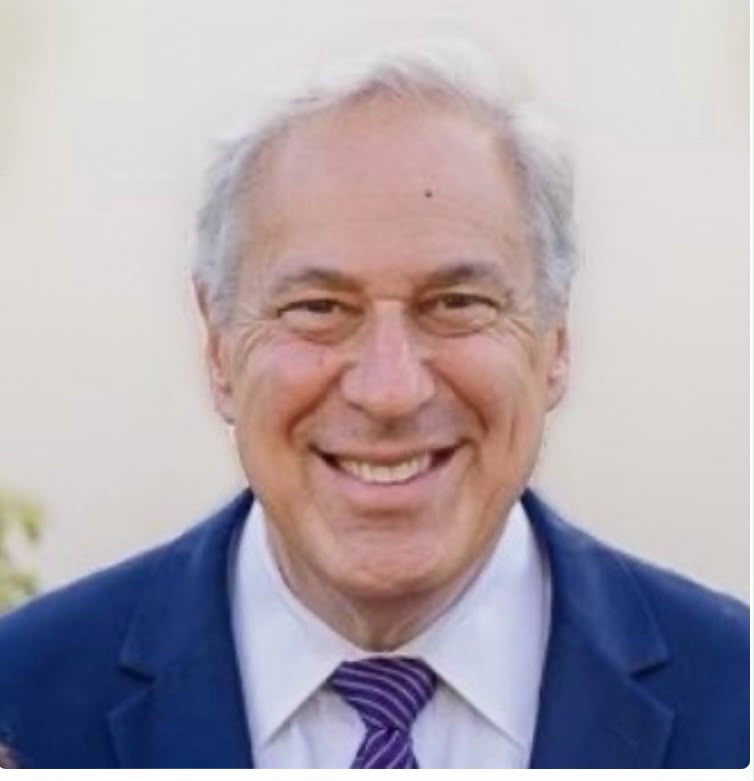
Rabbi Moshe Taragin is a rabbi at Yeshivat Har Etzion, was ordained by Yeshiva University and has an MA in English literature. His books include To Be Holy but Human: Reflections Upon My Rebbe, HaRav Yehuda Amital. mtaraginbooks.com.