
Trump’s Iran Pivot Reminds Jews Of A Hard Truth We Can Never Forget
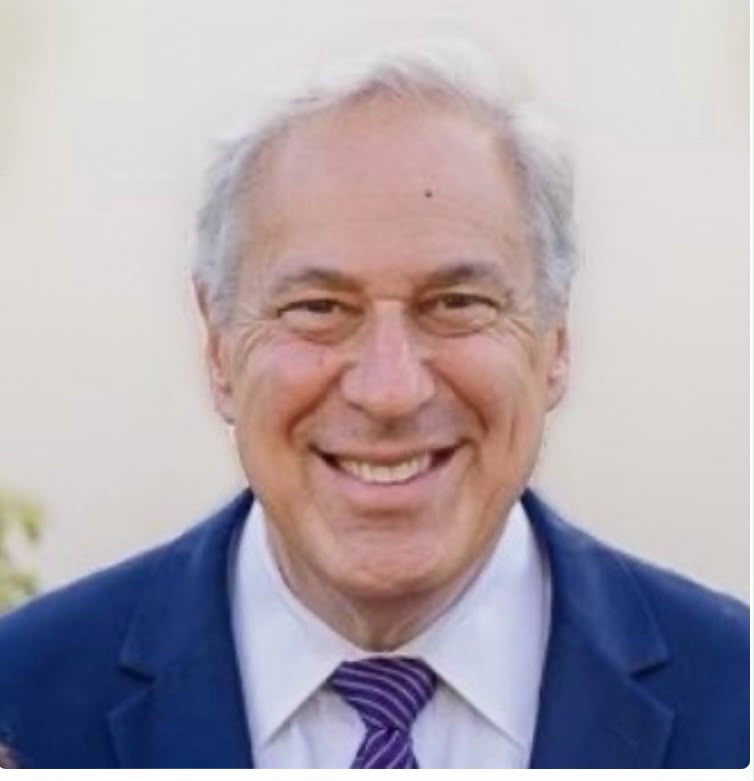
By: Rabbi Efrem Goldberg
As is often the case, many of us are interpreting the latest news about Iran through the prism of our own preconceptions. If you never liked or trusted President Trump, you will likely dismiss anything good he did in the past and see his latest pivot towards Iran and statements about Israel as confirmation that you were right. On the other hand, those who looked up to President Trump are shattered, devastated, and feel violated and betrayed.
But I would humbly submit that both approaches are wrong. Not only in how you viewed President Trump in the past and how you interpret his actions today, but also in how you view his character and his policies today.
President Trump was never perfect or beyond reproach. He has always been a transactional leader with political priorities along with his core responsibility to put America first. Throughout his first term and nearly halfway into his second, this aligned well with Israel’s concerns and Jewish interests. Whatever is happening now with this peace deal does not and should not minimize or erase the good and positive things the president has done for Israel and the Jewish people. But those things never guaranteed that different world circumstances would not change the president’s approach—and shame on anyone who assumed they did.
The mistake was not in being grateful and supportive while our interests were aligned, it was in believing that the alignment was permanent and that the values, devotion, and loyalty would mean always speaking, acting, and giving orders the way we want.
Yes, it’s shocking that the same Trump administration that ordered unprecedented coordinated strikes on Iran, the world’s largest state sponsor of terror, could act in a way that emboldens the Iranian regime like never before.
It is devastating and disappointing that the author of “The Art of the Deal” could be the architect of one of the world’s worst deals in history. It’s painful that the man who called himself the “good friend” of Israel’s Prime Minister has now attacked him publicly with vulgar insults. And seeing how the man who routinely defended the morality of the IDF and went after Ivy League universities for failing to defend Jews now unfairly and unethically accusing Israel of intentionally killing innocent people in Lebanon feels like a punch in the gut.
And this feeling of betrayal from someone who positioned himself as a friend is legitimate, reasonable, and real. But as sudden and surprising as this is, it should be a feeling that is all too familiar to our people by now. Two thousand years should have taught us to be grateful and appreciative and honor those who do good things for us, but also to be wary, skeptical, and cautious in our relationship with them. Above all else, we must never be overly invested in any human being as the arbiter and protector of our destiny.
Long ago Shlomo Hamelech said in Mishlei (21:1) that “Palgei mayim lev melech b’yad Hashem, al kol asher yachpotz yatenu—the heart of a king is like a stream of water in the hand of Hashem, wherever He wishes, He will direct it.” We say every single day in our davening, “Al tivtechu b’nedivim—don’t place your faith and trust in princes and diplomats.”
As believing Jews, we recognize that it is the Master of the Universe who orchestrates domestic, foreign, and all policies and their consequences. To be a student of Torah and Jewish history is to recognize the Almighty’s guiding hand. His hand guided our history and ultimately, it is His hand that guides our destiny, no matter the outcome of an election, even “the most important one of our time.”
Our rabbis tell us (Bamidbar Rabba 18a), “Harbei shluchim l’Makom—Hashem has lots of agents and messengers.” While we must make choices in elections based on our finite and limited perspective, the vision of the Ribbono Shel Olam is limitless. We don’t know why He chooses to employ any particular person or leader in a given situation.
From the depths of October 7 to moments of triumph over enemies, from pushing Iran to the brink to this new potential conciliation deal with an evil regime: this rollercoaster ride feels exhausting. Of course, this exhaustion pales in comparison to the feelings our brothers and sisters in Israel are experiencing with every new development. But while these past three years feel in some way like forever, they are a relatively short amount of time.
We are a people of patience. We are a people of resilience. We are a people of hope. As confusing as the news may be, as frustrating as this war has become, and as uncertain as the end remains, remember that the Jewish people play the long game. We see the long arc of our history. Nobody knows how to wait like the Jews. For two thousand years we have waited without surrendering hope. For two thousand years we concluded our Yom Kippur services and Pesach Seder with the words: “LaShana haba’ah b’Yerushalayim.” Year after year for two thousand years we have always believed, always hoped, and always waited patiently.
When we take out the Torah, we sing: “And it came to pass in the journey of the Ark, that Moses said, The Lord shall arise, and thine enemies shall be scattered, and they that hate thee shall flee before thee.” When the Ark was to set out, Moshe would say, “Advance Hashem! May Your enemies be scattered, and may Your foes flee before You! Rashi comments: “Those who hate Israel hate the One Who spoke and brought the world into being.” Ultimately, the story of the Jewish people is not merely our story. It is Hashem’s story.
When relating to elected leaders, don’t be too high or too low, too optimistic or too pessimistic. Vote, advocate, and express gratitude or concern when appropriate. But as Jews, we know that neither politicians nor governments ultimately direct history, Hashem does. Especially in moments like this, it is critical to remember to always put one’s faith in the One Above.
Rabbi Efrem Goldberg is the Senior Rabbi of the Boca Raton Synagogue (BRS), a rapidly-growing congregation of over 850 families and over 1,000 children in Boca Raton, Florida.