Parenting Advice From Shimon Ben Shetach
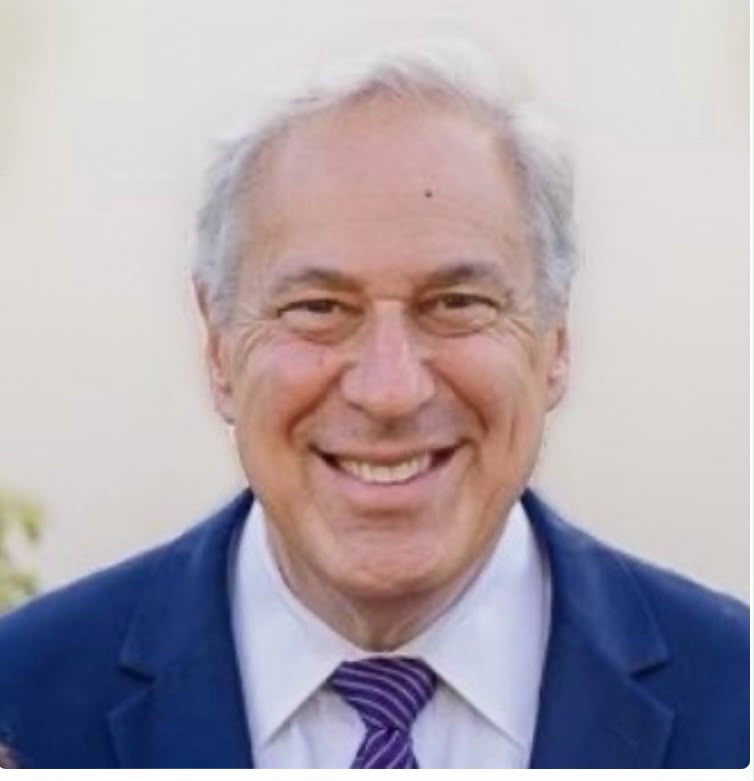
By Yochanan Gordon
This week we observed Tu B’Shevat—a holiday which doesn’t normally get much mention after its actual observance. But the truth is that as endearing as the buksur may be, one can argue that the fruit which serves as the centerpiece of Tu B’Shevat is, in a certain sense, symbolic—particularly for those of us living outside the Land of Israel.
There is a famous story brought in the Gemara in Ta’anis. Rav Yitzchak and Rav Nachman encountered each other and spoke in Torah for a long time. Before parting ways, Rav Nachman asked Rav Yitzchak for a blessing. Rav Yitzchak responded:
Let me offer you a parable. A man was traveling in the desert, hungry, tired, and thirsty, when he came upon a tree whose fruit were sweet, whose shade was pleasant, and with a spring passing underneath it. He ate from its fruit, drank from its water, and sat beneath its shade.
When he was ready to part, he said: “Tree, tree—with what can I bless you? That your fruit should be sweet? Your fruit are already sweet. That your shade should be pleasant? Your shade is already pleasant. That you should have a spring passing beneath you? You already have a stream passing beneath you. Rather, may it be His will that all saplings planted from you should be like you.”
Rav Yitzchak continued: “You ask me for a blessing? With what shall I bless you? With Torah? You already have Torah. With wealth? You already possess wealth. With children? You already have children. Rather, let me bless you that all those who come forth from you should be like you.”
There are many questions and layers of symbolism in this Gemara, but I’m not going to expound upon it here beyond its basic narrative. However, I did want to focus on the tree for a moment.
The Hebrew word for tree is ilan, which has a numerical value of 91—the same numerical value as the combination of Havay-h and Ad-nai. These two Divine Names can be viewed as root and outcome. Havay-h is the transcendent, primary Name of Hashem; Ad-nai represents the po’el yotzei—the manifestation of Hashem’s will in this world, and the way it aligns with its spiritual root.
Interestingly, the Gemara repeats the word ilan twice: “Tree, tree.” In Torah we sometimes find names repeated in this affectionate manner as well—Avraham Avraham, Yaakov Yaakov, Moshe Moshe. The commentators explain that a repeated name corresponds to the person above and the person as expressed below: the essence in its loftiest form, and its manifestation in the physical world.
In that vein, I wanted to treat the two successive appearances of the word ilan as well: ilan relating to Havayah above, and ilan relating to Adnai below.
So if Tu B’Shevat is about fruit, then it must also be about trees—the place from which fruit emerges. In fact, the Gemara says that Tu B’Shevat is the Rosh Hashanah for trees, Rosh Hashanah la’ilanos. While the mitzvah of the day is to eat fruit, the judgment of the day is on the tree—on what kind of fruit it will produce in the coming year.
Yet in the opening Gemara, Rav Yitzchak—seeing that Rav Nachman possessed Torah, wealth, and children, which are symbolized by fruit, shade, and water—ends up blessing him that his saplings, his neti’os—his children—should be like him.
It’s fascinating, because while we are discussing trees and the consistency of what comes out of them, there is a built-in inconsistency within the tree itself. Chazal teach that originally the bark of a tree was meant to taste like its fruit, but it was cursed immediately. Instead of emerging sweet like the fruit it produced, it emerged bland—and only the fruit retained sweetness.
Perhaps this is the spiritual root of the tension that can sometimes exist between parents and children: the constant comparing and contrasting, the painful awareness of similarities and distinctions, and the external competition that emerges when children don’t seem to mirror their parents.
A father whose son was clearly not following in his footsteps once came to the Lubavitcher Rebbe for guidance. The man lamented that he was terrified of the line, “The apple doesn’t fall far from the tree.” It seemed that he was plagued not only with concern for his child, but with questions of honesty and authenticity: if his son was not following in the family tradition, how close was he himself to that tradition?
The Rebbe replied: “The apple doesn’t fall far from the tree in a regular wind. But in a hurricane—in a nor’easter—apples can fall very far from their trees.”
Parenting is a topic of great importance. There are many approaches to raising children, and there are challenges in our postmodern era that previous generations did not confront in quite the same way. Yet what we will see is that there is a timelessness to Torah—values enshrined thousands of years ago remain fresh and relevant even today.
If your parenting experience is one where your children are model kids—good students, helpful and respectful around the home, and adored by their peers—then there is, in a sense, nothing with which to bless you. You are already blessed.
However, throughout history there have been instances—and there continue to be cases—where, from the look of things, children are not following in the footsteps of their forebears. And the age-old question remains: how do we deal with them?
Some people looked to Torah and saw that Avraham had a Yishmael. Sarah expelled him and his mother from the home, and Hashem even told Avraham, “Listen to everything Sarah says,” because she was the greater prophet.
Yitzchak had an Eisav. Although Yitzchak did not expel Eisav, the Torah disqualifies him from being the progeny of Yitzchak’s covenant when it says, “For through Yitzchak shall your offspring be called,” and Chazalexplain: from Yitzchak, but not all of Yitzchak.
But there is an important distinction: Yishmael ultimately is not Jewish, and Eisav—though he is viewed as a rebellious Jew—becomes the father of Western civilization. So if we’re looking for guidance on how to deal with behaviorally challenged Jewish children, those stories may not be the place to begin.
Sadly, for time immemorial, some parents dealing with defiant children removed them from the home in order to protect the innocence of the rest of their family. We cannot judge these parents. It was a crushing nisayon, and they were doing what they believed was right.
After all, a large part of parenting is discipline. When a child acts out, we as parents feel compelled to correct them, to keep them on the straight and narrow. So conventional thinking was: if we discipline a child for minor lapses, then all the more so we must discipline a child who outwardly defies the checks and balances of the familial structure.
However, clearly, in many cases it was not working. Like the frogs in Egypt—the more they were hit, the more they multiplied. The problem metastasized rather than diminished, and a different approach needed to be introduced.
This isn’t an article about Avi Fishoff and Home Sweet Home or “Twisted Parenting,” but I remember attending one of his early events twenty-five years ago, a melaveh malkah from yeshivah, which was my first exposure to what was being presented as a distinct approach to extreme parenting challenges.
Because this article isn’t about parenting modalities, I may lump practitioners together even though their methods and long-term goals are not identical. But within what was once labeled “new age”—associated with figures such as Rav Dovid Trenk, Rabbi Shimon Russell, or Rabbi Daniel Kalish—the central theme was the same: unconditional love toward defiant children.
And having read Raising Royalty by Avi Fishoff, it became clear to me that this approach was not only modern psychology, but something deeply rooted in Torah and endorsed by Gedolei Yisrael throughout the ages.
This emerged most clearly for me when I was exploring Mishnayos Ta’anis and reading the story of Choni HaMe’agel.
The Mishnah relates that there was a drought in Eretz Yisrael, and the people came to Choni HaMe’agel—the tzaddik of the generation and a known miracle worker—to obtain a blessing for rain.
Choni drew a circle in the ground and declared before Hashem: “I am not leaving this circle until You bring an end to this drought.”
At first the rain descended in a trickle. Choni said: “This is not what I asked for.”
Then it became a flash flood. Choni said: “This too is not what I asked for—I asked for rains of blessing.”
Finally, it began raining steadily.
The Mishnah then says that Shimon ben Shetach sent a message to Choni HaMe’agel: “If you were not Choni, I would place you in cherem. But what can I do? For you are like a child who defies his father—and his father has no choice but to give him whatever it is he asks for.”
This line from Shimon ben Shetach set off a lightning bolt in my consciousness.
This is the most authoritative proof-text for the so-called “controversial” approach of unconditional love as a way of dealing with defiant children. Here you have an approach which has been criticized as unconventional—not “what our bubby and zaidy did”—yet it is explicitly alluded to by Shimon ben Shetach himself.
Most of all, we should learn to be proud of our children regardless of how they may seem on the outside. When Yaakov appeared not to recognize Menashe and Ephraim as Yosef brought them forward to receive a blessing, Yosef responded simply: “They are my sons, whom Hashem has given to me.”
May we be blessed to develop eyes that can see the divinity at the core of our children’s souls—and in the world around us. And we will come to realize that the world which has long seemed dark and depraved will turn into a lustrous garden; and the children we once dismissed as spoiled and defiant will emerge as holy, pure, and precious.
The author can be reached at [email protected].