Our Aliyah Journal: An Update During War
By: Rabbi Heshie and Rebbetzin Rookie Billet
By Rabbi Heshie and Rebbetzin Rookie Billet
We wish to thank those of you who have inquired about our life in Israel after making aliyah. We’ve been very busy in the skies and on the road as we traveled throughout the east coast of the U.S. to visit our American families, starting out in Florida, with Avi and Chana’s family, then down to Colombia, South America, which turned out to be the only foreign excursion of this trip.
The idea for this Colombian trip began when we saw a video by Rabbi Yoel Gold, who has published inspirational clips on YouTube. He described his visit to a community in Medellín in the province of Antioquia, where there is an Orthodox Jewish community of some 300 people, all of whom are converts to Judaism. Their rabbi, Rabbi Elad Villegas, was a pastor until some twenty years ago. In his former life, he led a church of 3,000 people until the day he announced that he was leaving the church and converting to Judaism. A few hundred followed his path. Theological questions had bothered him in his Christian belief and practice, and he found Judaism more authentic and consistent. He also had reason to believe that his ancestors had been Spanish Jews who fled during the Inquisition. Some Jews continued to practice Judaism in secret while ostensibly practicing Christianity, which subjected them to the punishments that the Inquisition Ecclesiastical Courts imposed on heretics, which included burning at the stake in autos-da-fé. Jews were under pressure from the Inquisition even in South America until the mid-19th century. Members of the community believe that they are descendants of Anusim, also known as Conversos and Marranos. Recollections of hand-washing rituals, secret candle lightings, blessings before and after eating, and a special oven used only in the Springtime for a week all served as evidence that their families, while renouncing their Judaism in public, secretly practiced many Jewish customs and laws and remained hidden as much as they could.
After making contact with Rabbi Gold, we were helped by Jubie Charnowitz, a woman from Brooklyn who has taken a strong interest in the Medellin community, to arrange a visit so we could meet the Rabbi and Rabbanit and their congregants, give some Torah classes, and help them in any way we could.
We were met at the Medellin airport by Rav Elad, who took us to his home, a farm he acquired years ago, about a thirty-minute drive from the synagogue. The couple also has a small apartment in the shul that they use on Shabbat. Their son is 17 and is a student at the American Yeshiva for boys in Cherry Hill. Their daughter, 15, is a student at a local high school and plans to study in Israel and the U.S. after she graduates. The rabbi got his semicha from the Diaspora Yeshiva in Israel and teaches Torah in Spanish, but all the tefillot are in perfect Hebrew. In the yard of his home, there’s a kosher mikvah that the women use. The rabbi’s wife, Keren, has a certificate as a Madrichat Kallot (Kallah teacher) from Machon Puah, that wonderful agency in Israel that deals with halachos related to fertility and other concerns surrounding taharat ha’mishpacha (family purity). Keren had to take a serious course to qualify, and is also the community’s mikvah lady. The community hopes to eventually acquire a small property near their current rented building where they can build a shul of their own with a mikvah on the premises, classrooms, a social hall for simchos, and other facilities to serve the community.
So many aspects of their observance of halacha are inspirational. There’s a daily Shacharit minyan at 7:00 a.m. with a most respectable attendance. After Shacharit there is a dvar Torah. While we were there, Heshie gave some divrei Torah, which someone translated into Spanish. On Shabbat, the shul was completely filled with men and women at 8 a.m. when services begin. Like Sephardim, every word is said aloud. Communal singing also makes the tefillot especially beautiful. On Friday night, there was a communal dinner. Since there is not yet a kosher catering facility, each family brought their own food in tins that were served on paper plates. Kosher wine is in short supply, so every family makes their own grape juice. The men and women were all dressed in honor of Shabbat, with the women covering their hair with brightly colored scarves that are tied like Israelis. They observe the modest dress code meticulously. While their Hebrew reading is impeccable, very few understand the words of the siddur, which makes their sincerity and kavanah all the more remarkable. Twenty of their young men have served in the IDF as lone soldiers, and the community proudly showed us an article in a local newspaper with photos of the boys in uniform.
The Rabbi took us around to see some of the most important sites in the vicinity of Medellin. One was a fruit market where we tasted many fruits we had never seen before. We made the Shehecheyanu blessing several times and still managed to have a new fruit for Tu B’Shevat, which took place a few days later. A woman from the congregation knocked on our door and delivered a platter with all the Shivat Haminim (seven species from Israel), including pomegranates, figs, dates, olives, grapes, and something made of wheat and barley. She also prepared both white grape juice and red grape juice. We found the text of the Tu B’Shevat Seder on the phone, which includes four cups of wine, just as in the Pesach Seder, starting with white, light pink, dark pink, and red. At least we had two of them and could also mix to create the in-between colors.
Other sites we saw were the towns of Guatapé, Santa Fe, and Comuna 13 or S. Javier. We used the Metro municipal train system, which is super clean, fast, and efficient. We climbed a mountain called the Rock which has 700 steps. The cardiologist and knee surgeon would be proud of their handiwork! Another trip we took was a boat ride around a lake bordering the former estate of the drug cartel leader, Pablo Escobar, who was finally taken out by police some years ago. His demise reduced the gang wars and made Colombia somewhat safer. Though we did not feel unsafe while on these excursions, they told us not to wear jewelry and to keep our phones secured since there is a lot of crime reported in the streets.
Rookie also gave a class to the women. I learned that the women recite Tehillim weekly as a group and on their own, and they would welcome a shiur on Tehillim. I found the women to be engaging and attentive. A lovely young woman who had spent time in the U.S. translated Rookie’s shiur into Spanish quite capably. Rookie could tell because she has been studying Spanish on the Duolingo app since Covid, and though she’s not fluent, her comprehension is good enough to know the translation was great.
We saw evidence of Jewish life in the form of several old mikvaos that were still extant in museums. Two of them were closed when we tried to visit, but one was open and it was quite impressive.
Another deeply moving part of the trip was when several women asked Rookie to pray for them. The hopes these women laid out to Hashem included prayers for marriage partners, for children, for wayward children to return to Judaism, for family members who did not yet convert to join the fold, and prayers to make aliyah. Rookie incorporated their wishes into her daily tefillot.
We returned to Florida to spend Shabbat with Avi and Chana’s family. We always enjoy listening to the shiurim and sermons given by Avi. Activities with the kids included bowling and mini golf. One of the Florida Billet kids, Tammy, plays the violin in a youth orchestra and we were there just at the right time to attend their concert. It was outstanding, and we thoroughly enjoyed it. It never ceases to amaze us that some of our grandchildren are musically-inclined! We gave a Motzaei Shabbat lecture in Avi’s shul about our experiences in Colombia.
After quality time spent with our Florida family, including an outing with cousins Rena and Sol Gelernter and a visit with Mendy and Sheila Weissman, we flew north and headed to Riverdale. Activities with the Exler kids included rock climbing, mini golf, and the Liberty Science Museum. Then we drove to Philly for Shabbat and had Sunday and Memorial Day excursions with Nava and Daniel’s kids to the James Michener Museum that featured a terrific exhibit of the artwork of Eric Carle, most famous for The Very Hungry Caterpillar and other favorites, and later to the Aquarium in Camden, NJ.
Appointments with some of our amazing doctors brought us to Woodmere, where we were hosted by Sima and Jonathan Greenstein when we weren’t running from appointment to appointment. And we were able to participate in our yearly sibling dinner in memory of Rookie’s parents in person this year instead of Zoom. It was a treat to be together and extoll our parents and the impact they had on making us the people we became. We spent Shabbat in Riverdale with Steven and Shira, where the rabbi (our son-in-law) invited us to share our Colombian experiences in the after-kiddush slot.
Our journey continued to Teaneck, where we arrived in time to beat the coming snowstorm. The blizzard materialized as predicted by the weather service and while the kids played in the high drifts, we contributed to the snow removal through our diligent shoveling, which we were eager and willing to do. It was very satisfying work and we managed to dig paths to free our cars out. The snow day with no school was a bonus and we spent quality time with Moshe and Rebecca’s kids. On school days, we took them to the bus in the morning, met them in the afternoon, helped with homework, dinner, and bedtime stories, then we drove back to Philly for a second Shabbat with the Tegers and took a wonderful snowy nature walk in the Tyler Arboretum.
We used the fast day to drive the 100 miles from Philly to Teaneck and to shop at Costco for treats to take back to Israel. Most anything is available in Israel for a price, but the Costco experience makes us feel like the country mouse in the big city. Twenty-foot ceilings piled high with goods, free kosher snacks we couldn’t taste because of the fast of Esther, produce of every season on a cold winter day, and reasonable pricing. Of course, it’s a joy and a privilege to live in Israel. But sometimes you go to “museums” to see beautiful things you cannot bring home and perhaps wouldn’t want to.
Three more lovely grandchildren experiences took place, from planting parsley seeds to be ready in time for the Seder with Talya’s fourth grade SAR class together with Madeline Schmuckler and her grandson Eli, whose other grandmother Beth Hait also joined. Then we read a story to Jack’s kindergarten class at Yavneh, and listened as Benjamin recited Kiddush flawlessly at the erev Shabbat assembly at Yavneh, which included the children all singing the Misheberach for Tzahal, which brought us to tears. The tefillot of Tinokot shel Beit Rabban (small school children) are especially meaningful. The children all know it by heart, which told us they say it all the time. As parents and grandparents of seven soldiers, we appreciated this so much.
We heard the Megillah at Keter Torah, broke the fast at the Billets, enjoyed the Purim seudah at Shira and Steven’s together with the Billets, and took pleasure in the generous hospitality of Debbie and Michael Rapoport, Rebecca’s parents, during our Teaneck stay. We also had lovely times with Michael and Rita Zelkowitz and Evelyn and Sam Gross during our visit.
In the midst of all this precious family time, President Trump gave his State of the Union Address to Congress and only a few days later, the U.S. and Israel attacked Iran on Shabbat, February 28. When we arrived at the Lower Merion Synagogue in Bala Cynwyd on Shabbat, we learned from the security guards that an open war had begun with Iran, with targeted airstrikes against Iran’s supreme leadership and its missile arsenal after weeks of rising tensions. The Supreme Leader, Ali Khamenei, and other close advisors were “taken out” without collateral damage. We are grateful for the support of the U.S. against the existential threats posed by the Iranian regime against Israel and the West, which many pro-Israel journalists have downplayed, calling it Trump’s war or Israel’s war, while we believe that Israel is doing the spade work of putting our boys and arsenal out there in harm’s way to save the world from evil and tyranny. It was revealed that the First Lady of New York City, Rama Duwaji, Mayor Mamdani’s wife, “liked” some posts on social media that said accusations of rape and violence against Israeli women in the October 7th attacks were a hoax. Some Conservative media personalities, who had once supported Israel and were voices of sanity, have come out as anti-Israel and are unrecognizable from their previous rational selves. Indeed, it is a topsy-turvy world we live in.
The last event of our trip was the wedding of our nephew Eli Katz to Sara Goldstein. It was a fantastic simcha for our entire family. Both families were delighted with the match, and we reconnected with many of our American nieces and nephews and their children, and even a few cousins whom we do not see often since we moved to Israel. Our original flight was scheduled for the day after the wedding. Luckily, we had an EL Al flight from Newark to Tel Aviv that we had booked months ago. However, the Monday flight was cancelled on Sunday, but EL AL offered us the equivalent flight on Tuesday, which we quickly accepted. The flight took off on time, and ten hours later, we were on the ground in Tel Aviv, baruch Hashem. The flight was not quite full, and we were perplexed as to why there were so many empty seats with so many people wanting to return to Israel. It felt strange, even after they explained they were most likely no-shows. We know people who are trying to fly to Israel for their children’s wedding who could not procure seats, so any empty seat felt like a missed opportunity for some Israeli citizens who wanted to get home or other travelers who had pressing needs to get to Israel.
It was great to be home. Highway One looked like business as usual, with miles of stalled traffic in the direction of Tel Aviv. But the lanes to Jerusalem were relatively smooth. We brewed some fresh coffee right away and our first order of business was to try to restore our Cellcom Israeli cell service on the new phones we acquired in America. It was an ordeal, but in the end, after several hours, we were successful. After that, we made our way to the supermarket to restock. Our dear friends and neighbors Shulamith and Joel generously provided us with dinner and some staples.
We found out about the untimely petirah of Rav Simcha (Sam) Lauer, z’l, son of Elliot and Marilyn Lauer of Lawrence, whom we have known since our single days. We learned from listening to the recording that Rav Simcha was a young husband and a father of four small children, an extraordinary talmid chacham who wrote several learned sefarim in an engaging, accessible style, geared to both very learned readers and also less experienced learners. A ba’al middot who never let a word of lashon ha’ra pass his lips, a yerei shamayim, and mensch par excellence, Simcha fought a brave battle against a brain tumor for four years. He is a great loss to his family, his talmidim, and all of Klal Yisrael. We visited his wife, Rena, but the rest of the family had taken a flight back to the U.S. to complete the shiva there. Yehi Zichro Baruch and heartfelt wishes for nechamah for the family and all who loved him.
To illustrate how unused to the home front commands and requirements we were upon our return, we actually got dressed for the wedding we were scheduled to attend on Thursday night at Binyanei HaUma, and were about to go to the bus stop when it occurred to us that events were supposed to be for not more than 50 people and how could there be such a small wedding at Binyanei HaUma? We made a few phone calls and sure enough, someone forwarded us a note that the celebration had been postponed. So, we sat down to our own dinner in our kitchen in our formal dress!
Other war-influenced stories include our friend’s children, with two of their own children, who were on vacation in Vietnam before the war started. Their trip ended and of course, there were no EL AL flights from Vietnam to Tel Aviv, so they couldn’t get back home. They flew to Bangkok, rented an Airbnb for a few days, bought food from Chabad, had a minyan if they needed it, and waited till they could get on a flight to Israel. Pretty resourceful! We’ve heard that other Israelis caught in various parts of the world did the same. Others drove to Eilat, went to Taba, then to Sharm-el-Sheikh, and from there to Athens or Istanbul and finally to JFK. We even heard of those going through Amman, Jordan. But people need to get back to work and family, and if it worked, we’re happy for them.
On Shabbat, shuls had reduced crowds and prayed in smaller rooms as they have since the war began. For Shabbat lunch, we were hosted by Esty and Avi Zemelman with a lovely menu and interesting company, including children and grandchildren who were staying with them because of miluim. We’ve been trying to keep up our goal of 10,000 steps a day, and while we don’t complete it every day, we come pretty close.
We are hearing stories of people whose Pesach plans have been cancelled and were forced to make alternate arrangements. We all hope for a decisive victory for the U.S. and Israel in this current war. Bret Stephens called this alliance “genuine coalition partners,” unlike previous allies of America who barely committed ships or armaments at previous efforts to fight the enemies of democracy and Western civilization. Stephens praised the Israelis, the outstanding air force, the soldiers of the IDF, and how tiny Israel, smaller than New Jersey, with a total population of a single American city, has managed to mobilize so much firepower and so much bravery in this battle of good versus evil. He suggested changing the language of many critics of America’s entry into the war, saying that the U.S. hadn’t entered a forever war, but was truly trying to end the forever war with Iran that has been going on since 1979.
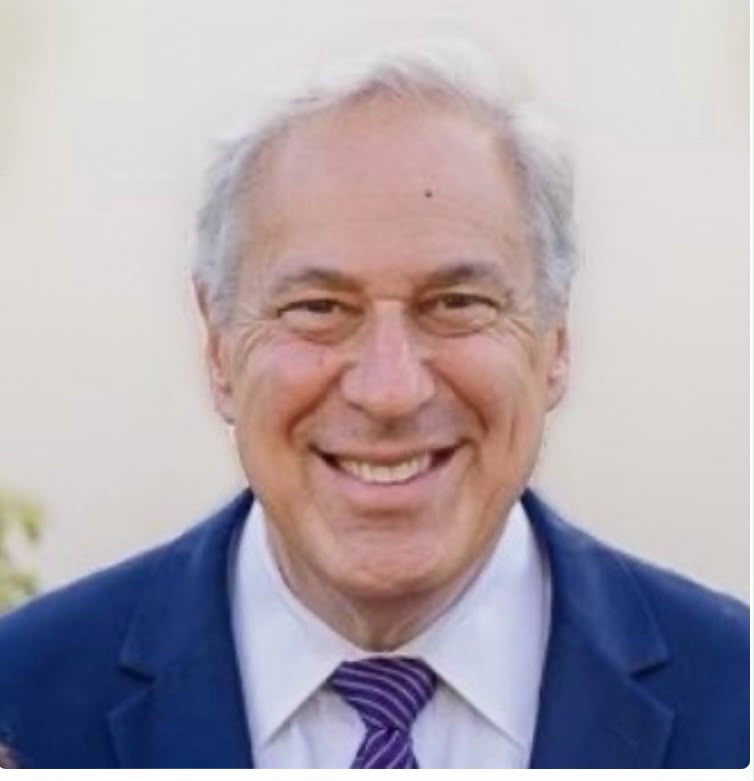
Rabbi Heshie Billet is Rabbi Emeritus of the Young Israel of Woodmere and a past President of the Rabbinical Council of America. Together with his Rebbetzin, they built institutions that shaped Jewish life in the Five Towns of Long Island and beyond. Today, they live in Israel after making aliyah.