




Bikur Cholim: The Healing Visit
Our Sages offer guidelines on bikur cholim, the mitzvah of visiting those who are ill. These include structure for the timing of the visits, where one should sit relative to the ailing person, which medical conditions would preclude a visit, and the spiritual meanings involved in the mitzvah.
Our Sages also provide a formula as to what should be said at those moments, as well as what can be said on Shabbos. Provisions are also given as to when viduy (a confessional) should be encouraged. We are also directed to offer prayers for the recovery or relief of those who are suffering. Halachah and tradition cover this topic quite comprehensively.
Visiting a person who is ailing can be uplifting at times. It can be uplifting to the bedridden patient who sees that he has not been forgotten. And it can be uplifting also to those who take the time to stop by and engage in the mitzvah of “loving others as we love ourselves” since it is a fulfillment of the Jewish value of doing unto others that which we would want for ourselves—namely, acts of loving kindness. The expression gemilus chassadim is an interesting one in that we extoll Hashem daily as the Gomel Chassadim tovim (bestower of good deeds). Yet, the usage of that word gomel actually refers to maturing or to the weaning process. The first appearance of this word in the Torah is when Sarah has weaned her maturing son Yitzchak and no longer needs to nurse him. This sheds some light on the concept of gemilus chassadim: we bestow acts of caring and kindness to someone in the hope that they will not need to remain dependent on us or on others, but will instead regain the strength to be able to thrive again, which includes caring for themselves. Every act of gemilus chassadim aims to help put that person back on their feet, figuratively. In fact, I have often mused that the word gomel is related to the word gamal, which is a camel. Something unique about the camel is that it can swallow and absorb enough water to survive for days, even weeks. Thus, a camel retains the liquid sustenance it needs to continue to function and thrive independently. It can aide others for long intervals as a pack animal because once it has slaked its thirst, it can travel long distances while carrying goods without assistance. When we bestow kindness through a visit to an ill friend or relative, we are giving them hope, encouragement, and inspiration, all of which can help empower one to fight their illness, all of which might boost resilience and resistance to their disease, and all of which can clear their mind of some of its burdens, allowing them to relax with less distress, sadness, anxiety, and in Jewish tradition, we help diminish one sixtieth of their illness and pain.
What are the psychological and spiritual guidelines for bikur cholim? Keeping in mind that just as a doctor commits to do no harm, a visitor must commit to also cause no harm. When leaving the bedside of the stricken person, we want to be sure that they do not regret that we have come. It never helps to ask endless questions. It never helps to ask what medicine they are taking since most of us have no knowledge of what medicines are effective anyway. Commenting about their choice of doctors is often risky. At times, a visitor will offer a backhanded comment such as, “I knew someone who went to him, alav hashalom.” Or: “Shouldn’t you see a bigger specialist?” While well-meaning, these comments generate worry and despair in the patient. That is not being gomel chesed to someone in their position. In general, unless asked for your advice, it’s usually wiser not to offer any to someone already getting professional treatment.
While it’s true that forging a stronger connection with Hashem is a proper step when one is ill, visitors need to tread carefully there too. To say or even insinuate that they brought on their illness because of their transgressions is likely to spawn emotional pain rather than spiritual inspiration to repent. I find that if a person asks to discuss spiritual matters during my visit, I might prompt them to talk about how they are doing spiritually. If they do not seem ashamed or distressed because of any self-perceived misdeeds, it is not my role to convince them that they must have done something wrong for Hashem to have punished them in this way. We do not go into the sickroom as judge or jury and the patient is not on trial in a way which we can discern or know. Their internal process is their own, and between them and Hashem. Unless specifically asked, it is not our place to enter into that private and sacred place with them. It is not advisable to walk in with a stern expression and say, “Have you done cheshbon hanefesh for this?”
Idle talk can at times serve as a distraction from suffering, but not when the chatter leads to useless gossip, irrelevant blithering, bad news, or excessive focus on the personal problems of the visitor. The focus is meant to be on the patient, not on the one who is visiting. When the visitor shares their own struggles and triumphs, they are making themselves the center of attention and that is of little use for the person who may need my caring attention. Similarly, appearing bored and disinterested, as if I’m only there to do the mitzvah, but have more important things on my mind, is not a chesed. The patient has a right to speak, if they choose, and they can kvetch to me if they want. My gift to them is the art of listening. Of course, if they need other things from me, I will try to arrange it for them. It is not helpful to say, “If you need anything, call.” But it can be helpful to say, “These are some things that I want to help out with…”
I am sometimes asked if a person should do bikur cholim with a person they normally don’t get along with or worse, that they suspect does not like them. Our Sages caution against doing so lest one be perceived as gloating over the misfortune of the ill person. It is certainly not helpful to try visiting and to cause such a scene or upset that you have made the patient sadder or more distressed. There are case histories in halachah regarding persons who have said hurtful things to a stricken individual, even in jest. Making a joke to cheer up a sad patient up can be alright; making a joke that pokes fun of their ailment is not alright. Imagine visiting someone with a broken leg and telling him: “You don’t have a leg to stand on” or teasing the person with a broken arm by saying, “Did your wife do that to you?” I have heard these comments, and worse ones. I watch the face of the patient, who fails to see the humor at the moment. Bringing a smile to the face of one in distress can be glorious. Laughing at their expense can be sadistic.
The mitzvah of bikur cholim is a precious one. It is a display of caring and an imitatio Dei, following in the ways of Hashem, who “paid a visit” to Avraham by sending the angels as proxies while Avraham was recovering from his bris milah. So much depends on our intention, the words we choose, our timing, and our consideration for the plight of the one who is ill and suffering. Do it well. Do it with compassion. Be gomel like the gamal—bringing good tidings and letting the good feelings you leave them with last a long time. Otherwise, skating on thin ice will land you in hot water!
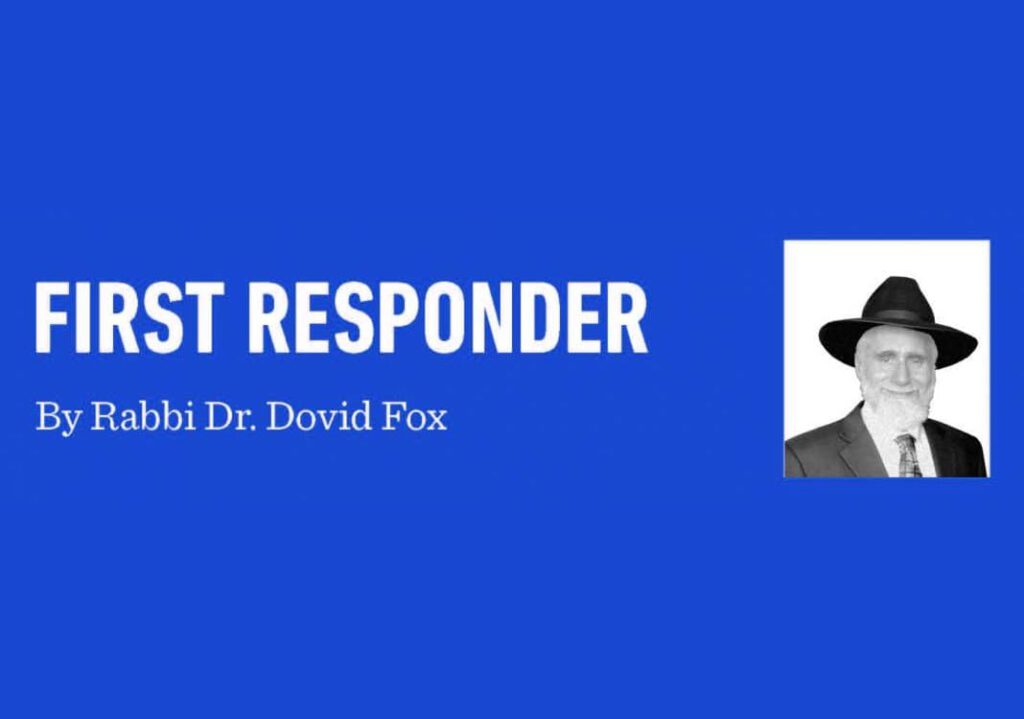
Rabbi Dr. Dovid Fox is a forensic and clinical psychologist, and director of Chai Lifeline Crisis Services. To contact Chai Lifeline’s 24-hour crisis helpline, call 855-3-CRISIS or email [email protected]. Learn more at ChaiLifeline.org/crisis.