
JNS Policy Summit In Jerusalem

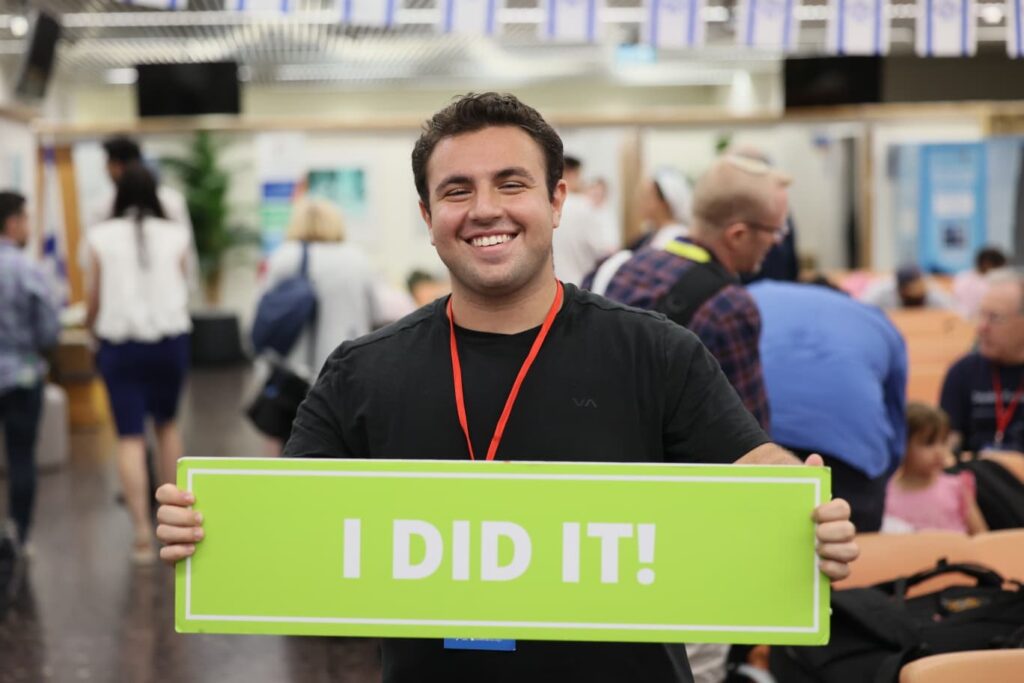
Shalom Maidenbaum, Aharon Schreiber, and Montana Tucker
Photo Credit Iris Maidenbaum
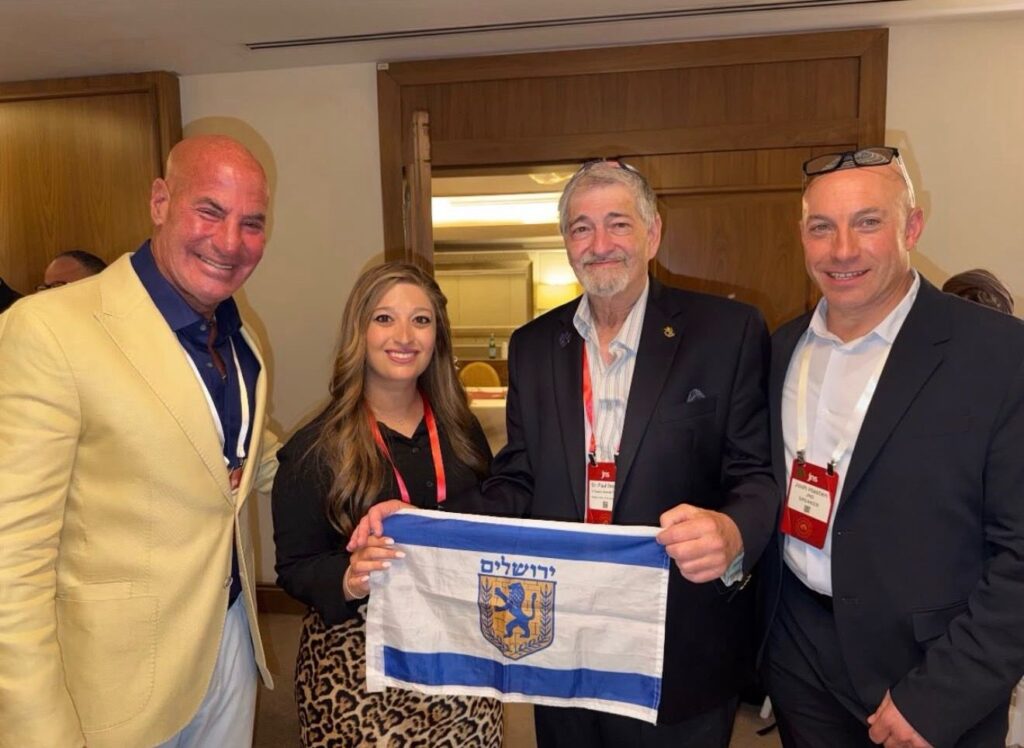
Sid Rosenberg, Dr. Paul Brody and Limor Oratz, and Josh Hasten JNS Podcaster
Photo Credit Paul Brody
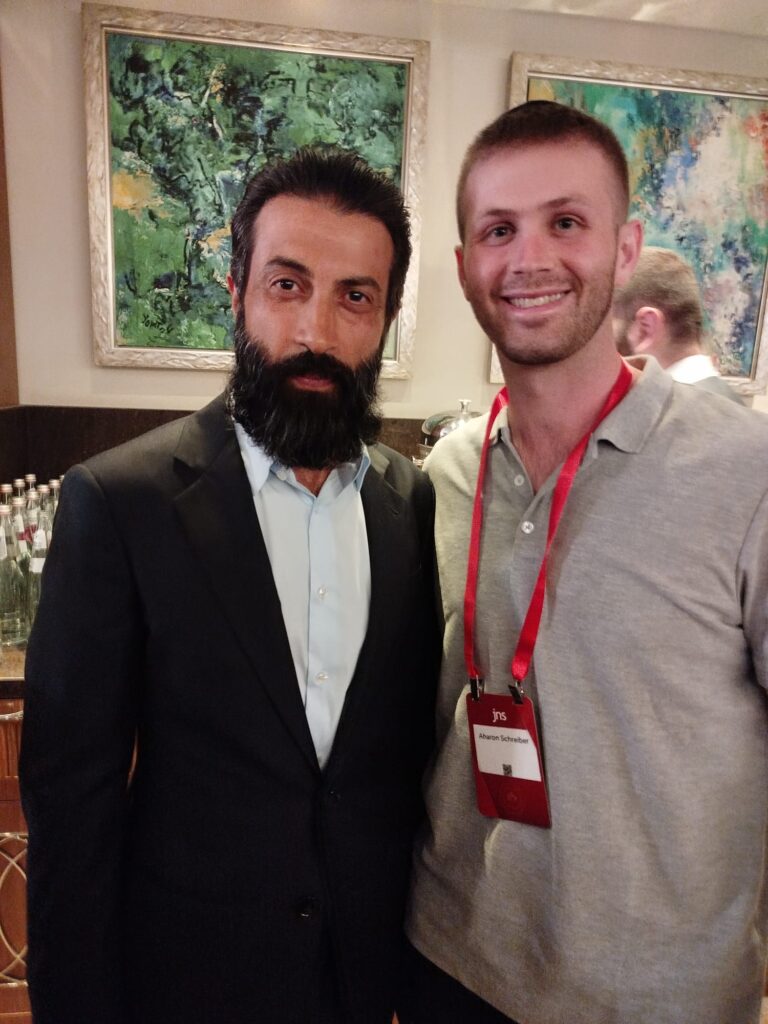
Mosab Hassan Yousef, the “Green Prince,” and eldest son of Hamas cofounder Hassan Yousef with Aharon Schreiber
Photo Credit Shalom Maidenbaum
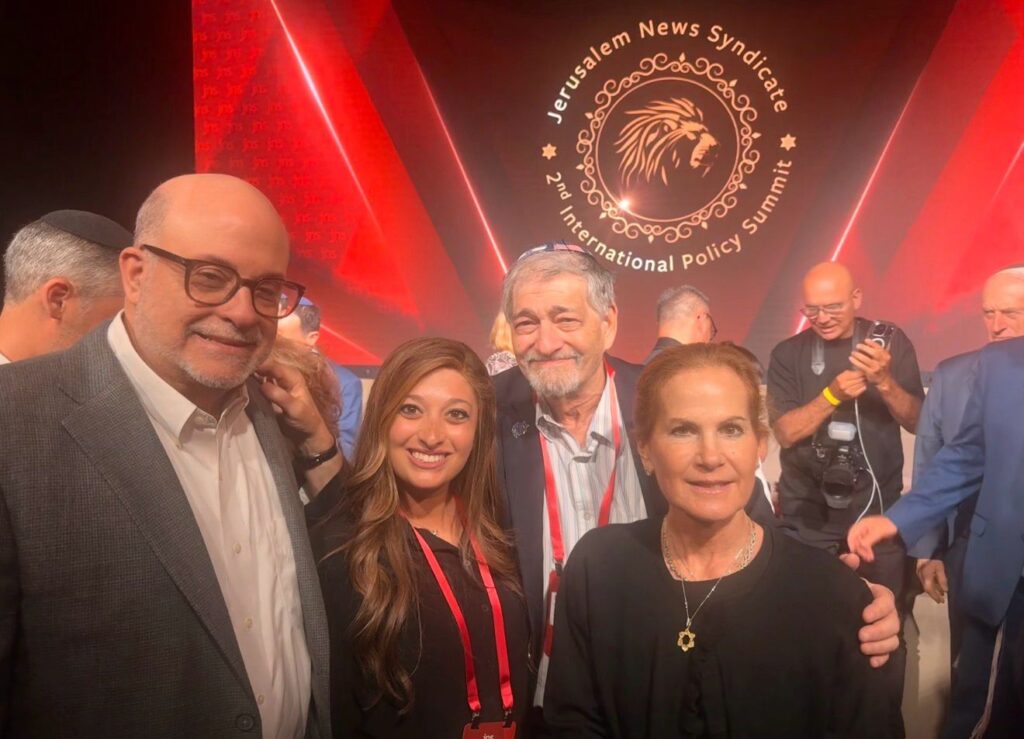
Mark Levin with Dr. Paul Brody and Limor Oratz
Credit Paul Brody
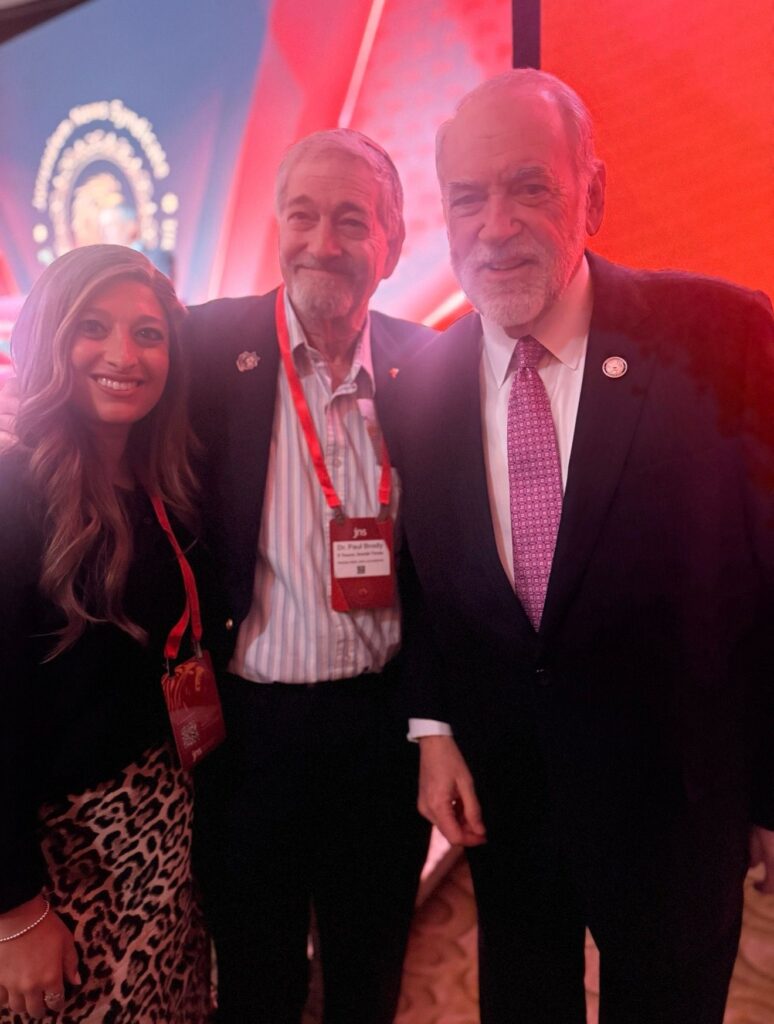
Limor Oratz and Dr. Paul Brody with Ambassador Mike Huckabee
Credit Paul Brody
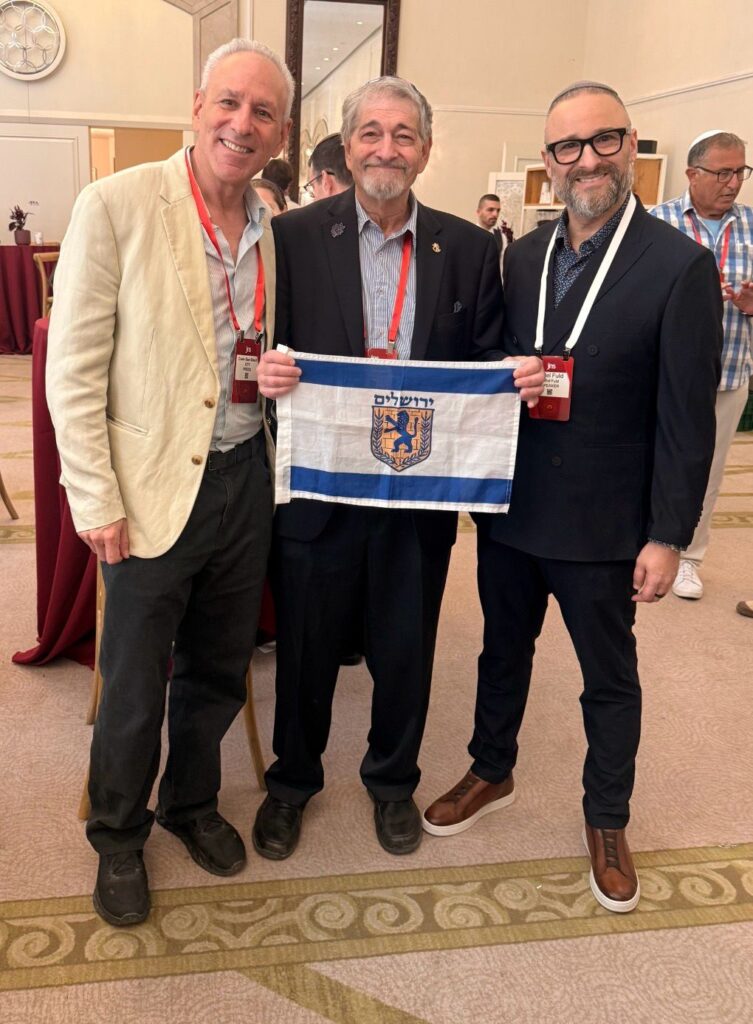
Dr. Paul Brody President ZOA Long Island & Queens, flanked by ILTV’s Calev Ben David, one of I 24 TV’s original broadcasters and Hillel Fuld, tech columnist and Israel advocate, Brother of slain Ari Fuld.
Credit Paul Brody
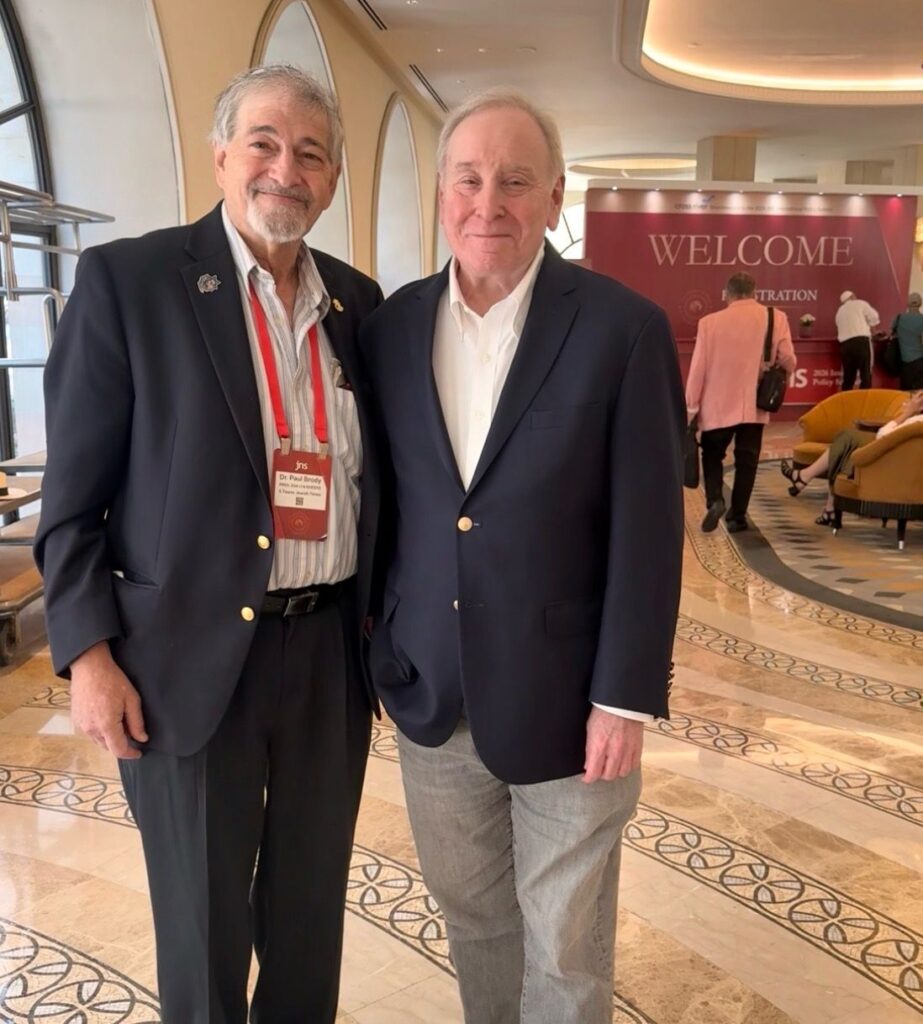
(L-R) Dr. Paul Brody, ZOA President Long Island & Queens with Jonathan Tobin, Editor-in-Chief, JNS, in the lobby of the Jerusalem Waldorf-Astoria, site of the JNS 2026 International Policy Summit, June 21-23, 2026.
Photo Credit Paul Brody
The second annual JNS International Policy Summit got underway on Sunday in Jerusalem, just days after the United States signed a memorandum of understanding with Iran.
The three-day conference, which took place at the Waldorf Astoria in Jerusalem, included keynote addresses by top Israeli government leaders, including Prime Minister Benjamin Netanyahu, President Isaac Herzog, and Foreign Minister Gideon Sa’ar, alongside U.S. Ambassador to Israel Mike Huckabee, Fox News host Mark Levin, and the head of the World Jewish Congress–Israel Region, Sylvan Adams.
“Israel continued to manage hostilities with Hamas, Hezbollah, and Iran. Diplomatic relations and the future of the U.S.-Israel relationship were constantly being tested. Antisemitism was rising dramatically. And yet Israel’s economy was strong, and the Jewish state was emerging as a regional superpower,” said JNS CEO Alex Traiman.
“This second JNS International Policy Summit gathered over 200 security experts, politicians, diplomats, legal scholars, policy experts, journalists, and influencers to discuss the most important issues facing Israel and the Jewish people. It was among the largest gatherings in Israel that year, and one of the most important. This summit positions JNS at the center of the pro-Israel ecosystem and as a key platform for establishing policy, in addition to its critical role in setting Israel’s narrative in mainstream media.”
The conference included addresses and panels on U.S.-Israel relations, the war with Iran, Israel’s military, diplomatic and legal battles, the wave of global antisemitism in the wake of the Oct. 7, 2023, Hamas massacre, as well as the Jewish state’s relations with the Christian world.
The 2026 JNS International Policy Summit, which was preceded by a weekend VIP “Shabbaton” gathering, came one year after the inaugural JNS Summit held in Jerusalem. (JNS)
{JNS Summit Tackles Uncertainty In U.S.-Israel Ties
By Canaan Lidor
Amid great hopes and deep concern for the future of U.S.-Israeli relations, about a thousand people convened on Sunday in Jerusalem for the second annual JNS International Policy Summit, whose opening session spoke of “a new era” in that relationship.
U.S. Ambassador to Israel Mike Huckabee acknowledged the concerns in his address at the conference, following critical remarks by President Donald Trump and Vice President JD Vance on Israel’s handling of Lebanon’s Hezbollah terrorist organization and disagreements regarding the U.S.-Iran Memorandum of Understanding.
There is “a high level of anxiety about the relationship between the United States and Israel,” Huckabee said, but there is “an unbreakable bond” between the two nations, he added, noting that Trump has said this repeatedly.
Huckabee received two standing ovations from an audience that another panelist, Knesset member Ohad Tal of the Religious Zionism Party, said was “thirsty” for his words of deep friendship. Still, the conference also reflected the confusion and concerns that its participants felt, along with countless others who hold the U.S.-Israel alliance dear.
JNS Editor-in-Chief Jonathan Tobin opened the panel as part of the three-day conference, with a succinct question to three panelists specifically about the U.S.-Israeli partnership: “What is going on?”
The question reflected the confusion felt by many after Trump and Vance appeared to dismiss and disparage Israel, mere weeks after the countries’ joint military operation in Iran, which Trump halted last month, appeared to take the partnership to unprecedented heights.
Sylvan Adams, president of the World Jewish Congress-Israel, noted the contrast between Trump’s initial rhetoric about Iran and the U.S.-Israel partnership, and his dismissive language toward Israel in recent weeks.
Adams posited that the Memorandum of Understanding with Iran, which opens the door to releasing hundreds of billions of dollars to Iran in exchange for the opening of the Straits of Hormuz, is a “play for time,” which will end with the resumption of a U.S. attack on Iran with the goal of regime change.
“Despite the MoU, I trust the president. He didn’t lose his wits and courage to a bunch of Iranian pipsqueaks,” Adams said, adding, “President Trump is not a frayer,” Yiddish for “sucker.” Trump is merely “buying time ahead of the midterm elections” and the 250th anniversary celebrations, he said.
Adams related to the dismissive language that Trump and Vance used in reference to Israel, which Trump said may be replaced as the preferred partner for dealing with Hezbollah in Lebanon. With the midterms in sight, “Yelling and taunting Bibi may be popular in an increasingly isolationist America,” Adams, a dual citizen of Canada and Israel, said.
Malcolm Hoenlein, executive vice chairman emeritus of the Conference of Presidents of Major American Jewish Organizations, told JNS that, regardless of what becomes of the MoU, the enemies of Israel and the U.S. “see a breach right now.”
The U.S.-Israel relationship, he said, “will remain strong. But I worry about the perception of the leaders in the region who will look at this, and I don’t know if they would commit to the Abraham Accords today,” Hoenlein said. “My fear is that they won’t see the U.S.-Israel relationship as solid,” he said of Middle Eastern countries, “and that they won’t think they will get rewarded by coming closer to Israel in terms of American policy, and won’t view this as a priority.”
Hoenlein, a veteran Jewish community leader who speaks regularly with world leaders, including in the Middle East, said he does not believe that the Iranian opposition is in a position to stage a significant revolution. The Iranian regime is “remarkably resilient,” he said.
Panelist Amiad Cohen, founder and CEO of the Herut Center for Israeli Liberty, declared pessimistically that the Muslim Brotherhood is increasing its political clout in the U.S. in ways that will impact the alliance, and Israel needs to find new partnerships in response.
“We need to diversify our alliances if we want to act as an independent nation, and as an independent ally, if we want to really be independent, and to really be an ally,” he said.
Tal, the chair of the Knesset Israel-U.S. Relations Caucus, expressed gratitude to Trump, but expressed doubt that his successors will be as friendly to Israel, even considering the recent discord.
“No other president ever stood with Israel as Trump did. We need to remember that. But we need to prepare for a day that another president will most likely not be as friendly and supportive as Trump is, so we need to be much more independent, forge new alliances, and prepare for future alliances,” Tal said.
David Wurmser, an American foreign policy specialist and a fellow at the Jerusalem Center for Security and Foreign Affairs think tank, described changing attitudes toward Israel in the U.S. as a shift that is more connected to internal American processes than any actions undertaken by Israel. “This debate over Israel isn’t really about Israel, but about the soul of America as a civilization,” he said.
At the conference, the CEO and Jerusalem bureau chief of JNS, Alex Traiman, announced a rebrand and name change for the news site, which has been renamed the Jerusalem News Syndicate, with “Jerusalem” replacing “Jewish.”
Support for Israel among Christians in the U.S., in Latin America, and elsewhere around the world “is being undermined, in large part due to disinformation and misreporting in mainstream media,” Traiman said. “The word of G-d is truth. And among the vast sea of lies and disinformation, JNS strives to be a voice of truth.”
JNS Publisher Joshua Katzen jokingly thanked Trump’s unpredictable actions for increasing demand for JNS commentary. The American president “has been our No. 1 recruiter in the atmosphere of confusion and uncertainty. There are 1,000 people who have come here to make sense of it,” he said, triggering laughter.
Commenting on the MoU with Iran, he said that without good intentions, the agreements are not worth the paper they’re written on.
“This MoU was signed electronically,” Katzen noted. (JNS)
Canaan Lidor is an experienced journalist and international correspondent for JNS, covering Europe, Australia and global Jewish affairs
{Netanyahu: Iran Campaign Laid The Groundwork For Fall Of The Regime
The joint U.S.-Israeli campaign against the Islamic Republic has created the conditions for the regime to fall, Israeli Prime Minister Benjamin Netanyahu said on Sunday night, addressing the 2026 JNS International Policy Summit at Jerusalem’s Waldorf Astoria.
“Together with our American friends, the American air force, the American military, we carried out the largest airstrike in our history,” Netanyahu said.
“Had we not acted in ‘Operation Rising Lion’ and in ‘Operation Roaring Lion,’ Iran would have had atomic bombs, and … they would have used them,” he said. “That’s what we prevented.”
In “Operation Roaring Lion,” the United States and Israel launched a massive surprise attack against the Islamic regime between Feb. 28-June 17, decimating its leadership, including its Supreme Leader Ali Khamenei, wiping out its remaining ballistic missile capability, sinking its navy and severely degrading its military-industrial base.
It followed “Operation Rising Lion,” a 12-day air campaign conducted mainly by Israel between June 13-24, 2025, which eliminated 30 senior Iranian military leaders, Islamic Revolutionary Guard Corps commanders, and nuclear scientists within the first four minutes. The operation gained key U.S. military support when, on June 22, seven B-2 bombers struck three Iranian nuclear facilities.
“We destroyed Iran’s nuclear infrastructure. We knocked out 20 of their top nuclear scientists, 12 in ‘Rising Lion,’ another eight in ‘Roaring Lion.’ And when you take out the scientists, it’s very hard to make a nuclear weapon, exceedingly hard,” Netanyahu said.
The cumulative damage inflicted on the regime’s economy is “counted in hundreds and hundreds of billions of dollars, and it will take them a long time to recover,” he added.
“They may not recover, because once you deal these blows and once the rift between the regime and the people is so deep, you cannot tell when such a regime will fall,” he said.
The prime minister added, “I think we created the conditions for its future fall; that is what will be the real triumph, when the Iranian people take their own destiny in their hands, and they knock out this brutal regime that is terrorizing them and terrorizing the rest of the world.”
The Israeli premier highlighted other achievements under his leadership as the Jewish state clawed its way back from the Oct. 7, 2023, Hamas-led attack on southern Israel to deliver blow after blow against its enemies.
It is not just the Iranian regime, but its terror axis throughout the Middle East that Israel has thrown back, Netanyahu said. “We took out [Hamas leader Yahya] Sinwar. We took out [Hamas Political Bureau Chairman Ismail] Haniyeh. We took out [Hamas military commander Mohammed] Deif. We took out tens of thousands of terrorists. And despite those who said it couldn’t be done, we brought back to Israel every single hostage.”
Netanyahu highlighted Israel’s accomplishments in Lebanon, referring to what has become known as “Operation Grim Beeper,” in which Israel booby-trapped thousands of pagers and hundreds of walkie-talkies used by the terror group Hezbollah.
“We decimated Hezbollah’s military machine. We destroyed over 90% of the 150,000 rockets and missiles that Hezbollah amassed against us,” he said, also praising Israel’s targeted assassination of Hezbollah leader Hassan Nasrallah.
Israel has now established security zones on multiple fronts, including in Lebanon, he said.
The Israel Defense Forces will remain in Southern Lebanon “as long as we need to protect our people” from Iranian-backed Hezbollah terrorists, he stressed. “The reason is perfectly understood; no country would be asked to do otherwise.”
“Now, you imagine the United States, across the border, you have thousands, an army of thousands of terrorists who pellet your cities and your towns with rockets and ballistic missiles and killer drones. They kill your soldiers, they kill your citizens, they kill your children. And they threaten them every day. Well, what would America do?
“Would it say, ‘Well, there’s nothing we can do; let’s hold our fire?’ Is that what America would say? No. You know damn well what America would do. It would cross the border, create a security zone, kill the terrorists, and protect its people until the threat is removed,” he said. “That’s exactly what we are doing.”
Regarding the care Israel takes when targeting terrorists hiding among civilian populations, Netanyahu said “no country” would do a better job in Lebanon. The ratio of terrorists to noncombatants slain in the war has been as low as 5 to 1, despite Hezbollah’s use of human shields, which is “unheard of, because no army goes to such lengths as the Israeli army, who target terrorists and minimizes civilian casualties. We should be commended for it.”
But Israel’s greatest achievement, according to Netanyahu, was “to break through the barrier of fear.” Israel overcame the longstanding belief among naysayers that it was too dangerous to strike inside Iran. Israeli warplanes filled Iran’s skies, hitting missile production sites, terror targets, and nuclear facilities.
“We changed Israel’s security doctrine. We initiate. We attack. We surprise. And we attack those enemies that seek our destruction, that seek to kill us—we attack them before they have a chance to do so,” he said.
Addressing reported disagreements with Washington over his policies on Iran and Lebanon, Netanyahu said he and U.S. President Donald Trump “respect each other’s sovereignty, leadership, and commitment to our people.”
“In the United States, they say that President Trump does everything I ask him to do, and in Israel, they say that I do everything that he wants me to do. Well, neither is true,” Netanyahu said. “We’re leaders of independent and proud countries. We stand for our interests; I stand for the interests of Israel, and for its security. Often we see eye to eye; sometimes we don’t.”
Netanyahu noted that this year marks the 50th anniversary of the 1976 Entebbe Raid, considered the most daring rescue operation in modern history, in which Israeli commandos led by Netanyahu’s elder brother, Lt. Col. Yonatan Netanyahu, rescued Israeli hostages in Uganda. Netanyahu’s brother was killed during the raid.
Netanyahu had come directly to the JNS conference from Mount Herzl, where he had been visiting his brother’s grave.
“Entebbe showed that a free people, if they mobilize their courage and muster their strength and their will, they could overcome the worst tyrannies,” the prime minister said. (JNS) n
See full coverage at JNS.org/jns-international-policy-summit.