
The Foundations Of A Torah Life: Derech Eretz And Character Development
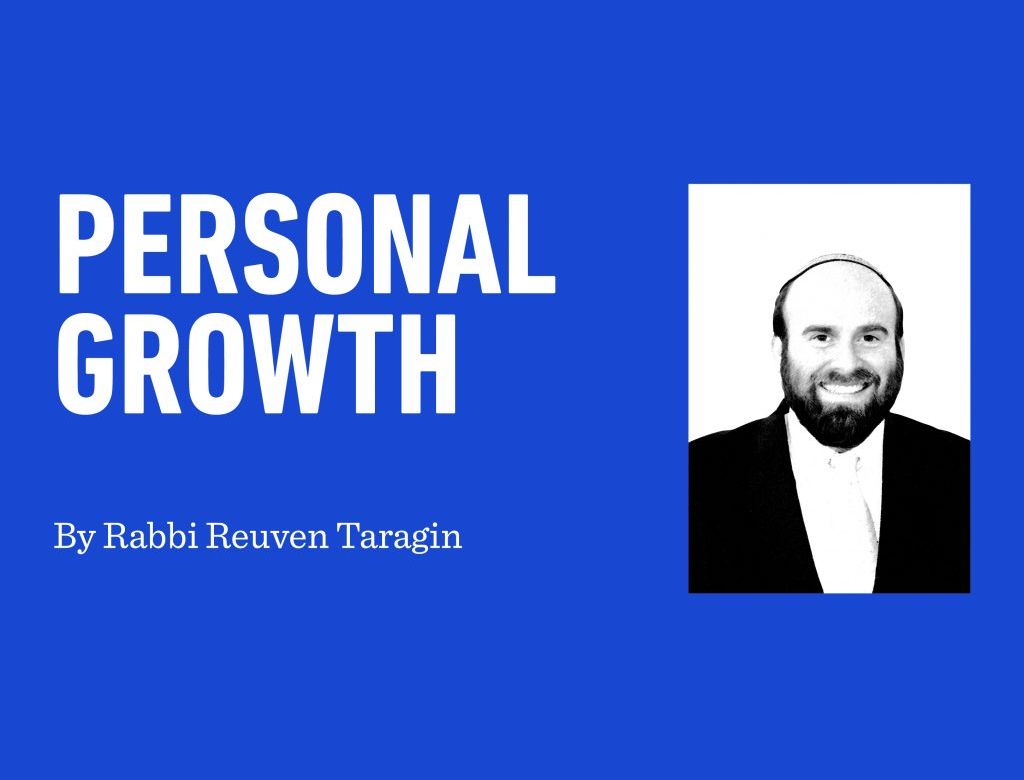
By: Rav Reuven Taragin
Although Sefer Bereishit contains only three mitzvot, it is included in the Torah to convey foundational values regarding Divine interaction with the world and appropriate human conduct.
Bereishit is also referred to as Sefer Yesharim (A’Z 25a) because it details the lives of the Avot, who exemplified integrity and honesty. Though the Avot observed the mitzvot, the Torah emphasizes their moral and ethical conduct.
The Netziv (H”D, Intro. To Ber.) elaborates that since Hashem is straight, “He does not tolerate those who are crooked, even if they are motivated by noble intentions, because that kind of behavior destroys civilization and the world.” This quality distinguished the Avot. Beyond being tzaddikim, Chassidim, and lovers of Hashem, they were also characterized by integrity and honesty.
Ethics and morals are fundamental to proper human existence. For this reason, the Torah alludes to their significance as early as Parashat Bereishit by describing heavenly angels as guarding the “derech” to the tree of life (3:24). Chazal (V’R 9:3) interpret the term derech as “derech eretz,” living in accordance with societal norms, and deduce from this allusion (made 26 generations before the giving of the Torah) that derech eretzprecedes Torah.
This historical sequence is also inherently significant. The Torah references derech eretz prior to the giving of the Torah to indicate that ethical conduct is a prerequisite for a Torah lifestyle. Interpersonal behavior forms the foundation for proper Avodat Hashem.
Personal character development is as fundamental as interpersonal conduct. Beyond practicing good manners, we must cultivate good middot. Alongside improving interactions with others, we must also pay attention to personal emotions and aspirations.
Rav Chaim Vital, the Ari’s principal disciple, explains that the Torah does not enumerate character development as a mitzvah because personal improvement is not merely a mitzvah; it is a prerequisite for Torah life. Physical and personal health are preconditions for spiritual growth.
Rabbi Eliyahu Lopian, the renowned mashgiach, likened this concept to a building’s foundation. While a contractor must provide detailed plans for each room, the foundational strength is assumed, as the building cannot stand without it. Although the foundations are the most critical component, the building plans do not detail them.
In the same way, middot and ongoing character development serve as the foundations of life; the Torah does not explicitly mention them because, clearly, a robust Torah life inherently depends on strong and firm middot.
Extending the building analogy, as additional floors are constructed, the structure becomes increasingly vulnerable if the foundations are weak. Greater height increases weight and pressure, thereby amplifying the risk of collapse when the foundations are insufficient.
This concept aligns with Chazal’s teachings regarding a Torah life that lacks ongoing character development and is marred by behavioral impurities. Chazal (Taan. 7a) make a severe observation: Mitzvotperformed and Torah studied by individuals with corrupt character traits can be self-destructive. Rather than serving as an elixir of life, their Torah may be self-destructive or even an elixir of death.
The Gra considered character development not only foundational but also the ultimate purpose of life: “The purpose of a person’s life is to overcome (negative traits) that he has not yet overcome. Therefore, one should strive continuously to strengthen oneself in this endeavor, because if not, what is the purpose of life?” (Mish. 4:13).
The Baal Shem Tov (Lech Lecha 3) cites Rav Hai Gaon, who similarly asserts: “The main purpose of man’s creation is for him to change his nature and break his naturally imbued bad middot.”
The foundational significance of character development and derech eretz underpins the importance of studying mussar.
Shlomo Hamelech emphasizes this principle in Mishlei. Though Shlomo was renowned for his wisdom, he introduces the sefer by defining its objective as not only the attainment of wisdom, but also the acquisition of mussar, guidance on proper living and self-development.
He underscores this by referencing mussar alongside chochmah (wisdom) four times within the first eight verses, and repeatedly throughout the sefer. Individuals who value wisdom must also recognize the importance of mussar and pursue it concurrently.
Contemporary society often separates wisdom from personal conduct and character. As wisdom and innovation are frequently valued and rewarded regardless of character, many individuals prioritize study and invention while neglecting personal growth. May our appreciation for derech eretz and character development motivate us to pursue them alongside wisdom.
Rav Reuven Taragin is the Dean of Overseas Students at Yeshivat Hakotel and the Educational Director of World Mizrachi and the RZA. His new book, Essentials of Judaism, is available at RabbiReuvenTaragin.com.