
Rosh Hashanah: In It Together
By: Rabbi Judah Mischel
Rebbe Pinchas Menachem Alter, zy’a, the Pnei Menachem of Ger (d. 1996), was widely respected as a wise and unassuming tzaddik and was the beloved rosh yeshivah of Yeshivas Sefas Emes. One year just before the Yamim Noraim, the Pnei Menachem was learning with his student and chavrusa, Reb Yitzchak Menachem Weinberg, shlit”a, (the current Tolna Rebbe of Jerusalem), when the latter shared the following vort from the Yismach Yisrael of Alexander:
“In the Musaf davening of Yom Kippur, we describe how the Kohen Gadol rejoiced when mixing the blood of his personal offering together with the blood offered as part of the communal sacrifice on behalf of Klal Yisrael. Until that point, the Kohen Gadol, in his exalted and singular role, was separate from the rest of the community. More than a technical aspect of the avodah, the mixing of the blood together united him with the rest of the tzibbur, and this was a cause for rejoicing.”
The Pnei Menachem took great pleasure in this teaching.
Soon thereafter, following the passing of his half-brother, the Pnei Menachem inherited the role of Gerrer Rebbe and accepted the leadership and responsibility of the movement. As a Rebbe to thousands of chassidim, Reb Pinchas Menachem assumed a very public role. On the first Rosh Hashanah of his reign, he confided in his student, who by then had become the Tolna Rebbe, that the trappings of leadership and the perceived distance from the chassidim that came along with his new status were a challenge: “Der vort badert mir zayer—The vort you shared with me (regarding the mixing of sacrificial blood) is bothering me greatly.”
The Pnei Menachem was experiencing the same sense of isolation that the Kohen Gadol felt prior to performing the avodah of mixing the different bloods of the Korbanos. Seeking comfort, after yom tov, he asked his old chavrusa and talmid to accompany him on a late-night journey to Kever Rachel.
As they approached the kever, Reb Pinchas Menachem was lost in thought and prayer and did not notice the signs indicating that the regular entrance was closed due to renovations. Suddenly, he was accosted by a security guard, shouting, “Mah atah choshev? What are you thinking? That you’re different from everyone else here? Atah kmo kulam! You’re like everyone else here! Go around to the other entrance around the back, like every other visitor!”
The Rebbe was taken aback, apologized for his oversight, and thanked the guard with a smile. “Yes, it is true, ani kmo kulam. I am just like everyone else,” he said, and joyfully entered Kever Rachel through the back entrance together with the rest of the tzibbur.
nnn
Sefer Melachim describes in great detail the kindnesses performed by the Shunamite woman in hosting and providing for the Prophet Elisha and his student, Gehazi. Wanting to express his appreciation, Elisha inquires if there is anything he can do for her: “Hayesh l’daber lach el Hamelech—Can we speak on your behalf to the king?” Declining his offer, the hostess answers cryptically: “Betoch ami ani yoshevet—I dwell among my people.” (Melachim 2, 4:13)
The Zohar HaKadosh provides context for the interaction: “Hahu yoma, Yom Tov d’Rosh Hashanah hava—That day was the holiday of Rosh Hashanah” (Zohar 2:44:1). Elisha was not simply asking if the Isha Shunamit needed some protektzia, or wanted him to pull some strings with the authorities on her behalf. Being the start of a new year, Elisha HaNavi was offering to intercede and daven on her behalf before Hashem, The King of Kings, who is coronated each year on Rosh Hashanah.
“Betoch ami ani yoshevet—I dwell among my people….”
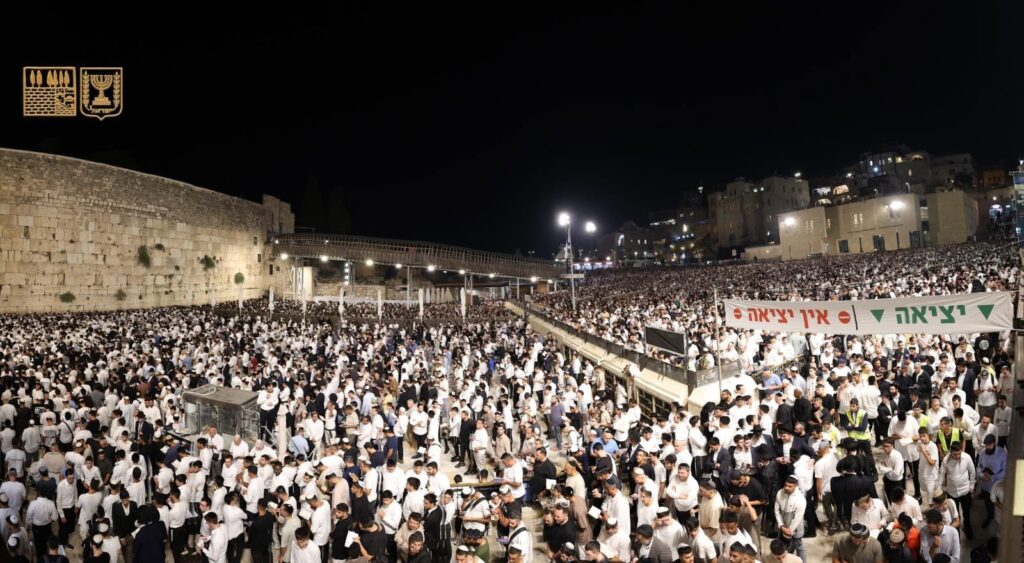
The answer of the Isha Shunamit reveals a fundamental insight into the nature of Rosh Hashanah, and is an important reminder for this auspicious day. Each and every one of us has the privilege and opportunity to address the Ribbono Shel Olam, to approach the King directly, and to engage Him with our own words. On Rosh Hashanah we are on level ground with all of humanity, dwelling among our people. We stand before Hashem empowered by our connection to the greater tzibbur and the community to which we belong.
This Rosh Hashanah may we strengthen our commitment to each other and awaken a deeper sense of mutual responsibility and connectivity. May we strengthen our dedication to improving the welfare of our brothers and sisters, for indeed, we are all in this together—anachnu kmo kulam. n
Excerpted from Baderech: Along the Path of the Torah, forthcoming (Mosaica Press, Elul 5786).
Rabbi Judah Mischel is Executive Director of Camp HASC, and Mashpiah of OU-NCSY. He is a member of Mizrachi’s Speakers Bureau at www.mizrachi.org/speaker.