
Musings Of A Shliach From Montana
By: Rabbi Chaim Bruk
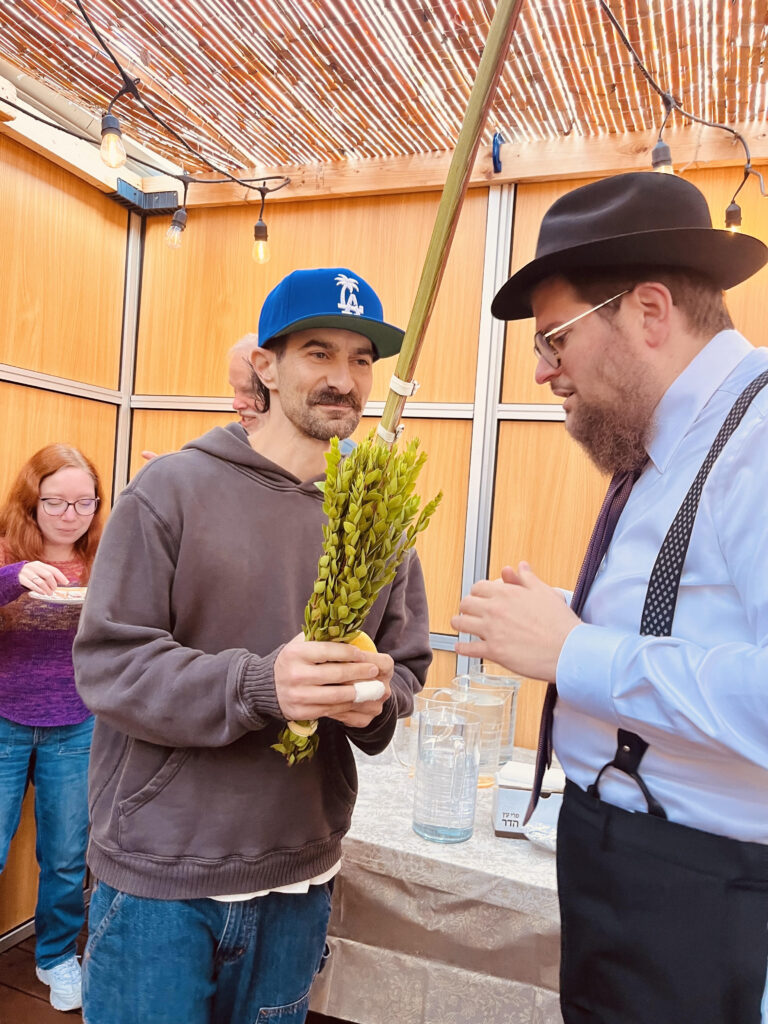
Rabbi Chaim and Jared from Sukkos 5786
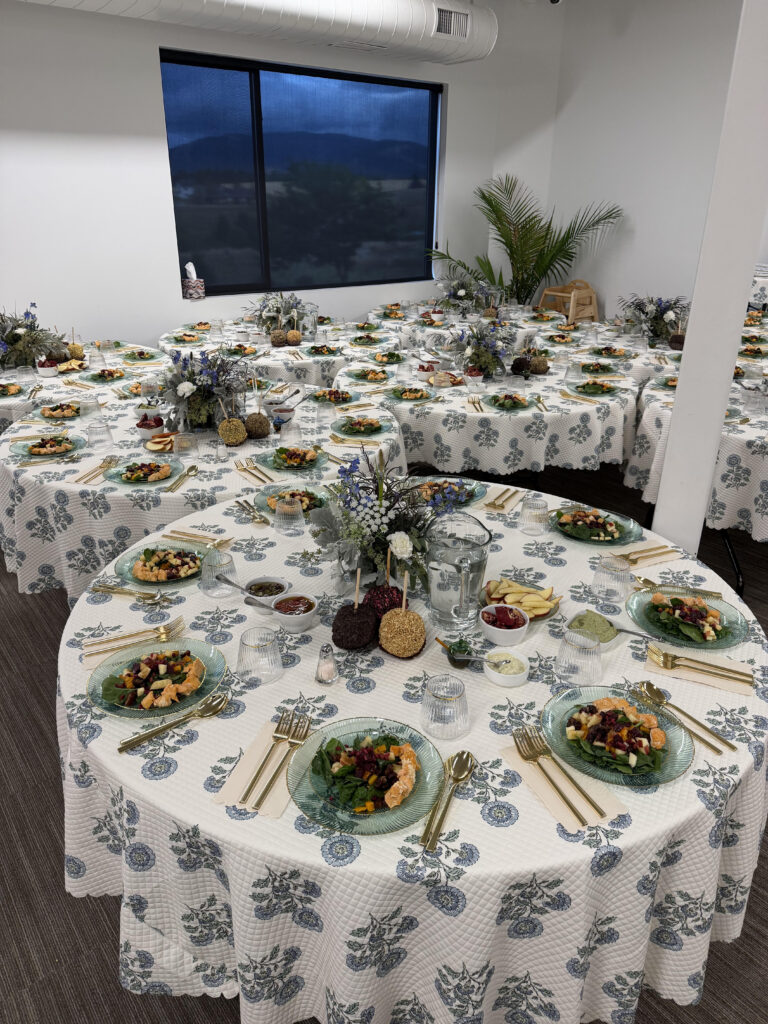
Rosh Hashanah tables being set for more than 90 guests that joined us in Bozeman
What an incredible Rosh Hashanah we had in Bozeman. There were funny moments, such as the young MSU college student who registered and showed up for Rosh Hashanah dinner thinking she was going to a Reform temple, and the moment at Tashlich when two non-Jewish joggers came passing by the creek and when I asked them if they wanted to cast away their sins, one said, “I’ll cast mine while in motion” and the other one said, “Praise Hashem and pass the plate” as he kept going. Then there was the wonderful neshamah who was sitting next to me during dinner and asked during the Grace after Meals, “Who was the Hellenistic government?” I realized he was in the middle of saying V’al Hanissim for Chanukah in English and clearly wasn’t paying attention to my announcement about which inserts to say for Shabbos and Rosh Hashanah.
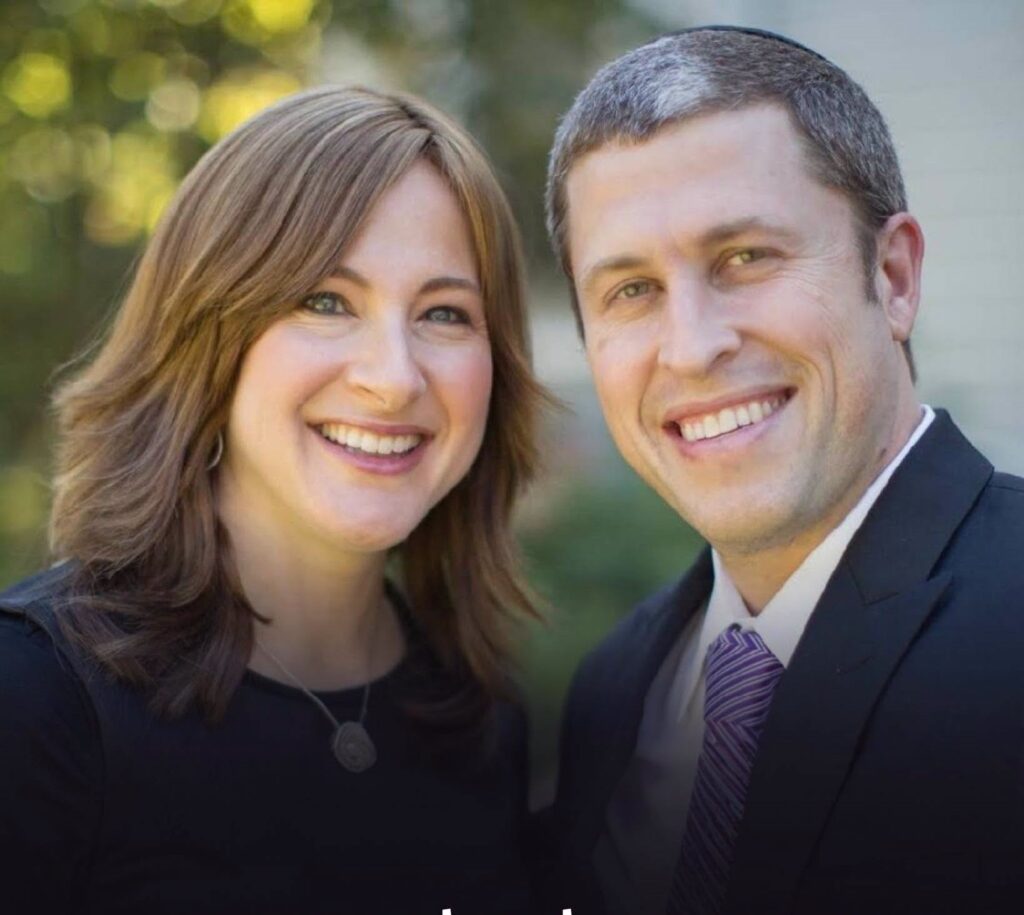
Joking aside, it was a truly uplifting yom tov, as Chavie and I had the zechus to host 160 Jews throughout Rosh Hashanah, including over 90 at the first dinner, a full crowd on both days for davening and lunch, and “Shofar in the Park” a few hours before the end of yom tov, with 20 Jews who came to hear the shofar. Plus, we sent a brand-new Jewish calendar and the most recent edition of the Montana Jewish Voice to every home in the state, reaching over 4,000 people. Our yom tov avir (atmosphere) was epic and inspiring. It’s hard for me to fathom the amount of work Chavie puts into cooking all the meals for hundreds, but she produces five-star gourmet meals and it’s a game changer for those seeking to find a Judaism that is warm, welcoming, and delicious.
There was a dozen Israelis on trips to Yellowstone who joined us for Rosh Hashanah, and it was really nice to hear Yoav, a visiting cross-country motorcyclist from Ramat Gan, tell me how much he appreciated my words that evening about Shanah Tovah U’metukah, in which I explained that it’s not enough to have a sweetness, which can be fake and a cover for darkness. It’s vital that first comes “tovah,” the need to be good at our core, and only then express our “metukah,” our inner sweetness. I contrasted this with those who are always fighting for the “underdog” and seem sweet on the outside, but seeing how they defend Hamas, we realize that beneath their sweetness, they are not very good.
There was Costa, a wonderful MSU college student, who joined with his visiting mom and was able to celebrate Rosh Hashanah even when far from home in San Diego. There were the four Jewish families with young children who came to Shofar in the Park so that their children could participate in the special mitzvah and be awakened to teshuvah. And yes, there was the young woman who showed up to our home just before sundown because she missed all the other shofar options and still wanted to fulfil the mitzvah.
What beautiful souls!
Seeing these Jews daven, dip apples in honey, eat pomegranates, wish their fellow Jew a Shanah Tovah, say a l’chaim as a community, reconnect with their heritage, and send blessings to our brothers and sisters in Eretz Yisrael is something I never get bored of witnessing.
In the book, “It’s All About Change: Stories and Insights from Rabbi Zecharia Wallerstein, zt’l” by Rabbi Elan Perchik, the late Rabbi Wallerstein shares the following story about Rav Levi Yitzchak of Berditchev: One Yom Kippur, the people in Rav Levi Yitzchak’s shul saw that he was down, which caused the community to spin into an anxious panic. Usually, Rav Levi Yitzchak was exceptionally happy and jovial. This was strange. They felt like something wrong had happened or was bound to happen soon, G-d forbid.
All of a sudden, at the end of Neilah, Rav Levi Yitzchak started dancing. The sudden shift in his mood clearly meant something positive had happened. After they broke their fast, the community members approached him and asked him what caused him to go from being sad to happy so quickly.
“I saw with Ruach Hakodesh (Divine Inspiration) that there were dark clouds over Europe and that an ominous gezeirah (decree) was going to befall the Jews,” said Rav Levi Yitzchak. “But as much as I davened,nothing helped. Then, all of a sudden, in the middle of Neilah, I saw in Heaven that the decree had been lifted, the clouds were gone, and I saw that somebody in this shul broke the gezeirah for the entire country.”
“Rebbe,” said the people. “It had to be you! For sure it was you.” Rav Levi Yitzchak shook his head, a tone of humility in his voice, “No, it wasn’t me,” he said. “I tried the whole Yom Kippur, and it didn’t work.” “Do you know then who it was?” asked the congregants. “Yes, I do,” said Rav Levi Yitzchak. The entire room was taken aback, eager to know who the saintly man was. They asked, “Is there a bigger tzaddik than you, Rebbe?” Rav Levi Yitzchak responded, “There is someone bigger than me when it comes to tefillah, the wagon driver who sits in the back of shul.”
The people were perplexed. They knew the wagon driver was completely ignorant of Torah and didn’t even know how to read Hebrew. “He broke the gezeirah?” they asked in confusion. “He doesn’t know how to read!” “Let me tell you what I saw with Ruach Hakodesh,” said Rav Levi Yitzchak. “At the end of Neilah, the wagon driver turned to Hashem and said, ‘I don’t know how to read Hebrew. I don’t know how to pray in Hebrew. There is only one thing that I know, and I learned it in school: the aleph-beis.’ So, during Neilah, he recited the entire aleph-beis to Hashem. Aleph, beis, gimmel, daled, hei… Then he said, ‘Hashem, I don’t know how to pray. I’m giving you the aleph-beis. You can take the letters and make the words of my prayer.’ So, Hashem took this broken peasant’s letters and arranged the words that we needed in order to break the gezeirah. It was all from the wagon driver.”
Amazement spread throughout the shul and everyone felt a newfound respect and recognition for the simple, pure prayers of the wagon driver.
I think about these stories all the time from the Baal Shem Tov. They revive me time and time again because it’s these types of neshamah stories that Chavie and I deal with every day. The souls that seem distant yet never stop yearning, never stop searching, never stop seeking, and then they discover Chabad or Chabad discovers them, and it turns out they weren’t that distant after all. To see them bowing at Korim during the Aleinu prayer, to see them singing Avinu Malkeinu with heart and soul, to see them learning about Chana and Shmuel and recognizing that miraculous hope is always possible, to see them invite their Jewish friends to join them at shul on a Jewish holiday or Shabbos; it is always inspirational. Seeing the children celebrating the Rosh Hashanah traditions in the shul playroom and having a seven-year-old girl walk in after shofar and say, “That was beautiful” while crying from emotion is what it’s all about.
After most of our guests departed after Rosh Hashanah dinner, I went over to farbreng with my buddy Jared, who was sitting with his wife and daughter. We ended up talking about our family history and he said, “My mother’s parents came from a place I’m sure you never heard of, it’s called Dokshyts (Today’s Dokshytsy, a town in Vitebsk Region of Belarus).” I was stunned. It felt so unreal, I could scarcely believe it. If you read this column fairly frequently, you know that my maternal Bubbe, Esther Goldman (Gordon) and her siblings, including Larry Gordon’s dad, my dear uncle Nisson, came from Dokshyts. It’s in our DNA, at every Gordon simcha we sing the Dokshytser Niggun. Here I am in Bozeman, next to my buddy with arms covered in tattoos, someone I’ve known for six years, and he too comes from Dokshyts! His grandparents or great-grandparents almost certainly knew my family.
It was such a strong reminder of our interconnectedness.
Jared is a dear friend, but it took lots of time for him to warm up. I was the scary Orthodox rabbi, but over time we developed a wonderful friendship and after all that it turns that we are connected not just as fellow Jews, but as two Jews who share a unique history. Human beings are so good at creating barriers, we think we know it all and know where we stand in the annals of Jewish history, but the truth is, like with the Aleph Beisfellow and Rav Levi Yitzchak, we are so connected that if we allow ourselves to be open to fellow Jews of all flavors, we will discover the holiness of each of them despite their differences or life choices.
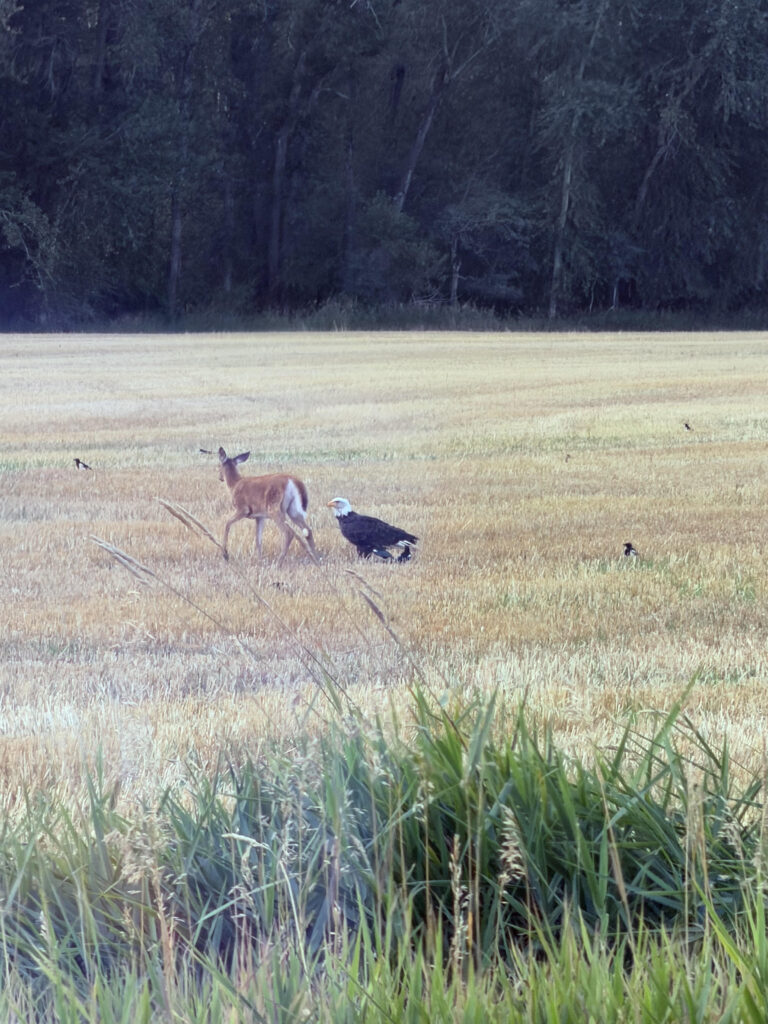
It’s about pausing to experience life in the moment and interacting with presence with the person before you. On Erev Rosh Hashanah, while driving to school, we saw a bald eagle chilling in a field with a deer walking right beside it. I turned the car around so we could get a better glimpse and spent five minutes, with Chana Laya and Menny enjoying this fascinating glimpse of Hashem’s natural world. It’s the same with humans. If we live in our bubble and don’t have time to interact with Hashem’s children in other communities, learning and teaching, discussing and farbrenging, trying to listen and understand the other, we’re missing out on the uniqueness of each soul that Hashem planted in every Jew.
This Yom Kippur when we seek Hashem’s forgiveness, let’s resolve to be nicer to His children and more connected to our Jewish family, because there ain’t nothing that makes our Daddy in Heaven happier than when his kids show up for each other with love, concern, and compassion. n
Rabbi Chaim Bruk is co-CEO of Chabad Lubavitch of Montana and spiritual leader of The Shul of Bozeman. For comments or to partner in our holy work, e-mail [email protected] or visit JewishMontana.com/Donate.