
A Lichtigeh Velt
An anecdote: Professor Eli Weisel, zy’a, was once “speaking in learning” with one of his teachers, the brilliant professor, Rabbi Saul Lieberman, discussing whom they considered to be the most tragic figure in the Torah. Weisel suggested it was Adam HaRishon, who was the “only man,” the lonely man who experienced the pain of the first failure, tasted the bitterness of the first exile, and shouldered the guilt of the cheit for eternity. Lieberman disagreed: “I think it is G-d Himself, Who looks toward the world that He created and says, ‘I have given you such a beautiful world; what have you done with it? What are you doing with it?”
When Reb Shlomo Freifeld, zt’l, would hear of people getting caught up in pettiness, he would often remark, “Aza a lichtigeh velt… It’s such a glorious world! Why do they seek to make it small and narrow?”
“And He said to him: ‘I am Hashem Who took you out of Ur Kasdim…’” (Bereishis 15:7).
Rabbi Yitzchak said: This can be compared to a man who was traveling from place to place and saw a birah dolekes (a palace that was “lit up” or “burning”). He said: “Could it be that this palace has no owner?” The owner of the palace looked out at him and said: “I am the master of the palace.” So too, since Avraham Avinu said: “Could it be that this world has no master?” Hashem looked out at him and said: “I am the Master of the world.’ (Bereishis Rabbah 39:1)
The Midrash is often understood as the moment Avraham “discovers” Hashem; he looks curiously at the world, reflects deeply, and realizes that there must be a Borei Olam, a Creator and Sustainer behind it all. Furthermore, Avraham Avinu’s encounter seems to be an insight about the state of the world and of our own state, as well. Most commentaries understand and translate dolekes as “ablaze.” The birah dolekes is a “burning tower”; the world is on fire, in a desperate state of destruction and chaos. Avraham asked: “Still, how can such a world even exist without someone in charge?” The Ribbono shel Olam looked out of a window (so to speak), smiled at Avraham, and calmly answered: “I am the Master.” This affirms that despite the dire suffering, violence, and disorder of this world, it—and we—are not alone. The Divine Presence, the Source of Peace, is right here, unharmed, even amid fearful flames.
The phrase birah dolekes can also mean an illuminated palace. This is a metaphor for a beautiful, orderly, sacred world, lit up with candles, that clearly points to its Designer. In this version of the story, Avraham saw the world as filled with bright harmony and balance, and due to this he realized that there is obviously a Creator and Owner of such a magnificent construct.
These two interpretations are two paths, perspectives, and possibilities. We can find G-d at the root of everything when we see our surroundings as burning with existential and philosophical crises, pettiness, narrowness, and neglect. We can also find G-d when we see our surroundings as glowing with sacred, serene light, such as after the candles of Shabbos have been lit and a delightful peace envelops and suffuses our hearts and the world.
At the birah dolekes, Avraham Avinu encountered this dialectic, experiencing the deep paradoxes of this world. There is suffering and there is great beauty; there is awful cruelty and also awesome kindness. He refused to look away from these incongruities. He demanded an answer, and Hashem revealed Himself: “I am the Master of paradoxes!’
Avraham Avinu’s courage was not only in discovering Hashem in a world aflame, but in teaching us how to respond to the flames around us. “My children, if you see a world filled with brokenness, ablaze with painful, unanswerable questions—do not look away. You will find our Omnipresent Master, Who has taken us out and redeemed us from Ur Kasdim.”
Ur can be interpreted to mean “fiery furnace” (Targum Yonasan). It is in fact, according to the Midrash, the city where Nimrod threw Avraham into a fiery furnace, and where our forefather sat, unharmed, in a state of calm self-mastery and uncompromising emunah in the Divine Presence (Rashi, 11:28).
When our emunah grows to the point that we can see the spark of the Ribbono shel Olam within the flames of this world, we can, like Avraham Avinu, begin to empower the world itself to cry out: “There is a Master of this palace!” Our own “discovery” of the Owner of this world becomes a charge to appreciate, amplify, and ennoble the beauty and light that surrounds us. We live life to the fullest, to experience the lichtigkeit in all that Hashem has created.
May our children inherit a lichtigeh velt, a sublime palace of harmony, beauty, peace, and redemption, with the continuing unfolding of geulah and the undeniable revelation of Hashem’s Presence. May we continue to experience the triumphant return of Klal Yisrael to Eretz HaKodesh—as Hashem promised to Avraham, “I am Hashem Who took you out of Ur Kasdim…to give you this Land, to take possession of it,” Amen.
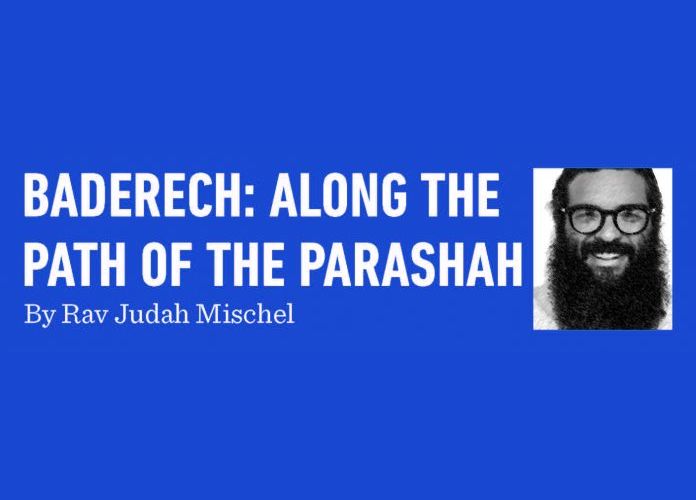
Rav Judah Mischel is executive director of Camp HASC, the Hebrew Academy for Special Children. He is the founder of Tzama Nafshi and the author of the “Baderech” series. Rav Judah lives in Ramat Beit Shemesh with his wife Ora and their family.