
Days Of Judgement: Gazing Through The Window; Peering Through the Lattice (Shir Hashirim2:9)
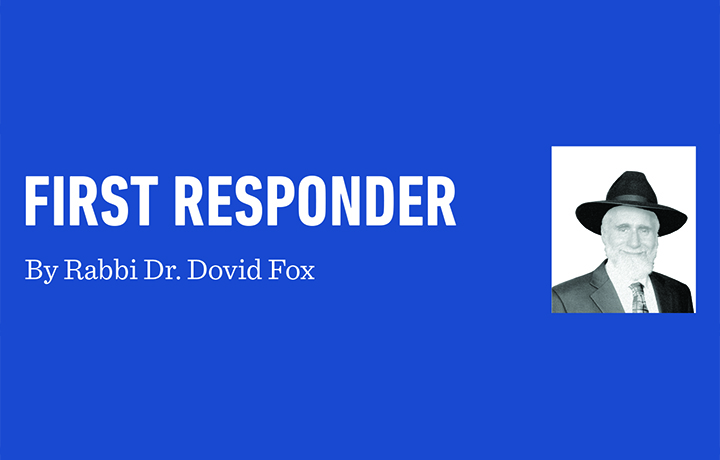
By: Rabbi Dr. Dovid Fox
The birthday of the world. We are entering the Days of Judgement, and we proclaim that Rosh Hashanah is the birthday of the world. Our prayer services, the variegated shofar blasts, making resolutions and promises to ourselves about ourselves: all mark the coronation of Hashem over His creation and our belief that we are starting afresh. This is what our New Year is about.
The Talmud and our halachic authorities have ruled that whereas a Jewish person must be engrossed in studying and living the Word of Hashem at all times, there are some situations and places where it would not be fitting to engage in or even think about Torah concepts. Places that are considered unclean or inappropriate for sanctified activities should not be used to ponder a Talmudic passage or scriptural verse.
Recently, I presented my weekly halacha shiur on this topic, and explored whether the mitzvah of teshuvah, repentance, can be undertaken when one is in a place where Torah study is not permitted. When a Jew engages in the process of repentance, there are many steps. The Rambam encourages one to recognize the wrongdoing(s), regret them, take steps to distance oneself from those erstwhile infractions, resolve to avoid repeat offenses, and confess to Hashem what he has done wrong. Rabbeinu Yona adds that one must also achieve a state beyond cognitive regret and must reach a state of emotional remorse or embarrassment for his failings. Elsewhere, I have written about this difference of opinions between these great sages and how we can understand the variance between the Rambam’s concept of teshuvah and the concept of Rabbeinu Yona.
According to all opinions, part of teshuvah is the internal work of contemplating one’s errors, poor judgements, and choices, and restructuring the psychological approach to living and functioning. That is a lot of brain work and leads to the halachic question of whether such thinking constitutes the active performance of a mitzvah. If it does, one should not be doing those mental actions when in an unclean place. Many authorities rule this way, so teshuvah should not be on our minds if we are not in a pure environment.
Now, this does not mean that one should vacate Hashem from one’s thoughts under such conditions. Fear of the Almighty, reverence for Him, and love for Him are meant to be constants. We think of Heavenly thoughts and ideas at all moments and in all settings. The halachic issue is more about studying Torah and performing mitzvos during these times, which includes thinking about the process of performing mitzvos. The mitzvah of teshuvah requires and involves formal and concentrated intentionality, so it cannot be undertaken during those circumstances. So, what can one think about at such times? Can a Torah scholar ever be expected to suppress his learning? One of the rabbis who attended my halachic shiur shared that the late rosh yeshiva of Be’er Yakov, Rav Moshe Shmuel Shapiro, would take a newspaper into the bathroom and hold it upside down. He explained to his students that this forced him to focus on the printed words, which distracted him from spontaneous or attentive thoughts about Torah. Others in my shiur cited various rabbinic authorities who would study math and science texts in that place, as a productive diversion from their customary immersion in Torah. One of the Chassidic rabbis attending the shiur questioned this practice, citing authorities who opine that learning about the creation through studying science is also considered a mitzvah. The shiur was a lively one. But the question we ended with was what is considered a “kosher” thought in an unclean place that does not violate the halacha of refraining from contemplating Torah?
I was recently in Africa, and after giving some lectures, I traveled with my wife to see Victoria Falls, which flows along the border of Zambia and Zimbabwe. We spent hours viewing the magnificent falls from different angles. Our guide was a local man, softspoken and humble, but a person who knew well the recent and ancient history of the Falls, and who clearly enjoyed the uplifting sense which any sensitive human being will have upon seeing this massive wonder of a mighty river cascading millions of gallons of water per second along an expanse of jungle cliffs. I said a berachah there, considered saying a second one, and at certain moments, was spellbound by the sights and thunderous sounds. As the sky darkened around us, our guide encouraged us to leave the area because the beasts and wild animals emerge as dusk deepens. Dovid Hamelech said it well (Tehillim 104:20), “You make darkness, and night comes and then every beast arises.” As we made our way out of the area and headed back to our lodging, I asked the peaceful man if he had ever come to the Falls on his own, without tourists. He gave a gentle smile and said that he brings his children and wife there once a week. He comes alone even more frequently. I asked what drew him to see the Falls so often and what led him to insist that his family visited weekly. His soft reply captivated me. “I wanted them to know that G-d created this. I want them to know that G-d alone made the universe as the Bible says. When I can, I come here to feel closer to G-d and remember the miracles in His world.”
What can a Jewish person think about when in a place where Torah study and mitzvah involvement is not appropriate? Many opine that he should be thinking about the greatness of Hashem’s universe and the wonders of His creation. This leads a person to marvel in awe at his own limitations. This helps bring us to focus on our constant obligation to have reverent fear of Heaven. Those who appreciate the world around them and the skies above can use that elation to propel them to greater spiritual heights. Pick your place: a waterfall, a mountain top, a desert expanse, a silent jungle, a raucous lightning storm, a sacred spot. Envelop yourself in the experience of that past experience and if you end up with thoughts of Hashem, you have succeeded.
Rabbi Dr. Dovid Fox is a forensic and clinical psychologist, and director of Chai Lifeline Crisis Services. To contact Chai Lifeline’s 24-hour crisis helpline, call 855-3-CRISIS or email [email protected]. Learn more at ChaiLifeline.org/crisis.