


“I’ll Be Back”: How Eli Sharabi Turned Loss Into Legacy
By Eli Mandelbaum
A story of loss, resilience, and a lifesaving legacy, building a lighthouse of hope and compassion in Ashkelon.
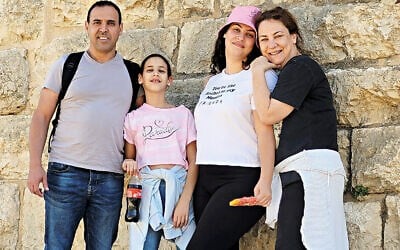
On October 7, as terrorists burst into the Sharabi family home, Eli Sharabi and his wife, Lianne, thought only of their children. They threw their bodies over their two daughters, Noya and Yahel, in a desperate attempt to protect them. As Eli was dragged from the house by gunmen, he made one final plea for their lives, shouting that his wife and daughters held British passports.
Realizing he was being kidnapped, Eli turned back toward his family and called out, “I’ll be back.”
It was the last time he ever saw them.
Eli Sharabi survived the horrors of captivity. But on the day of his release, another devastating truth awaited him. Turning to the social worker escorting him, he asked quietly, “Please bring me Lianne and my daughters.” She replied, “Your mother and your sister will tell you.” In that moment, Eli understood the bitter truth, his wife and daughters had been murdered.
Despite this profound loss, Eli has shown remarkable resilience. In his recently released book, Hostage, he writes:
“I want to live. I love life. I choose life.”
Those words, L’Chaim, to life, have become Eli Sharabi’s guiding principle since his release.
In the aftermath of tragedy, Eli asked himself one question: How do I honor the memory of my family?
The answer lay in the values they lived by—dignity, compassion, and inclusion. His daughter Noya had volunteered for years with people with disabilities and determined to transform grief into purpose, Eli made a decision.
“I want to dedicate something in their memory at Shalva,” he said. “That’s what they would have wanted.”
The new Shalva Center currently under construction in Ashkelon, part of Israel’s leading network of care for people with disabilities and their families, will be named the Sharabi Family Center.
A continuation of values: More than a building, the Center will reflect the compassion, inclusion, and responsibility for others that Lianne, Noya, and Yahel embodied.
Support for regional trauma: Located in an area deeply scarred by recent events, the Center will serve families facing disability, uncertainty, and emotional pain.
Professional care with human warmth: The Center will offer high-level professional care alongside community, dignity, and belonging.
Eli Sharabi’s story, and the Center established in his family’s name, stands as a testament to lives taken too soon, and to the enduring human capacity to choose meaning, responsibility, and life, even after unimaginable loss.
L’Chaim, to life.