
Leadership and Quiet Courage
Israel is in the midst of a collective hangover. The elections have come and gone, and our political system seems more deadlocked than ever. Neither major party appears to have a viable path toward forming a stable government. The elections have done little to break the stalemate, and another round would only further strain an already divided public, with little reason to expect a different outcome.
Over the past two weeks, our airwaves and news sites have been crowded with politicians and commentators offering competing solutions to the political deadlock. Yet despite all the proposals and promises, we remain mired in political uncertainty with no clear path forward.
Instead of simply lamenting our political situation, we should consider why it has become so difficult to overcome. Our political divisions reflect the extraordinary challenge of building a unified Jewish state. We are gathering Jews from across the world, from different cultures, different levels of religious observance, different political leanings, and attempting to forge one cohesive society governed by democratic principles. With so many competing interests and deep social divisions, finding enough common ground to form a stable governing coalition has become increasingly difficult.
These difficulties are, to some extent, the price of our democratic system. Yet democracy remains the fairest way to govern ourselves and protect the rights and dignity of our people. It also encourages the freedom, creativity, and initiative that have helped us maintain our military advantage while building an advanced and prosperous society. But for all its strengths, democracy cannot always provide a solution to our political divisions.
Meanwhile, Israel continues to face existential threats and ongoing wars on multiple fronts. At a time when we desperately need political stability and national unity, we are left with even greater uncertainty.
{The Burden of Uncertainty
Our tradition teaches that there is no joy greater than the resolution of doubt: Ein simcha kehatarat hasefeikot. If so, perhaps there is no greater frustration than the deepening of uncertainty. We went to the polls hoping for clarity but emerged with even more questions about our political future.
This uncertainty carries an important lesson of its own. Breakthroughs rarely arrive when we expect them. We anticipate clarity and resolution, only to discover that life continues much as before, and the struggles of yesterday remain the struggles of today. Learning to live with unresolved problems without losing our determination to move forward, is an important part of life.
Even after the great trial of the Akeidah, Avraham’s struggles continued. He learned that his brother Nachor, who had remained in Charan, had fathered eight children, while Avraham had only one son, Yitzchak, to carry his legacy. He then struggles to negotiate the purchase of a burial plot for his beloved wife. And he remains anxious about his family’s future given that Yitzchak is still unmarried.
Avraham had just demonstrated extraordinary faith and obedience, yet the promises that had accompanied him throughout his life still seemed distant. Beyond the spiritual summit of the Akeidah lay the uneven roads of everyday life.
Avraham’s uncertain future would depend upon the dedication of an unnamed servant, dispatched on a long journey to his former homeland to find a wife for Yitzchak. Without this servant’s loyalty and determination, Avraham’s great revolution could stall. The Torah never mentions his name, though the future of Avraham’s family rests on the success of his mission.
The servant accepts this arduous assignment without complaint or any expectation of personal reward. In fact, he has good reason to be disappointed. As many commentators explain, he had a daughter whom he hoped Yitzchak would marry, yet Avraham sends him to find a wife from his distant family instead. Despite this personal disappointment, the servant throws himself wholeheartedly into his mission.
Throughout, he places his trust in Avraham’s judgment and in Hashem’s guidance, determined to secure the future of a family whose interests have taken precedence over his own.
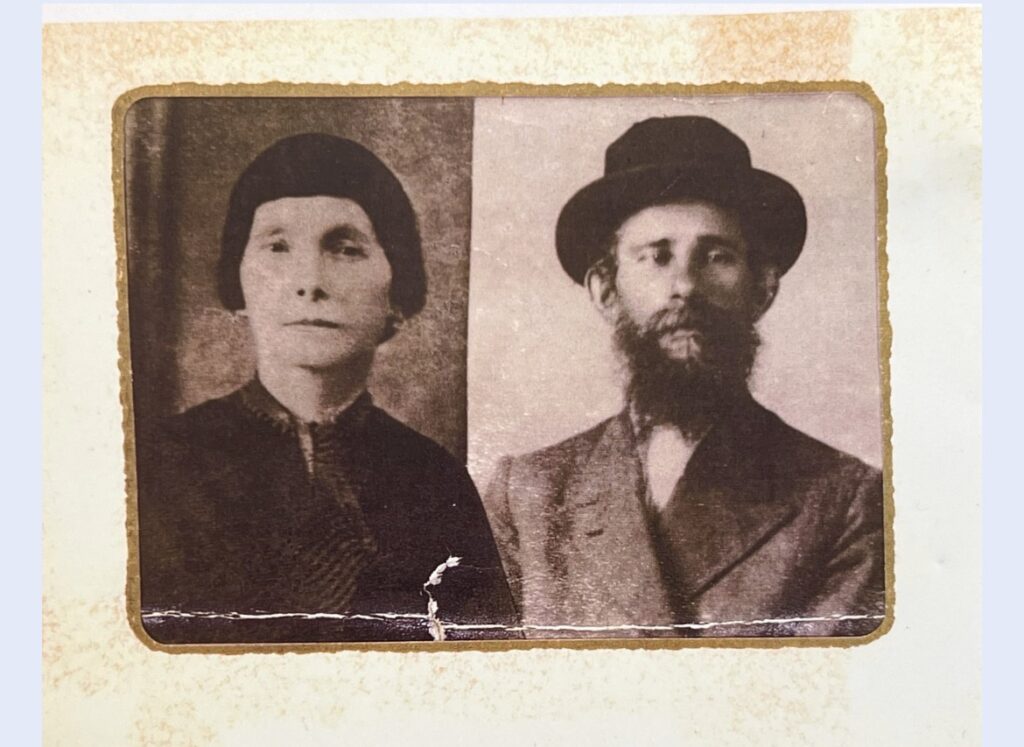
Perhaps the servant remains unnamed because he seeks no personal gain or recognition. But his anonymity also suggests a broader message. His story represents the countless ordinary people who quietly shoulder the responsibility of carrying history forward. Great changes often depend on people whose names are never recorded and whose contributions are never recognized. Their quiet courage and perseverance often have a greater impact on history than the deeds of more prominent figures.
This post-election hangover may be a good time to remember the quiet, anonymous heroes who have moved our history forward, even as our political stagnation obscures their contributions. Instead of fixating on political candidates, perhaps we should turn our attention to the soldiers who have sacrificed so much and continue to serve while we scramble to find solutions. We should remember the bereaved families whose lives have been forever changed and who have paid the ultimate price for our people. We should remember the wounded soldiers and their families who continue to struggle through long and painful recoveries. We should remember the hostages who endured unimaginable suffering yet demonstrated extraordinary faith, resolve, and resilience.
And we should remember the reservists who continue to cycle through hundreds of days of reserve duty, and of course their wives, who have shown quiet courage in holding together their families, managing their fears, and maintaining their professional lives while supporting our people.
It’s time to recognize how much our country and our people have moved forward because of the quiet loyalty and willingness to shoulder enormous burdens of average, everyday people. We cannot allow ourselves to become so consumed by political headlines—especially when they generate more confusion and frustration—that we lose sight of the people who have actually carried our country forward. The quiet heroism of ordinary Israelis tells a far more compelling story of what has sustained our people through these difficult years.
The courage and dedication of Avraham’s servant also offer a message for our badly divided electorate and political system. In an age of influencers and influence peddling, the word leadership has become overused. Leadership has little to do with how often your name appears in headlines or how much political power you wield. It has little to do with how many followers you attract and everything to do with making difficult decisions for the greater good. Avraham’s servant was willing to set aside his own hopes for his daughter’s future and devote himself completely to a mission that advanced Jewish history at the expense of his own family’s interests. He accepted a decision he would never have chosen for himself, and worked wholeheartedly to ensure its success. Our elected officials must demonstrate a similar willingness to place national responsibility above personal preferences and political grievances. Israel desperately needs leaders who are prepared to join forces and find common ground despite ideological differences and personal animosity.
We entered these elections hoping that the future would become clearer. Instead, we face another period of uncertainty. Avraham also lived with promises whose fulfillment remained distant, yet his family’s future advanced through the dedication of an unnamed servant. Sometimes history moves forward long before the larger questions are settled. History moves forward because people accept responsibility and take action, despite their own personal interests. n
Rabbi Moshe Taragin is a rabbi and educator at Yeshivat Har Etzion (Gush). Find his latest book, Echoes of Rashi: Bereishit, at MTaraginBooks.com.