Looking Forward At America 250: The Future of the American Jewish Community
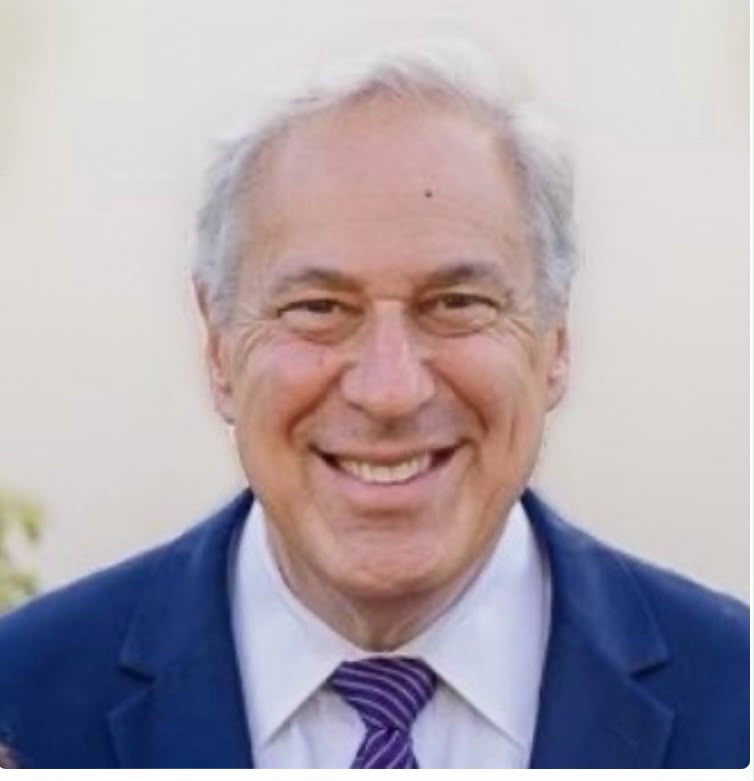
By: Dr. Chaim Botwinick
Part II
In addition to the issues raised last week, another critically important phenomenon we will face in the future is what is referred to as “The Israel Divide.” Unfortunately, the relationship between American Jews and Israel is increasingly polarized. While older and more traditional segments maintain staunch, fundamental support, a visible portion of younger progressive Jews express deep friction with Israeli government policies, leading to fierce internal communal debates.
This most unfortunate reality will demand that our community revisit its hasbarah (public diplomacy) in support of Israel. It also suggests that we will need to redouble, if not triple, our efforts to provide our youth with a more comprehensive foundation regarding the centrality and history of Israel and its relevance to our lives. This will present a significant challenge for our educational community working in tandem with Israel-based institutions.
Unfortunately, the majority of today’s non-Orthodox youth and their families no longer have the same love, passion, or affinity for Israel as we did in the past, nor do they support Israel unconditionally in the same manner I, my family, and colleagues did when we were in college. We are no longer a first generation of immigrant chalutzim (pioneers) eager to support Israel at all costs, but rather one which has been influenced by competing interests and demands, including an increased thirst for materialism and a standard of comfortable living through American acculturation.
This shift in attitudes may be attributed to a new reality which currently views Israel as a modern, progressive, and technologically advanced country that has the resources and brainpower to compete and succeed in today’s global market. Israel is no longer viewed as a poor country of post-Holocaust immigrant chalutzim who saw the country as the only island of safety, security, and refuge for Jews. Except for Israel’s historical and biblical significance, it is now viewed as just another country to tour, visit, and enjoy—not unlike other countries.
This new reality and shift in attitudes towards Israel by a younger generation of Jewish Americans is unfortunate and is seen through the post-October 7th violent anti-Israel demonstrations on college campuses and a general waning of support for Israel during and immediately following the war with Iran.
The number of young Jews who protest against Israel as a “colonizing occupier” and “oppressor of the oppressed” is a fabricated, left-leaning sociological and political phenomenon which is beyond devastating and shocking to many of us in the Jewish community. It also represents a completely false narrative.
We all hope and pray that this phenomenon diminishes over time and into the future.
Nevertheless, for many of us living in the modern Orthodox diaspora community, aliyah to Israel may be one of the best and most viable solutions for American Jews, irrespective of the costs incurred during relocation.
Anti-Semitism, Jew-Hatred, and Anti-Zionism
The next challenge relates to the increased level of Jew-hatred, anti-Israel sentiment, and anti-Semitism in the United States, and its negative impact on our future.
Today, we are witnessing a level of anti-Semitism and Jew-hatred unsurpassed since WWII. This frightening phenomenon, especially post-October 7th, is a reality that is harsh and, at times, overwhelming.
Although it is difficult to predict how today’s events and trends will affect our future, one reality is certain: unless there is a seismic change or shift in the social and political landscape of American society and its views towards Israel, the increased level of anti-Semitism will once again eventually energize and inspire more American Jewish families to seriously consider aliyah to Israel as a viable option. For others, it may force or encourage them to suppress their Jewish identity in public spaces or, at best, confront and battle the evil of this metastasizing societal cancer.
Either way, it is an eventuality that must be addressed front and center with all of our resources.
This demographic shift can also dramatically transform the face of American Jewry, not unlike the manner in which the Holocaust changed the trajectory and migration of Eastern European Jewry to the West and to Israel. But remember, for the overwhelming majority of today’s young American Jews, firsthand knowledge or experience of the Holocaust is virtually nonexistent.
This challenge implores us to expose our youth to the history of anti-Semitism and the Holocaust—not merely as a talking point or a dark chapter in a history book, but rather as a reality which has shaped and reshaped generations of Jews in unimaginable ways.
The Search for Jewish Unity (Achdut)
As we approach Tishah B’Av, we are reminded of the sinat chinam (baseless hatred) leading to the destruction of the second Beis HaMikdash (Holy Temple). This event was one of the most devastating occurrences in our history. Not only does it remind us of what can happen to us when we lack achdut (unity), but it also highlights its long-term negative impact on our community.
Much has been written about the critical importance of achdut in our community. But unfortunately, we all write and talk a good game with very little being translated into true change, improvement, or a shift in our attitudes and behavior. Except during times of crisis, our Jewish community—both in America and in Israel—is deeply divided along ideological lines.
Not only do we see a deep divide between our Orthodox community and the unaffiliated Jewish population, but we see a level of deep and profound hatred which is spilling over into the streets of Yerushalayim and Tel Aviv on a daily basis.
If we think these events are specific only to Israel, we must think again. Every time there is a massive, violent demonstration in the streets of Israel, it impacts our American Jewish communities in ways that are unimaginable. This is a harsh reality.
Whether we see demonstrations against the military draft of Chareidim, the withholding of governmental funding to yeshivot, or a debate about an appropriate location for egalitarian prayer at the holy Kotel, we are all affected by the violence and harsh rhetoric espoused by politicians from the Knesset podium.
These occurrences are exacerbated when we sit in our living rooms and see on American cable and network news how thousands of Chareidim in Israel are being brutally clubbed and water-cannoned in the streets and alleyways by Israeli police in order to bring peace and quiet to neighborhoods.
If we think for one moment that these demonstrations do not negatively impact our American community, we must think again. To be sure, our antagonists, adversaries, and enemies welcome these images, which fuel the fire of Jew-hatred and anti-Israel feelings. They are also sadly used to justify a perception that Jews do not have their act together.
Friends, although these are isolated events, they have a very negative cumulative effect on our American Jewish community. We must, therefore, do everything in our power in the States and in Israel to bring about communal shalom bayit (peace in the home/community) and true achdut.
The alternative is not an acceptable option.
Moving Forward…
Judaism in America may never disappear. It may change, shift, and transform itself, but it will always, where possible, continue to remain a forceful source of Jewish and religious unity, identity, and pride.
As the American Jewish community continues to evolve, it will be faced with a variety of unknown realities—some positive, and some less positive. Irrespective of the challenges or opportunities we currently face, the American Jewish community will continue to be in either growth or survival mode, much like our past history.
Wars, persecution, and assimilation will hopefully continue to be met with stiff resistance and a communal attitude anchored in our deep and profound bitachon (trust) and emunah (faith) in Hashem.
Our battle for resilience and survival has been a significant challenge since time immemorial. It has always kept us viable and steadfast. Reality dictates that our ability to survive adversity is historic, and with Hashem’s oversight, it will continue into the future.
Finally, irrespective of increases in aliyah to Israel, we will always occupy and maintain a strong American presence and footprint that for centuries has advanced American society through technology, education, science, business, commerce, and government.
As indicated earlier, there is no way to predict our future. But we can, at best, hope and dream what that future may look like.
I am an optimistic realist and therefore choose to see the glass as half-full. By doing so, we can paint a future portrait of hope, promise, positivity, and growth.
The great Kotzker Rebbe is quoted as saying that positive thinking must replace negativity. This is a philosophy and a mode of thinking shared by the Lubavitcher Rebbe, who is also quoted as saying, “If you think good, it will be good”—a philosophy that serves us well as we navigate islands of safety in a swirling, rough sea of uncertainty.
As the American Jewish community moves into the future, it remains to be seen whether the glass will remain half-full or half-empty. Indeed, it is a very mixed bag. Nevertheless, we will always have very serious concerns about the future of our Jewish community.
Yes, we are resilient; and yes, we show signs of religious and spiritual growth, steadfastness, and vitality. That is the half-full glass. But we are also facing an existential threat like a metastasizing cancer of Jew-hatred, anti-Semitism, and assimilation, in addition to hatred towards Israel—representing the half-empty glass.
At the end of the day, as we look towards the future of the American Jewish community, we must focus our thoughts and energies on those realities and eventualities which are half-full as opposed to those that are half-empty. By doing so, we guarantee a future of berachah (blessing), hatzlachah (success), promise, and success.
On this 250th anniversary of the founding of America, may Hashem continue to bless us with berachah, and may He continue to watch over the future wellbeing of our community.
Dr. Chaim Botwinick is a senior executive coach and an organizational consultant . He served as president and CEO of the central agency for Jewish education in Baltimore and in Miami; in addition to head of school and principal for several Jewish day schools and yeshivot. As an Influencer in education, he has published and lectured extensively on topics relating to education, resource development, strategic planning and leadership development. Dr. Botwinick is co-founder of LEV Consulting Associates and producer of the Chinuch Horizons podcast series. He is the author of “Think Excellence: Harnessing Your Power to Succeed Beyond Greatness”, Brown Books, 2011