Musings Of A Shliach From Montana

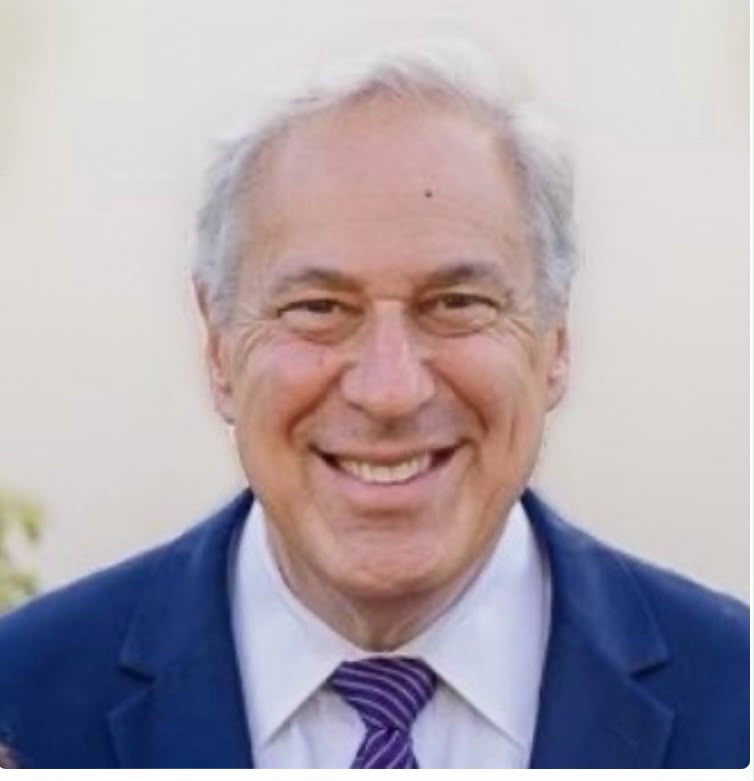
Rabbi Chaim and Rabbi Shaul Shkedi at the Chabad of Billings

Rabbi Chaim placing a mezuzah on the front door of a new home in Big Sky
During the Thanksgiving break, Chavie and I took the kids to Billings, Montana’s largest city, for 36 hours of family time. We picked Billings because I had an appointment for my TSA Pre-check renewal, so it made sense to multitask. We enjoyed the awesome Scheels mall that includes a Ferris Wheel, the kids had a blast playing at Lava Island, an indoor fun zone, and we enjoyed a delicious dinner at the home of our colleagues, Rabbi Shaul and Mushky Shkedi, who’ve been in Billings for three years now. Together with their daughters Zelda Rochel and Shaina, they are truly the source of all things holy and Jewish in Eastern Montana.
It may seem normal at this point (most Jews are used to it already), but to me it never will be “normal” that a young couple in their early twenties (he’s from Pittsburgh; she’s from France) arrive in a city with a small Reform congregation and three years later, dozens of Jews are connecting with their Father in Heaven. They live in a small rented home which is an essential beacon of light, love, kedushah, and Torah for an entire region. They have plans to purchase a new home/Chabad center in the next few months, so if you’d like to help make that happen, please let me know and I will be happy to introduce you to them.
Rabbi Shkedi is a lamdan, a rav whose expertise is in mikvaos and maros chaim. If he lived in a frumcommunity, he would be considered an illui, a prodigy, but instead of worrying about his own prestige, he and his wife are caring for Hashem’s flock who roam all over Montana. This past Yom Kippur, they struggled to get a minyan for all the tefillos because so many of the local Yidden became inspired to do Yom Kippur right by fasting and abstaining from driving, so they stayed home. I guess they were victims of their own success. That’s not normal; that’s superlative.
I think about this a lot because many years ago, that was Chavie and me. I don’t see it that way anymore as we’ve been doing this for over 18 years, but it’s how it played out for us, too. We showed up in town as young and idealistic shluchim. I was 25 and Chavie was 22, and we did door-to-door combat, finding and inspiring Hashem’s beloved flock. On Monday of last week, I drove up to Yellowstone Club in Big Sky to place mezuzoson a newly-built home belonging to a beautiful Jewish family from Northern California. And as I placed the mezuzos, I thought about how the Rebbe’s vision is coming to fruition as thousands of couples are doing exactly what we’re doing by making the world holier and holier each day.
This coming Tuesday is Yud Tes Kislev, the Rosh Hashanah of Chassidim. It was on this day in the year 1798 that the founder of Chabad Chassidism, Rabbi Schneur Zalman of Liadi (1745–1812), also known as the Alter Rebbe, was freed from imprisonment in Czarist Russia. More than a personal liberation, this became a watershed moment in Jewish history, heralding a new era in the revelation of the “inner soul,” the mystical teachings of the Torah.
During the lifetime of the Vilna Gaon, the GRA, the opponents of Chassidism would have never dared to go against the Shulchan Aruch by informing the government with falsehoods. But after the Gaon’s passing, a Jew named Avigdor informed on the Alter Rebbe to the Czarist government, and in the fall of 1798, Rav Schneur Zalman was arrested on charges that his teachings and activities threatened the imperial authority of the Czar. He was imprisoned on an island fortress in the Neva River in S. Petersburg, and during his interrogation, he was compelled to present to the Czar’s ministers the basic tenets of Judaism and explain various points of Chassidic philosophy and practice. After 53 days, he was exonerated of all charges and released.
Rabbi Schneur Zalman saw these events as a reflection of what was transpiring Above. He regarded his arrest as the earthly manifestation of a heavenly condemnation against his revelation of the most intimate secrets of the Torah. And he saw his release as a sign of his vindication in the heavenly court. Following his liberation on 19 Kislev, he redoubled his efforts to spread the teachings of Chassidus far and wide, on an even broader scale, with more detailed and down-to-earth explanations than ever before.
The Alter Rebbe was in some way a man who walked alone. Sure, he was carrying the torch passed on to him by his master, the Mezritcher Maggid, and his teacher’s teacher, the Baal Shem Tov, but most of the mainstream Jewish world, and even many other Chassidic masters, felt that it was too much and didn’t like it. Yet, the Alter Rebbe knew it was the right path; he knew the time had come for the Jewish world to engage in the Chassidic lifestyle and mindset, and nothing could get in his way. He would walk the path alone until the world would catch on.
In this week’s parashah, Vayishlach, we read the following verse: “Rivka’s wet nurse, Devorah, died and was buried below Bethel, on a plateau. Jacob named this plain Alon Bachus (Plain of Weeping).”
In this context, reading about the passing of Devorah without mentioning the passing of Rivkah, our matriarch, the Ramban explains that when Rivkah Imeinu passed away, she did not have a proper, honorable, burial. Avraham Avinu had already passed away, her husband Yitzchak was at home because of his blindness, Yaakov was in Padan Aram, and Esav hated his mother and didn’t come to the funeral. It was the gentile family of Ches the Hittite who rapidly took her coffin and buried her in Chevron in the Cave of Machpelah. They did it quickly and secretly at night because they honored Rivkah and didn’t want Esav to find out and show up so that people would associate the righteous Rivkah with the wicked Esav. It is for this reason, says Rabbeinu Bachya, that it was called Alon Bachus in the plural, because Yaakov cried for his mother’s passing and also for the fact that she didn’t get the honors she deserved.
Some of our greatest don’t get the kavod they deserve in their lifetime.
Interestingly, I had an epiphany while reading another episode in this week’s parashah. Before Yaakov wrestled with the angel, it says “Vayivater Yaakov levado”—Yaakov was left alone (Bereishis 32:25). And this really got me thinking about how so often, the holiest of people, those who make the biggest impact in Klal Yisrael, are often alone. Initially misunderstood and suspect by many as time passes, only later, sometimes after they are long gone, does the world realize they were spiritual revolutionaries who did great for our people. It can’t be easy going it alone. But when you have the truth, you do what needs to be done and oftentimes personal loneliness, or loneliness with G-d, is a way of life. Avraham Avinu walked alone. Moshe Rabbeinu walked alone, and at times didn’t even have his family with him to do Hashem’s work. Yaakov was alone in Charan for so long. From Shimshon HaGibor to Rabbi Yonasan Eibshitz, from Rav Yochanan Ben Zakai to the Baal Shem Tov, so many great people didn’t have public support until much later.
My beloved mentor, the Rebbe, zt’l, was misunderstood, judged, mischaracterized, and sadly, even degraded for so long. Many of his campaigns and much of his worldview were under attack through the 1960s, 70s, and even 80s, and for many Yidden, it was only after his passing that they realized how great he was. I know hundreds of Yidden who now learn the Rebbe’s Torah and visit his Ohel but never met him while he was alive because they had a perception of him and his movement that was negative, and in retrospect, wrong.
But the Rebbe didn’t mind walking alone. He must have known that the Jewish world would eventually get it. He also created a world of Chassidim and shluchim, like Rabbi and Rebbetzin Shkedi in Billings, who are okay walking the dark world alone, comfortable being a source of illumination, and knowing that eventually we will bring Mashiach by ensuring that all of Hashem’s kinderlach come home to their Tatte in Himmel. n
Rabbi Chaim Bruk is co-CEO of Chabad Lubavitch of Montana and spiritual leader of The Shul of Bozeman. For comments or to partner in our holy work, e-mail [email protected] or visit JewishMontana.com/Donate.