Musings Of A Shliach From Montana

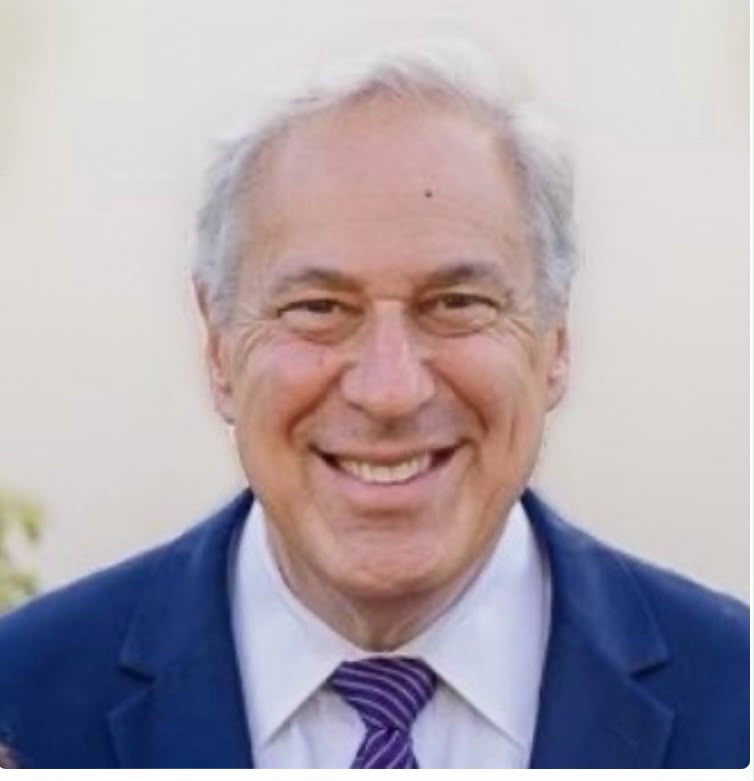
(left to right) Yanky Bruk, Rochel Banon, Rabbi Chaim, Mushkie Deitsch, and Chanochie Deitsch at Chai Lifeline’s 2024 Gala

The Rosh Chodesh Shevat Minyan in Bozeman last week
When a person has lost a parent at a young age, they tend to feel for those who are in the same boat or worse. I was 29 years old when my mom passed away, but my sister Mushkie was only eighteen. We lost the same mom, but the loss and the post-loss struggle are very different. I lost a mom who was my friend for over a decade; she lost a mom whom she had watched suffer on and off for twelve years of cancer treatments from the time she was 8 or 9 years old, before they could just be friends.
Each individual experiences loss differently.
Last week, we had the honor of hosting ten bochurim at our Lev Hospitality Lodge in Bozeman. The bochurim came for two days of snow activities on a trip organized by the amazing Links family organization that does wonders for those in our community who have lost a parent. Our friends, Yoeli and Goldie Glauber, first introduced us to the organization and now my sister Mushkie and her husband Chanochie are active in this holy work and it’s truly awe-inspiring.
The bochurim didn’t know it, but when I joined their rosh chodesh minyan at our shul singing the beautiful melodies of Hallel, I was looking at each of them and my heart ached for them. I know some of what they experienced, except that they experienced it at a much younger age, and it’s a feeling that can be unbearable. I don’t think yesomim are victims; they don’t have to remain bogged down in their sadness and mourning, but they do carry a heavy burden since they have to cope with not having the person or people in their lives that are meant to guide them, hold their hand during tough moments, walk them to the chuppah on their happiest day, take them to doctors’ appointments, and vouch for them with school and camp. The Links family helps with a lot of it, but nothing can replace a parent.
In this week’s parashah, Beshalach, we read about Kriyas Yam Suf, the splitting of the sea of reeds as the Jews headed from Egypt to Mount Sinai. The verse says, and we recite it every day in Shacharis: “When Israel saw the mighty arm that Hashem had exercised against the Egyptians, the people stood in awe of Hashem; they believed in Hashem and in His servant, Moses.” The holy Zohar explains that the words “Israel saw” refers to Yaakov Avinu, who was also called Yisrael, and that Hashem resurrected Yaakov Avinu from his grave in Me’arat HaMachpelah in Chevron and brought him to see the miracle of redemption with his own two eyes. There is an additional opinion that says that Avraham and Yitzchak were there too. We know that the Zohar says elsewhere that ancestors come from heaven to attend the simchos of loved ones in this world and perhaps our ancestors couldn’t resist seeing the greatest simcha of all which was our redemption from Egypt and ascension to Sinai.
I love these teachings because I think that sometimes we don’t realize how important our parents are until they’re gone. Furthermore, I think that the Jewish community is incredible in supporting amazing organizations like the Links Family, but sometimes we don’t take the time to deal personally with the yatom down the block, whose parent we may have known, even known well. Each of us knows some child, teenager, or young adult who’s wading solo through the waters of life and could use a friend willing to give them a little TLC. They want someone to hear them out, lend them an ear and heart. Yes, we need to support the Links family charity, but we must also serve as family or parents for those who need it.
My mother of blessed memory went back to teaching at Bais Rivkah girls’ school later in her short life and she always went out of her way to show up for the kids who were struggling at home. Perhaps she was subconsciously doing for them what she knew must be done for her own kids, but she did it with so much passion and love. There was no fanfare about her deeds; she just showed up with a little dose of love to those who were missing the person who brought them into the world and then left, leaving them to fend for themselves.
The Gemara says in Bava Metziah (85a-b) “Rav Yehuda says that Rav says: ‘What is the meaning of that which is written…why has the land been lost and laid waste like a wilderness, so that none passes through?’ (Jeremiah 9:11).” Until HaKadosh Baruch Hu explains it in the next verse: “And Hashem says: ‘Because they have forsaken My Torah which I set before them’ (Jeremiah 9:12).” Rav Yehuda says that Rav says: “This does not mean that the Jewish people ceased Torah study altogether; rather, they did not recite a blessing on the Torah prior to its study, as they did not regard Torah study as sacred.”
Chassidus explains at length that the meaning of this Shtikel Gemara is that the Jews back then didn’t take the time to internalize that the Torah isn’t just something a Jew studies, but that the Torah is Hashem’s wisdom expressed in practicality for us to fulfill and bond with. When we open a Gemara or a Midrash it’s not just beautiful wisdom, it’s G-d’s wisdom and when we forget this invaluable truth, we end up missing the whole point. This idea is elaborated further in Tanya Chapter 5, but on Simchas Torah of 1959, the Rebbe, zt’l, referred to the Bayit Chadash (Bach) on Shulchan Aruch (Siman 47), who writes that “when studying Torah, even when studying diligently, we must be sure to say Birchas HaTorah in advance. What does that mean? It means that when we learn Torah, we must connect our souls with the holiness and spirituality of the Torah. Hashem gave us the Torah so that we don’t forget Him and that we should connect our entire being, our entire body, with Him. Their mistake in the days of the Churban was that they only learned Torah to know the halachah, the practical law, and didn’t have the intention of connection with the Shechinah.”
We can say and do the right things and still miss the point.
Today, January 28 is Yud Shevat, the day on which the previous Rebbe passed away in 1950 and on which our Rebbe, zt’l, assumed the mantle of Chabad Lubavitch leadership. The Rebbe’s worldview was all about showing up for the child who feels alone in the world. In the bigger picture, it’s ensuring that every Jew, every human being, on planet Earth feels connected and knows that they are unique, but also on a personal level, specifically with those who have a story of loss or loneliness, that we make the extra effort to not only make the donation or the berachah, but to dig deeper and see what we can do in person to show up for those struggling down the block or in the apartment next door.
On Yud Shevat 1991, just after my 9th birthday, the Rebbe handed me (and everyone else) a green booklet which was a 1904 discourse from the Rebbe Rashab on the words “Mi She’asah Nissim.” In it, the Rebbe Rashab explains that there are miracles that shatter nature, where Hashem swoops in and splits the sea, and then there are miracles that are embedded in nature, with Hashem operating and showing up to create enormous change in the confines of our finite world. These latter miracles are more frequent, and if we just open our eyes and allow ourselves to see beneath the surface, we will see them.
We can be a miracle for those who are lonely and struggling, not just with a donation but with a genuine personal act of kindness.
Rabbi Chaim Bruk is co-CEO of Chabad Lubavitch of Montana and spiritual leader of The Shul of Bozeman. For comments or to partner in our holy work, e-mail [email protected] or visit JewishMontana.com/Donate.