



Musings Of A Shliach From Montana

The Bruk family at the hanachas tefillin

Rabbi Chaim watching Menny wrapping tefillin for the first time
Chasdei Hashem.
Our hearts are full.
This past Friday morning, the 3rd of Adar, Chavie and I celebrated Menny’s hanochas tefillin in our Bozeman Shul. It’s a minhag Chabad that a twelve-year-old begins to daven with tefillin two months prior to his bar mitzvah, so we invited our Bozeman community to celebrate, and they showed up for a rare weekday Shacharis Minyan followed by a community breakfast filled with simcha.
It’s a special moment when you see your child celebrating a meaningful milestone, especially when the milestone is connected to Torah and mitzvos and their Jewish growth. We adopted our Menny at birth in Columbia, Maryland, and have watched him grow up so beautifully, observing his intense preparations for his bar mitzvah with his two tutors, Rabbis Mendel and Shmuly. So, getting closer to the big day is exciting and this minhag was a part of Menny’s bar mitzvah journey.
After davening, Menny shared a dvar Torah with the community, and here is a part of what he shared:
“In Chabad we have a custom to share a maamar, a Chassidic discourse, that was recited by the Rebbe Rashab, Rav Sholom Dovber Schneerson, the fifth Lubavitcher Rebbe, at his bar mitzvah in the fall of 1873. The topic of the discourse is about wearing tefillin. But instead of saying it in Yiddish, I would like to share with you a brief synopsis of its teachings in English.
“Isa B’Midrash Tehillim, the great sage Rav Eliezer teaches in Midrash Tehillim: The Jewish people complained to Hashem, saying, ‘Ribbono Shel Olam, Master of the Universe! We would like to study the Torah all day and night, but we are preoccupied with the necessities of life and don’t have time.’
“Hashem responded to them by saying, ‘Wrap on the tefillin once a day, and I will consider this as though you were studying Torah both day and night.’”
Now that’s a huge statement!
How can tefillin fill the place of Torah study? How are the two related? How can they have the same impact?
Judaism teaches that every time a Jew does a mitzvah, it stirs up so much excitement for Hashem that He too chooses to do a similar act to match the mitzvah, though in His spiritual realm it plays out differently, not with physical objects.
David Hamelech says in Tehillim: “Maggid Devarav leYaakov Chukav Umishpotav LeYisrael—Hashem tells His own words to Jacob, His own rules and judgments to Israel.” This verse seems to indicate that Hashem shares the same rules and experiences that we do.
The midrash is emphasizing that Hashem is not like a king of flesh and blood who is often hypocritical. A human king orders his subjects what to do without doing any of it himself. Hashem, on the other hand, commands His subjects to do what He Himself does. So, when we perform a mitzvah, it’s more than an action in our world; it spurs Hashem to do something similar, creating a new Divine energy.
So, what does that look like?
Inside our tefillin are scrolls from the Torah, including the Shema, the part of the Torah that says “Shema Yisrael” “Hear O Israel, Hashem is our G-d, Hashem is One.” So, the question is, what’s inside Hashem’s spiritual tefillin? How does He manifest tefillin in His realm of true reality? It doesn’t say Shema, because Hashem doesn’t need to remind Himself that He is One. So, the midrash teaches that inside Hashem’s tefillin is a different verse from the Book of Shmuel that reads: “Who is like your people, Israel? One nation upon the earth!”
Now we’re getting somewhere. The Jewish people have tefillin that say Hashem is one, and Hashem has tefillin that say we are one!”
That was a part of his speech and it’s wild.
Hashem expresses His love for us by celebrating a verse that reflects the beauty of Klal Yisrael, and I think it’s a special and important reminder.
Last week, I had the great merit of attending a wedding in Queens. The kallah is the daughter of our dear friends and I was so happy to be there. The wedding was magnificent with so much simcha in the air. Yes, Benny Friedman sang beautifully both at the chuppah and during the dancing. Yes, the food was mouthwatering—yet it was much more than just good music and awesome food. The avirah, the atmosphere in the room was electric and warm. It was like everyone attending really wanted to be there and we danced the night away with so much ahavah, achvah, shalom, and reiyut. There was so much genuine simcha in the room and clear excitement for the families and I for one enjoyed that vibe.
Travel these days is complicated, and from Montana it’s more complicated, time-consuming, and expensive, which is why I don’t travel often to chasunahs or simchas. So, when I do, I tend to appreciate it more than those who are at vorts, weddings, and bar mitzvahs every night of the week. When I show up at a wedding, I celebrate the simcha, but I also celebrate the beauty with which Yidden celebrate simchas, something I don’t get to see often. The “world” outside the frum community doesn’t have the same spiritual component in their simchas, the same true level of joy. Dancing for three hours with leibidikeit and with our whole neshamah is unheard of outside of our circles. In addition, coming to a simcha and meeting my friends, Mordechai from Miami, Shalom and Sruli from Lakewood, Howard from Baltimore, Shimon from Monsey, and so many from the Five Towns and Far Rockaway, only added to the overall warmth.
Looking at the chassan and kallah under the chuppah, observing their parents and grandparents, listening to the berachos being recited and the spiritual underpinnings of the formal marriage, and then seeing the genuine joy for another couple beginning their journey in Klal Yisrael to build a Bayis Neeman BeYisrael, is just incredible, a true gift to our people. It’s not just about vows and love; it’s a commitment to each other and the commencing of a holy journey.
While flying to New York for the wedding, as I buckled myself into my extra legroom seat in 8A, I heard a boy from the row behind me singing at the top of his lungs “Hava narisha, rash, rash, rash! Bara’ashanim.” This is Bozeman, Montana, and while we do have visitors from more religious backgrounds, it’s a nachas to be sitting on a plane and hearing a kid sing it loudly, in all its glory.
When we landed at JFK, I turned to the mom and told her how much I enjoyed hearing her son sing a Purim song on the flight. With glee in her eyes, she said, “He’s a Ramaz boy.” I invited them to come to our Chabad Center next time they’re in Montana skiing. I love our people. From Lakewood to Ramaz, from Cedarhurst to Crown Heights, our people are awesome and so holy.
In our parashah, Tetzaveh, we read about the holy garments of the Kohanim and Kohen Gadol, the priests and High Priest, serving in the Mishkan and Beis HaMikdash. Clothing has an important role in Judaism; I will be writing more about that in the Pesach edition of Montana’s Jewish Voice. Interestingly, each morning we make a berachah, “Malbish Arumim,” thanking Hashem for clothing the naked. Rav Avraham Yitzchak HaKohen Kook wrote a peirush on the siddur and explained this berachah by saying that our thanks to Hashem is twofold:
Firstly, we’re grateful for having clothing to wear and that they’re not completely worn out. Secondly, we thank Hashem for the fact that we are human rather than animals, and we understand the need for clothing. As opposed to the animal kingdom, man is blessed with a moral sensitivity and a refined soul, and we give thanks to Hashem for the ability to understand the importance of living life with more honor than that of animals. Man must wear clothes, animals do not.
Rav Kook writes that we thank Hashem for the “refined spiritual sense that G-d planted in our souls that causes us to wear honorable garments.”
This is what I see when I meet Yidden of all flavors. I see the “Who is like Your people Israel?” I see the pure simcha, the holy neshama, the best of the best in humanity and a people worthy of being included in Hashem’s tefillin.
At Menny’s hanochas tefillin, we presented a local Jew, Gavriel, with his own pair of tefillin. A few months back, my buddy Azriel Inzelbuch from Lakewood sponsored a pair of tefillin so that if we find a Jew who wants to start the mitzvah daily, we could give them a pair. On Friday, at a celebration of tefillin, another moment of holiness came to life in Big Sky Country with yet another Jew donning them each and every morning.
I know Hashem is delighted.
So, when and if someone shares something negative about Klal Yisrael, we should just ignore it, push it away, and remember what it says in Hashem’s parchments and that will change the narrative immediately.
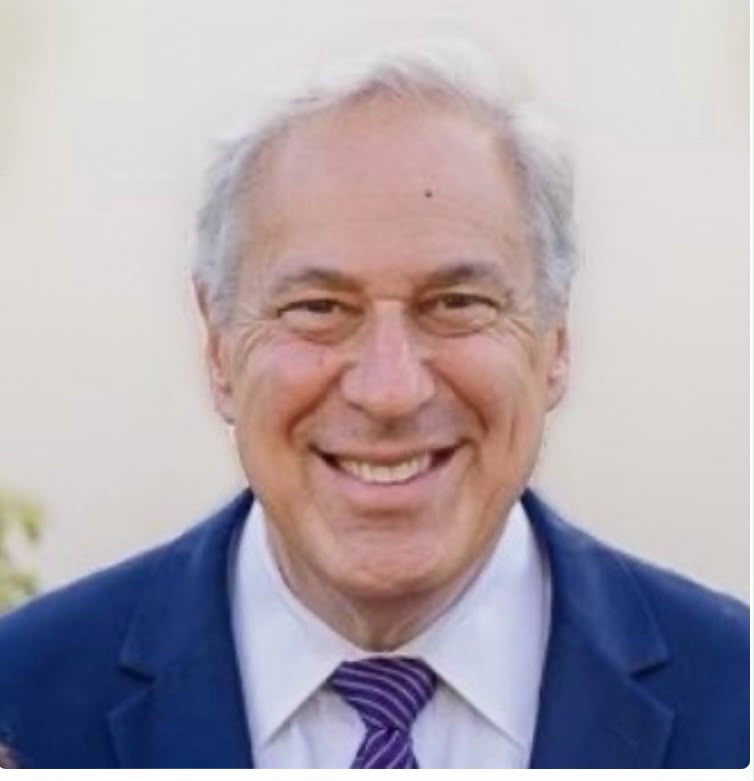
Rabbi Chaim Bruk is co-CEO of Chabad Lubavitch of Montana and spiritual leader of The Shul of Bozeman. For comments or to partner in our holy work, e-mail [email protected] or visit JewishMontana.com/Donate.