
Musings Of A Shliach From Montana
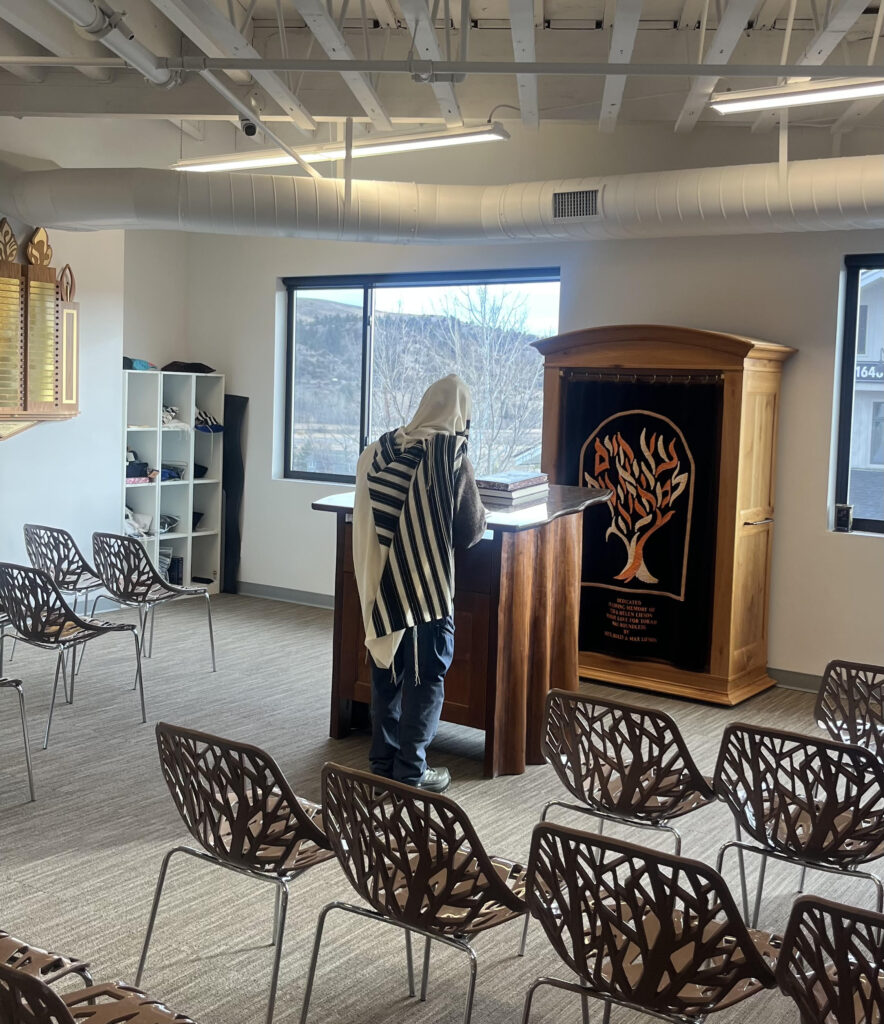
Gavriel ben Dovid davening at shul
Have you ever seen those viral videos of Israeli soldiers getting new pairs of tzitzis or tefillin? You know, the images of an IDF warrior saying the Shema while crossing into Gaza or Lebanon or while zooming over Teheran? Doesn’t it just tickle your neshamah and make you feel high on Judaism and the Jewish people?
I know it does something for my soul, and how joyous it makes me to be part of this holy nation.
What if you had the chance to spend your entire life—from the day you are married until the day you go to Olam HaEmes—doing just that? Imagine spending your life bringing holy Yiddishe neshamos closer to their Father in Heaven. Perhaps not solely Israeli soldiers, but with Hashem’s kinderlach no matter where they’re found. What if every single day you were a beacon of kedushah shining the light of Torah on those who are the Torah’s rightful inheritors, allowing them to experience their true heritage? What if during your lifetime 20 or 30 babies got a proper bris, connecting them to Avraham Avinu’s covenant? What if—on your watch—five more Jews chose to marry fellow Jew and build a Jewish family? Imagine you knew someone had a trust of a billion dollars but lacked the code to access the account and you gave it to them?
The Rebbe, zt’l, saw the spark of every Yid.
He saw the IDF soldiers who needed the Shema Yisrael, he saw the hippie in Berkeley who needed to see a public menorah. He saw the Israeli backpacker in Dharamshala who needed a Shabbos dinner. He saw the unaffiliated secular Jew in Bozeman who needed a Pesach Seder. And he wasn’t shy about implementing his plan to bring them all “Tachas Kanfei HaShechinah,” under Hashem’s loving wings. He begged, beseeched, and implored his Chassidim to take on the task of bringing Mashiach, of gathering neshamos and the holiness of our people. Most resisted. It took over two decades before it would be realized on a large scale, but today thousands of men and women, like Chavie and I, are spread across the globe, and we wake up each morning wondering what we can do to bring more Yidden into the fold and inspire them to love the treasures they were gifted at Mount Sinai.
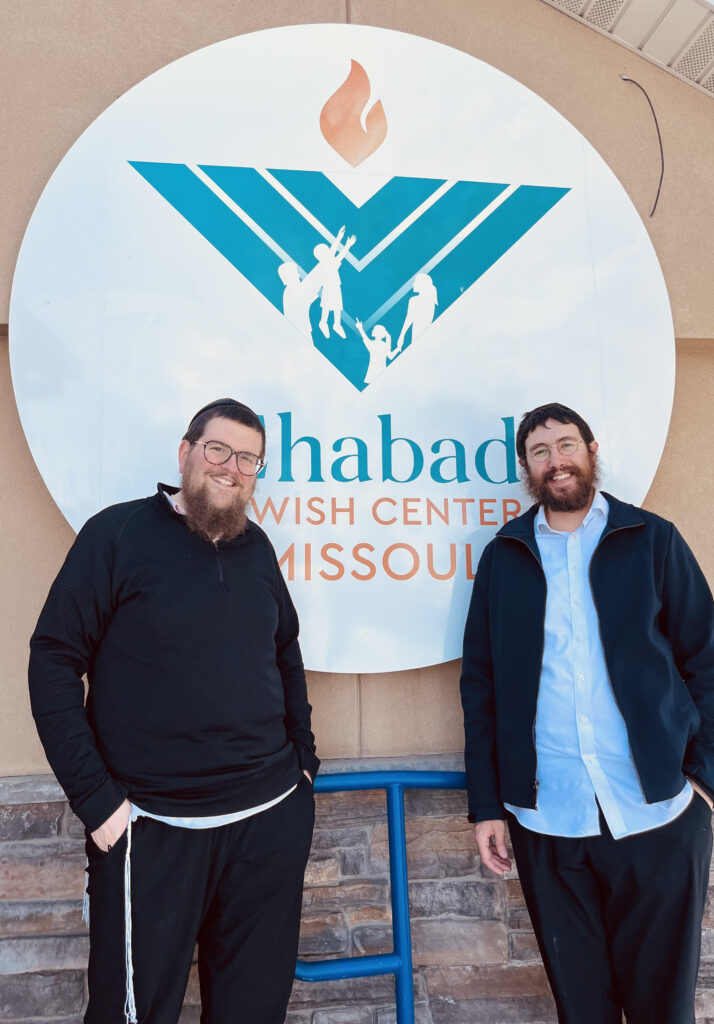
Our kids have spring break this week and so we are on a road trip in Eureka, Montana, about seven hours from Bozeman, near the border of British Columbia. En route to our getaway, we stopped for lunch at our colleagues in Missoula, Rabbi Chezky and Rochi Vogel and their beautiful children.
We opened our second Montana branch in Missoula in 2014, and the Vogels have been there since 2018. They are a lovely family of five boys and a girl who could have enjoyed being in cheder with friends their age, living near their Bubby and Zeidy, kosher restaurants and ice cream shops, their Tatty could be learning in kollelor helping his in-laws (Rabbi Gedalya and Mrs. Bassie Shemtov run the incredible shluchim office, which serves the needs of the shluchim), yet this young couple gave that all up so they can inspire one college student to go to yeshiva, one Jewish girl to start lighting Shabbos candles, one couple to give their baby a bris, and another couple to have a halachic wedding. Yes, we celebrate every IDF soldier singing Am Yisrael Chai, but we must ensure that Am Yisrael, no matter where they live, are connected to their Yiddishkeit.
Why am I focusing on the Rebbe’s worldview this week?
Last Thursday, we celebrated 19 years since a 25-year-old guy with his 22-year-old young wife, married for less than one year, landed in Bozeman, Montana to revolutionize Jewish life there. I think back to how crazy that was, how the Rebbe entrusted young people to go out and change the world. We left all our comfort, amenities, parents, grandparents, siblings, and community to accept the mission from our leader, our Rebbe, to inspire our people. We didn’t see ourselves as supermen or superwomen. We were pishers, but we were joining Chavie’s parents who had been doing it in San Antonio since 1985, and the thousands of others around the globe. Now I know what the sacrifice was and what it still is, but back then we were naïve, determined, inspired to spend our life doing this holy work, and for that I’m grateful. These days, when I visit my younger colleagues in Montana, I’m awed by how crazy—yet how normal—it is at the same time.
A few weeks ago, I wrote about the tefillin that we gifted to a local Yid at Menny’s hanachas tefillin. That one act has now resulted in this individual, Gavriel ben Dovid, showing up in shul each morning to daven at the Bimah with tremendous kavanah with his new tefillin donated by a Jew from Lakewood. It has also resulted in a group of men coming together for “Tefillin Tuesday” each week at shul.
This week we start reading Sefer Vayikra, reading parashah after parashah about the Korbanos, the offerings in the Mishkan and later in the Beis Hamikdash. The verse says “When a man will bring, from among you, an offering to Hashem, then from the animal, from the cattle and from the sheep, you should bring your offering.” The Mefarshim famously ask, “One would expect the verse to say: ‘When a man from among you will bring an offering’ and not ‘When a man will bring from among you an offering.’” The Alter Rebbe in Likutei Torah famously taught that the Torah is teaching us that the Korban, the most important offering, is the one that comes from within ourselves. Our inner ox, inner sheep, inner lamb, various animalistic tendencies that need to be sacrificed for Hashem.
Of course, one doesn’t need to live in Montana or Cambodia to sacrifice their inner self to Hashem, their inner “yetzer” to kedushah. That can and should be part of every Jewish person’s service to their Creator. We must ask ourselves what we’re willing to do to assist another Yid who was not as fortunate as us to have received a proper Jewish education. They grew up in Fargo or Biloxi and knew that they were Jewish, maybe met their Jewish grandparents, but never really experienced the warmth and depth of Torah—shouldn’t we show up for them? My friend Michael Nahmias of Riverdale is involved in a mezuzah project with Or LaChayal to bring kosher mezuzahs to every Israeli base that lacks them. It’s such a beautiful project and it’s all about living with dedication and self-sacrifice to our brothers and sisters no matter where they are.
Recently, a fellow showed up at my office named Rich, AKA Gavriel Aharon ben Avraham. He grew up in Los Angeles during the 1970s with a single mom who died when he was a teen. Unfortunately, when he was around 13 or 14, he was invited to be a Christian and has been a church-going Christian ever since. It’s such a sad story that he considers himself a Christian but he also knows he’s Jewish. If only someone from the Jewish community had reached out to him back then and urged him to attend yeshiva so he could be living a Jewish life today.
I will do my part to help Rich find his inner neshamah, but it’s also important that we all do a better job of sacrificing some of our Jewish comforts to inspire those who are an integral part of the Jewish family so they stay connected and inspired. Maybe it’s a work colleague, a neighbor, a mechanic, a barber, a plumber, or a waiter. While it may be uncomfortable to start talking about Yiddishkeit, it’s more uncomfortable knowing that you could have done more to bring a child back to their Father in Heaven.
Rabbi Chaim Bruk is co-CEO of Chabad Lubavitch of Montana and spiritual leader of The Shul of Bozeman. For comments or to partner in our holy work, e-mail [email protected] or visit JewishMontana.com/Donate.