



Musings Of A Shliach From Montana
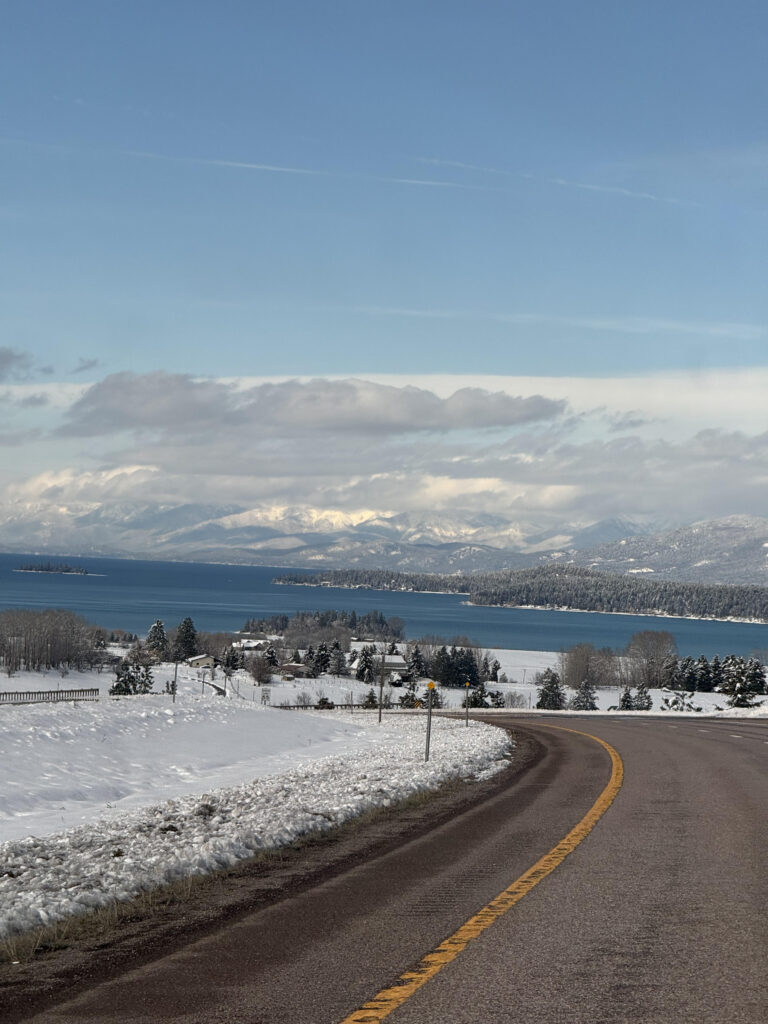
The view of Polson, Montana and Flathead Lake on the way up north
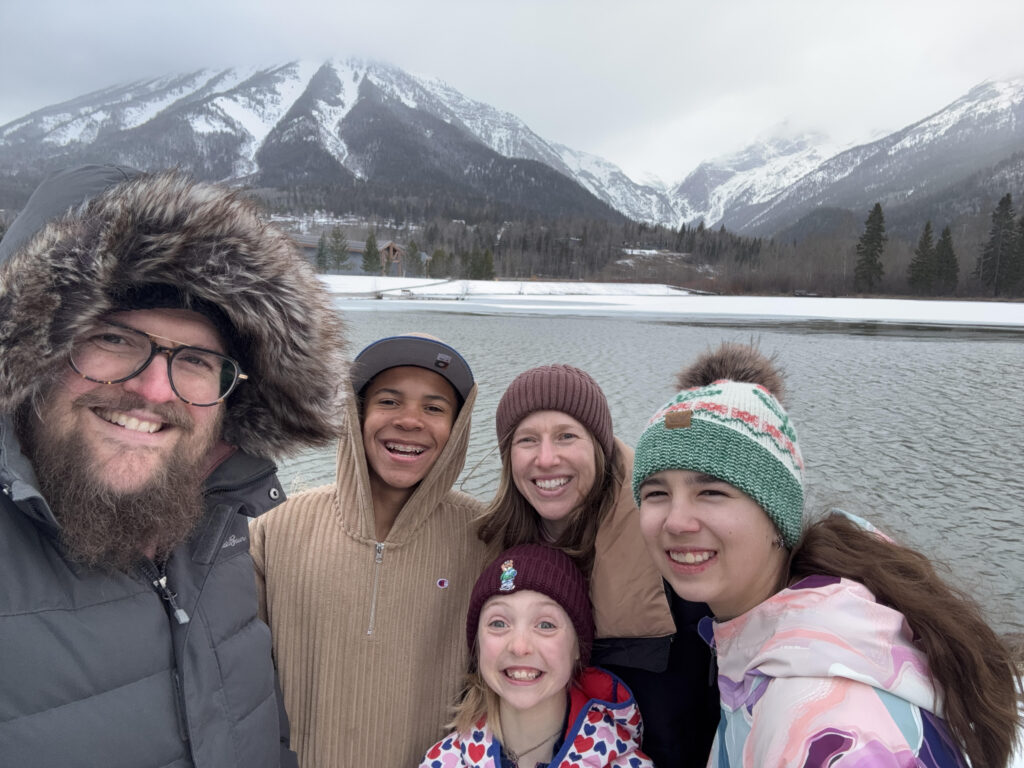
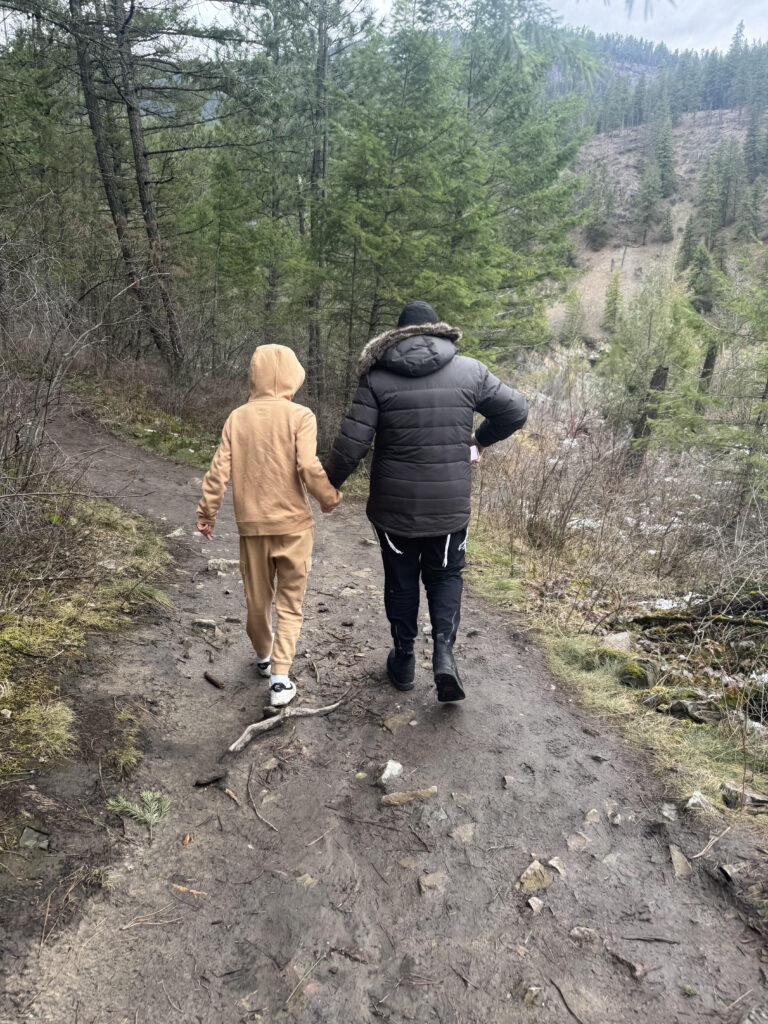
The Bruk family at Maiden Lake in Fernie, B
We are one week away from Zman Cheiruseinu, the Festival of our Liberation, the time when we celebrate the founding of our Jewish nation, and the Bozeman Pesach operation is underway. It’s not just cleaning the house, the cars, the shul, the hachnasas orchim house, it’s also Chavie preparing meals for hundreds as we gear up to bring Pesach to the entire community.
Last week I mentioned that we visited Missoula because our kids had Spring Break and Missoula was en route to our destination. In a moment, I will get to the nature experience that we enjoyed, but first I will share with you the highlight of our trip, which was Shabbos in Kalispell, nestled in the magnificent Flathead Valley outside of Glacier National Park. Chavie’s sister and brother-in-law, Rabbi Shneur Wolf and Chana, opened this Chabad Center in 2018 and revived Jewish life in the area. Last Shabbos, they hosted a Kiddush in honor of their new baby girl, Sarah Miriam, named for Chavie’s grandmother, Sarah Kahanov, who passed away in December, and we had the honor of attending the simcha.
It’s much busier up there during the summer months, so getting a minyan on a winter Shabbos was no small feat. Yet, Judah and Alan (whom I’ve known since I first visited Montana in 2004) showed up, as did Yehuda, who grew up in Woodridge, New York. This was in addition to Michael from Chicago, who has a second home in the area, another couple who recently moved from Tucson, a Jewish fellow who works at Border Patrol, a Texas-born Jew who is of Russian descent and has re-ignited his connection to Yiddishkeit near the ski slopes, and a few other members of our Jewish family. About 25 people in total showed up at shul to celebrate the shluchim’s simcha, which was so beautiful.
It’s amazing to see what one couple can do for the spiritual state of an entire region just by living there and allowing the light of Torah and mitzvos to shine through them.
When celebrating a birth, it’s about giving thanks to Hashem for the miracle of a healthy baby. Even with modern advancements in medicine, having a healthy pregnancy followed by a healthy baby is worthy of immense gratitude. In this week’s parashah, Tzav, we read the holy commandment concerning a Korban Todah, a thanksgiving offering. Our sages teach us that four individuals are obligated to thank Hashem through a Korban Todah: those who recovered from illness, those who are freed from jail, those who crossed the sea, and those who crossed the desert.
While a woman who gives birth does not bring a Korban Todah, that is a technical reality, but in their heart, in their kishkes, it’s an incredible source of hodaah, gratitude to Hashem for His infinite wisdom and blessings that guide the entire process from marriage to conception to birth. While we don’t bring a Korban Todah these days, and it will only resume when we merit the Third Temple speedily in our days, we do mark our gratitude by reciting Pesukim (verses) from the Korbanos section in our prayers, saying Psalm 100 (Mizmor L’Todah), which is recited as part of Pesukei d’Zimra, in the Modim blessing of Shemoneh Esrei, and in the Amidah.
The offering of a Korban Todah was a sublimely joyous experience. One way that this simcha was expressed was that the Korban Todah was accompanied by Nesachim, a wine libation, which was poured on the altar. So, we aren’t just supposed to say thank you, but we’re supposed to say thank you with inner joy. The Shulchan Aruch states that Mizmor L’Todah should be sung with a tune that can be replicated when the final redemption comes, since during the geulah, all of the current songs and praises will no longer be said with the exception of Mizmor L’Todah. The Chayei Adam adds: “Even if a person does not sing these words, he should be careful to recite Mizmor L’Todah with special joyfulness.”
I know that I may sound like a broken record, but gratitude is so important and the more we express our gratitude, the happier we will be and the bigger vessel we make for more of Hashem’s revealed love. The expansiveness that comes about internally via the state of joyous gratitude is immeasurable.
Now back to our trip. During Spring Break, we rented a home in Eureka, Montana, about seven hours away from Bozeman, near the Roosville Border Crossing that connects Eureka, Montana with Grasmere, British Columbia. Remember, Montana is a big place that borders Wyoming, Idaho, North Dakota, South Dakota, British Columbia, Alberta, and Saskatchewan. So, we stopped in Missoula for a quick visit and lunch, and then headed north. We spent five days enjoying the pristine, tranquil area of Montana. We visited Fernie, BC passing along the high mountain passes and the mountain goats on the road. We enjoyed the engineering and size of the Libby Dam on Lake Koocanusa, we hiked Kootenai Falls on the Kootenai River, including the Swinging Bridge. We visited The Yaak, the most remote area in Montana including the Yaak River and some pretty icy mountain passes. The kids skied with their cousins at Big Mountain in Whitefish, and then we drove back to Bozeman via Swan Lake, Seeley Lake, Canyon Ferry Lake, and over McDonald Pass.
All of it was just so good for the soul. Super rejuvenating.
I kept remembering that we are so close to Pesach and I have so much to do but then I kept telling myself “Chaim, be present. Enjoy this calming experience. Celebrate the gift that Hashem has given you today and stop living for tomorrow.” Sometimes nature serves us by giving us the calm we need to relieve the inner and outer chaos in our lives. But at other times, nature can’t take away the hardships we’re dealing with or even remove the chaos; it just gives us an opportunity to enjoy a beautiful part of our world that exists in our life, alongside the hardships and chaos.
The Baal Shem Tov and Rav Nachman served Hashem in nature and now I know why.
Rabbi Chaim Bruk is co-CEO of Chabad Lubavitch of Montana and spiritual leader of The Shul of Bozeman. For comments or to partner in our holy work, e-mail [email protected] or visit JewishMontana.com/Donate.