
Musings Of A Shliach From Montana

Biur Chometz in Bozeman, Montana

The Bozeman Community Seder

A picture of the gathered at the Whitehall Community Library
We all remember Avraham Fried’s famous song from the 80s, “No Jew Will Be Left Behind,” and that’s how Pesach feels for us on the range in Bozeman, Montana. The Rebbe, zt’l, famously spoke about our message to the second son at the Seder, the rasha (wicked one). Why would we tell a person who is struggling with their Yiddishkeit that if they were back in Egypt, they wouldn’t have been redeemed? Do we think a message of judgement and negativity will inspire them to do teshuvah and return to Hashem and His Torah? Why not say something nice to him to inspire him to be better?
The Rebbe went on to explain that our message to the rasha is incredibly positive. We let him know that while in Egypt, he may not have been redeemed, but when Mashiach comes, he will surely be redeemed because “Lo Yidach Mimenu Nidach.” Even the most forlorn Jew out in the Australian outback or rural Montana will be brought home. We are helping all Jews see the opportunity for a bright future.
This was the theme of the Rebbe’s entire shlichus: to find the Jew, lift him up, bring him home, and help him and the world prepare for Mashiach, when every member of our Jewish family must be included. Since I last wrote, my time has been filled day and night with this idea, so instead of writing about the Metzora and the women who gave birth in our parashah, I wanted to share with you, my dear readers, a bit about Passover 2026 in Montana. I will share some yom tov nuggets that will give you a glimpse beyond the rituals. I have changed most of the names to protect my congregants’ identities and their personal journeys of growth and spirituality.
My first story is about Linda. Originally from California, she is an agriculturist who grew up in a secular home with little knowledge about Jewish tradition. I only know about her because she has a religious sibling who stayed with us for Shabbos once. I texted Linda and asked her if I could bring her matzah for Pesach and she said yes. But when I asked her for her address, she hesitated and wrote: “The address is…. You can put it behind the house, near the…. My address isn’t shared due to a case of domestic violence to protect me from…”. No matter the specifics, we brought hand-made shmurah matzah to Linda and to over six hundred homes with a Jew to ignite their neshamos and connect them with their illustrious heritage.
Maya is originally from France. She married a non-Jew, had one child, and didn’t give the child much of a Jewish identity or education. The child, now in his 30s, reached out to us about a year ago, and today he and his family are learning, experiencing, and enjoying Yiddishkeit. Their journey has been beautiful. Maya isn’t happy about her kid embracing “Orthodoxy,” but two days before the Seder, I received a text from her saying: “I know it’s late, but if there’s still room, my husband and I would like to attend the Seder.” I’ve been in America for 40 years and have not attended a Seder since….” Forty years is a long time, but due to her son, the words of Malachi: “He will turn the hearts of the fathers back to their children and the hearts of the children to their fathers” is happening in real time. Maya stayed at the Seder until the end and who knows where this will go?
We’ve created something magnificent at our shul when it comes to Hallel. While 95% of the congregants never sang it before, over the past decade, we made it into a beautiful tradition.
Normally Jeff is our Kohen, and he was in town during the first days of yom tov, but he was away for the second days. Another congregant, Ben, doesn’t come as often, but we found out just before Purim that he too is a Kohen. So, on Shevi’i Shel Pesach, Ben was in shul and I instructed him on how to bless us with his very first Birkat Kohanim. Our Levi, Irwin, washed his hands and one of the visitors guided him to take off his shoes, make the berachah, and respond to the Chazzan’s words of the priestly blessing. It was hard for him as he’s never done it before, but he did beautifully. Afterwards, everyone in shul thanked him with the traditional “Yashar Koach, Kohen” and he was elated, and committed to practice his Hebrew for next time. I could imagine the reverberations in Heaven with joy and nachas from a descendant of Aaron HaKohen delivering his first berachah to Klal Yisrael.
Liat, a local businesswoman, showed up on Acharon Shel Pesach for Yizkor. I was curious as to why, and she told me it’s to memorialize her brother Zev who left this world by suicide some two decades ago. She shared with me and Chavie a bit about her family and then said something so powerful: “Rabbi, you know I was always one of those Jews with Israeli parents, but super Americanized, that if people asked me if I was spiritual, I would say yes. It was only after experiencing Judaism with you guys that I realized that it’s not just spirituality, but ritual. And religion can be spiritual too.” It’s these moments that make it all worth it, helping me to understand the Rebbe’s view of Klal Yisrael. She later returned for the niggunim and Seudas Mashiach before the holiday ended.
Inbal texted me 24 hours before the Seder. “Rabbi, I know I said we are coming, but I can’t find a babysitter, so we will come for Shabbos lunch instead.” Inbal is from a Sephardic background. I’d previously arranged for the bris for both her boys, so I felt comfortable enough to text her back that “You should come with the kids. I know they will be cranky the next day because of staying up late, but these are the Jewish memories they will never forget and will remain etched in their hearts and minds forever. My kids are cranky too the next day…” She wrote back: “Rabbi, you’re right. We will be there and I will register this evening.” They stayed until after the Afikoman, and I’m glad a pushed a bit.
Rochel grew up in Brooklyn in a typical frum family with ancestry in many Chassidic dynasties and giants of Judaism. She moved to Montana to help people learn about health and the proper relationship with food, and she’s really good at what she does. She lives about two hours away from Bozeman, but she made it to the first and second Seders and then to lunch and then came back for the second days. She loves Judaism, loves her people, and our family adores her. For decades, her neshamah was yearning for a non-judgmental and meaningful Judaism, and she found it in our home, our community, and now she’s just part of the family.
David was one of 16 Jewish college students from MSU that joined our first Seder. He sat through it almost until the end and fulfilled the mitzvos and customs of the holiday. As he was about to leave, I said “Dave, your dad says that you were the best in your family to participate at the Seder and do it right.” His smile was worth a million bucks. It’s amazing what a kind word, a simple reminder, an uplifting comment can do to change the trajectory of a person’s life.
During the afternoon of the first day of Pesach, the weather switched from 55 degrees and sunny to 25 degrees and blizzardy. By the time the second Seder arrived late Thursday night, we had close to six inches of fresh powder on the ground. Jerry was visiting from Tennessee for Pesach and was staying about three miles away from our home. He was there at the first Seder, came for morning davening and lunch, and I was certain that he wouldn’t make the trek since the snow was super hard to walk in. Yet, to my pleasant surprise, he showed up for the second Seder and kept doing the walk. He came to davening in shul the next day and also to Friday night dinner and to Shabbos morning davening and lunch. He was determined to celebrate yom tov properly and when there’s a will, there’s a way. He walked a total of six round-trips, which came to thirty-six miles over three days. I was humbled and inspired by his determination, and you should be too.
In this week’s double parashah, Tazria-Metzora, while discussing how to proclaim someone a Metzora(spiritual leper) the Torah tells us that “Vehuva el haKohen—and he shall be brought to the Kohen.” The ultimate designation must come through a Kohen, even if the actual assessment at times comes from the Torah scholars who know the laws of tzara’as. The Rebbe explained that while halacha is halacha and there’s not comprising the will of Hashem, we need to have a Kohen, who like their ancestor, Aaron HaKohen, is a person of peace and love who will make the determination because The kohen’s inherent kindness and sensitivity would lead him to spare no effort in learning from the scholar whether it was possible to address the matter in a lenient fashion and perhaps find a way for the struggling Jew to remain pure.
That’s what the Rebbe trained us to do every day: seek the goodness in our fellow Jew, seek the holiness in our brothers and sisters, and seek the humanity in every human being. It is easier to be judgmental, but changing lives through compassion and kindness is the way to go.
Let me throw in one more to wrap it up. On Monday of Chol Hamoed I was invited to give opening remarks at the traveling Anne Frank Exhibit at the Whitehall Public Library, about an hour away from Bozeman. With about fifty local gentiles in attendance and many more online, I spoke for twenty minutes about my Zayde, Reb Shimon Goldman and his incredible family who were murdered by the Nazis and how he restarted his life and built a beautiful family. I spoke about the Jew-hatred in America from the left and right and how we cure our society from the plague of toxic hatred. It was educational and I was glad that three of my kids were in the room to listen, and if you’d like to watch the speech you can email me at [email protected] for the link or go to my YouTube channel @JewishMontana and you’ll see it there.
Let the inspiration continue.
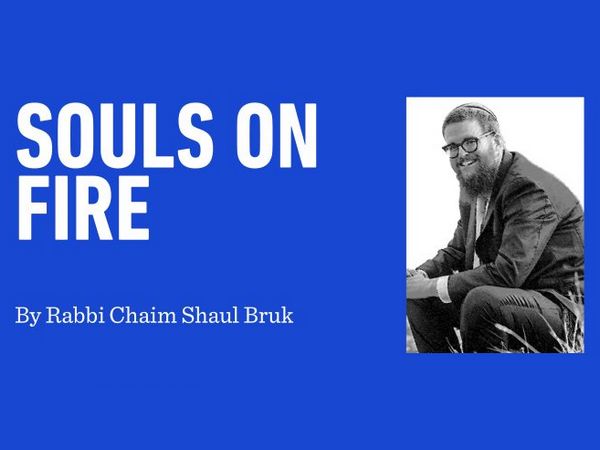
Rabbi Chaim Bruk is co-CEO of Chabad Lubavitch of Montana and spiritual leader of The Shul of Bozeman. For comments or to partner in our holy work, e-mail [email protected] or visit JewishMontana.com/Donate.