
Musings Of A Shliach From Montana
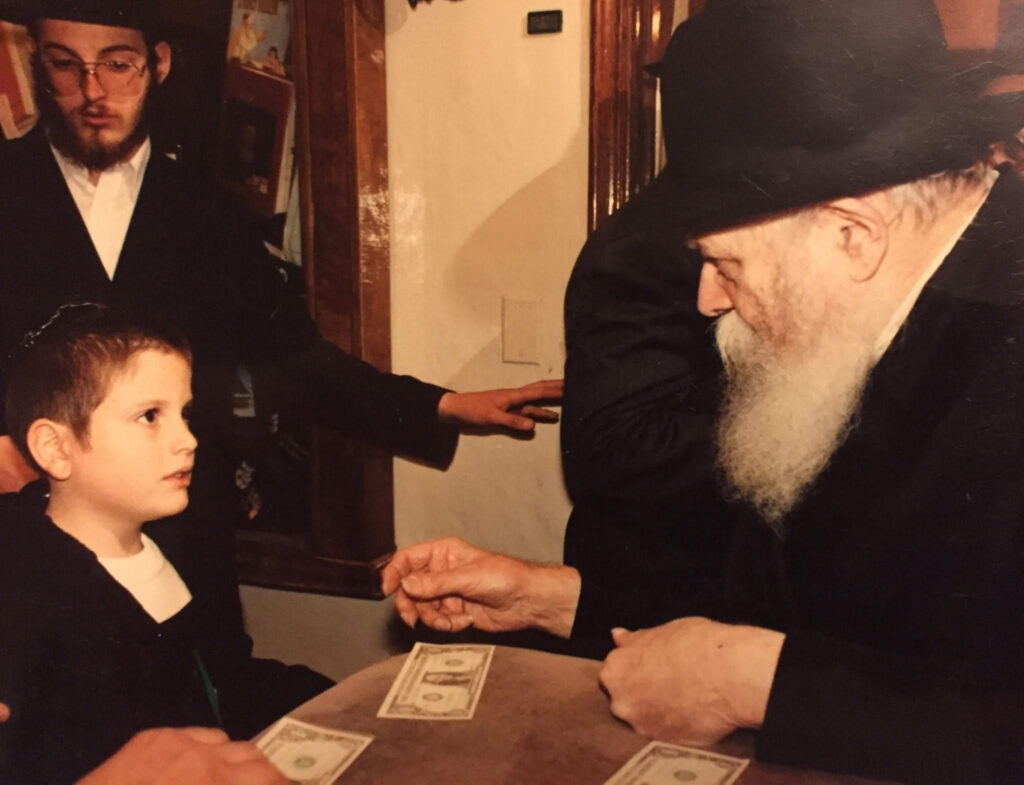
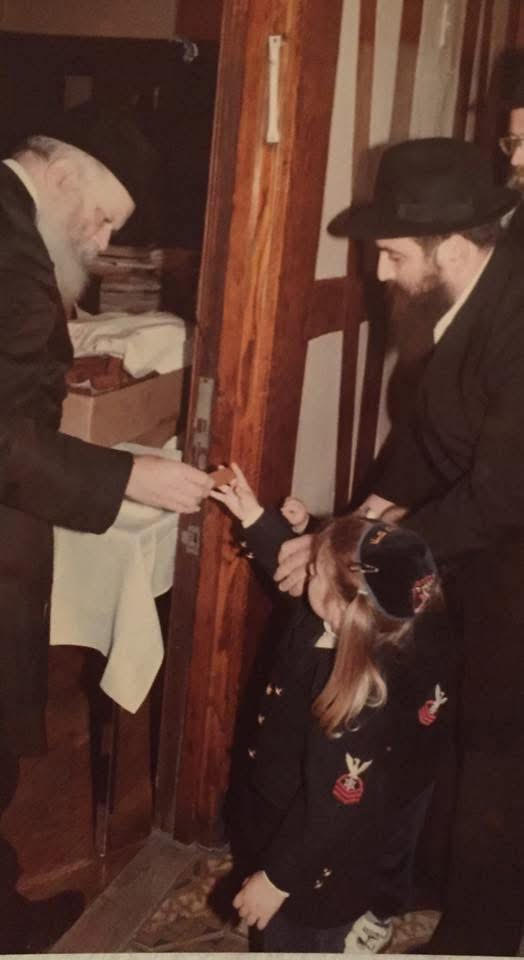
Rabbi Chaim receiving two dollars from the Rebbe in honor of his 9th birthday
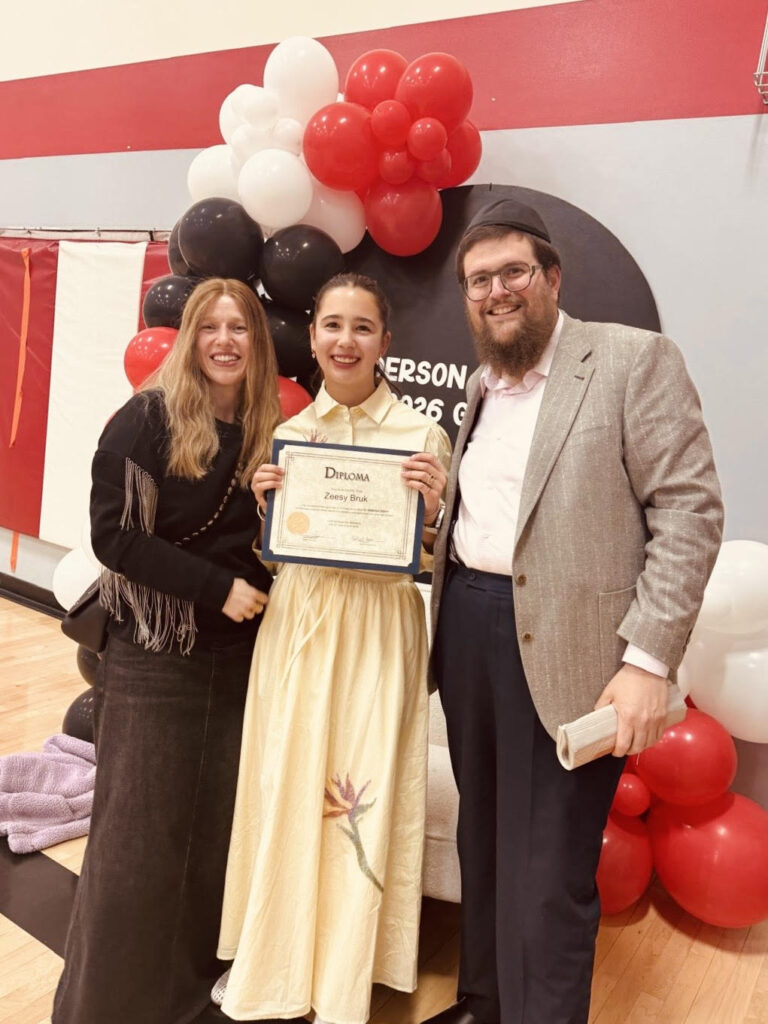
Zeesy with Rabbi Chaim and Chavie at her graduation last week.
It’s all about achdus.
Our beautiful Jewish communities must learn and re-learn the art of disagreeing with an idea without bashing the other person who is presenting the idea. It’s important to be principled and to follow the instructions of your family rav, rosh yeshiva, or Rebbe, but it must never come with the negative trait of disparaging other Jews who think differently or have been guided by their rabbanim to journey along a different path.
Our daughter Zeesy, who is fifteen, graduated middle school last Wednesday. It’s a big milestone for a child who has struggled with special medical needs since birth and lives with these struggles daily. The school she attended is called Anderson. It isn’t Jewish, yet it’s a perfect home for her education and the Special Ed she receives. She rocked it throughout middle school with awesome teachers, staff, and a wonderful class atmosphere, and I was ecstatic to share her special moment. Most people saw my post about her graduation and sent wishes of congratulations, including many of her Camp Simcha staff who love and adore her, but a few people couldn’t help but ask some questions like, “Is it a Jewish school?” and “What do you do about chinuch?” etc.
Do they genuinely think that Chavie and I don’t know the importance of every Jewish child receiving a proper Jewish education focused on teaching the beauty of Yiddishkeit? Our Rebbe always encouraged every child to get the pure, unadulterated Jewish education, which is what I received. Yet, every child is unique and comes with unique needs and it’s not anyone’s business how we make our decisions, especially when these questions are posed from a place of judgment.
That’s precisely my point. We so often judge others without knowing or even caring about the details of the story, the history, or the background. But we think we know it all and use “religion” as a tool for division, judgment, or a form of superiority when our Torah teaches us the opposite.
In this week’s parashah, Korach, we read about the mutiny that Korach instigated and led against Moshe and Aaron. The Mefarshim explain that Korach operated in a divisive manner; everything he did was geared towards dividing up Jews into sub-groups, and he was fairly successful. There are ways to question systems and opinions and debate hashkafa without the conversation descending into hatred. Korach used religion to create division; he did it in the name of service in the tabernacle, using holiness as the excuse for communal fragmentation.
If it’s divisive, it ain’t holy.
Baruch Hashem, last Shabbos we hosted guests from all over, but especially from Israel. We had a woman from Miami, a family from Chicago, a couple from Neve Daniel, a couple from Hoshaya, a couple from Merkaz Shapira, two couples from Gimzu, a young man from Kfar Saba, a young man from Givat Shmuel, a couple from Yerushalayim, and of course many of our local Jews who joined us throughout Shabbos. It was spectacular to have a mixture of Jews, including those who served in the army and those who didn’t, those who dress in skirts and dresses and those who wear pants, locals with tattoos on their arms alongside kids who go to yeshiva, a Yemenite couple alongside a Jew of German descent. We enjoyed awesome meals created by Chavie, chatted about Torah and Pirkei Avos, sang together, and enjoyed four Shabbos minyanim.
It’s a no brainer.
This idea that we can disagree with ideas and still embrace those who believe them was something instilled in us by our dear Rebbe of blessed memory, whose 32nd yahrzeit we commemorate on Thursday, June 26, the 3rd of Tammuz. The Rebbe was a man of extreme principle on halacha, hashkafa, minhagim, and anything he learned from his saintly father-in-law, the Friediker Rebbe, but it never got in the way of his relationship with fellow Jews. He shared his disagreements and he did so with passion. He simultaneously shared love, light, and warmth to every Jew, and every human being, because they are part of the Jewish family, the human family. From Conservative rabbis to left wing Israeli politicians, from Gedolim who saw the world differently to those who antagonized his shlichus movement, he never stopped caring for his brothers and sisters in all their flavors.
An eruv, a kashrus agency, serving in the IDF, Yom HaAtzmaut, Chalav Yisroel, and everything else; great issues to debate, but we must debate like menschen. Having Torah guidance and opinions is vital; it’s what makes us tick and allows us to live as Jews. But if someone does it differently from us, must we shun them? Can’t we celebrate Torah life together? Must we put others down in order to lift ourselves up? I am currently reading a book in Yiddish about the life of the Vilna Gaon. It’s a book I received for learning Mishnayos Baal Peh in school in the late 1980s. I’m only halfway through it, but all I’ve seen so far is a person who grew up devoted to Torah and his fellow Jews going to extremes not to hurt or embarrass another Yid, even if that Jew hurt him.
There’s so much that I can write about the Rebbe, zt’l, but to me the greatest thing about him was his love for Klal Yisroel and his willingness to interact with everyone, seeing their essence, not their externalities. Most people don’t know that the Rebbe had a relationship with Rav Yechezkel Abramsky, Rav Amram Blau, The Satmar Rav, Rav Shlomo Zalman Auerbach, Rav Isser Yehuda Unterman, Rav Yisroel Zev Gustman, Rav Yitzchak Isaac Herzog, Rav Yosef Eliyahu Henkin, Rav Joseph Ber Soloveitchik, Rav Moshe Feinstein, Rav Yitzchak Hutner, and of course hundreds of Chassidishe Rebbes and Sephardic Gedolim. Most of us never heard about these relationships, because various Korachs didn’t want us to know how well we can get along and how we have so much more in common than that which divides us.
If you know Israeli politics, you know that back in the day, Yitzchak Rabin, Shimon Peres, Arik Sharon, and Menachem Begin couldn’t be further away from each other. The Rebbe believed that not one inch of Israel should ever be given back to the Arabs as it puts Israel in danger (we see now how right he was) and that we should only accept converts who convert according to halacha. Yet, the Rebbe was visited by all four of them and many others. We can love and disagree at the same time. After the Rebbe was niftar, the Knesset held a memorial for the Rebbe’s Shloshim that included speakers like Eli Dayan and Moshe Shachal from the Labor Party, Moshe Katsav and Ron Nachman from the Likud Party, Rav Yosef Ba-Gad and Rehavam “Gandhi” Ze’evi from the Moledet Party, Rav Avraham Werdiger from the Agudas Yisrael Party and many others. They didn’t all agree with the Rebbe, and he certainly didn’t agree with much of their politics, but they knew that he loved them, appreciated them, and was willing to interact with them with respect and dignity.
I just read that HaRav Yisroel Bunim Schreiber, rosh yeshiva of Yeshivas Nesiv Hadaas, shared that recently, when getting cancer treatment, a doctor walked into his room and when he saw that he was chareidi, said he would be back in a minute and sent another doctor in his stead. He would not care for a chareidi patient because he was religious. It’s horrifying and disgusting. At the same time “chareidi” students are blocking traffic and calling police officers Nazis while stopping soldiers from davening in their local shul. My father was delayed two hours heading to my cousin’s wedding because they were blocking the road. Does this sound like Jewish unity or Korach divisive programming? It’s gotta stop and it starts at home. Our children should never hear us talk negatively about other Jews; we can discuss our hashkafa all day long without putting anyone else down.
We are our best version of Am Yisroel, when we learn to respect each other and treat each other with dignity.
In My Story (Volume 1 published by Jewish Educational Media), Mrs. Devorah Emanual shares the following story:
“I grew up in a non-observant home on Long Island, New York. It was not until I was in my late twenties, when an emissary of the Lubavitcher Rebbe, Rabbi Gutman Baras, opened a synagogue in Plainview, Long Island, that I became religiously involved. Through Rabbi Baras and his wife Chana, I found my way to Machon Chana, which is a school in Crown Heights for women with no previous religious background who want to study Torah.
I made rapid progress through their course of study and the next year, I met my future husband, Menachem, who had also returned to Yiddishkeit as an adult. By July of 1983, we were engaged. We wrote to the Rebbe, received his blessing right away, and began to make plans for the wedding. Before setting the date, we checked the community calendar to ensure that we were not conflicting with any other event our guests would feel obligated to attend.
We considered two dates. Menachem favored a date in the month of Tishrei, which includes many important Jewish holidays. Many of his rabbis and colleagues from Seattle would likely be in New York during Tishrei and they’d be able to participate in the wedding. I favored Kislev, the month of Chanukah, because that was my favorite month of the year. We wrote to the Rebbe, naming the two possible dates, one in Kislev and one in Tishrei, and asked which one he thought was better.
The Rebbe responded with a note: “Why wait so long?” and circled the earlier date, the 12th of Tishrei. (We later learned that, in general, the Rebbe favored short engagements.) The next day, the 13th of Tishrei, was the anniversary of the passing of the Rebbe Maharash, the fourth Lubavitcher Rebbe, when the Rebbe customarily held a farbrengen. But on the 12th of Tishrei, the community calendar was empty, so it was a good day for our wedding.
The morning of the wedding, as I was getting ready, I got a phone call from Rabbi Binyomin Klein, the Rebbe’s secretary. Now, I want to make it clear that I had never met the Rebbe in my life. I had written to him for advice and for blessings, but I’d never had a private audience with him, so as far as I was concerned, the Rebbe didn’t know me. Rabbi Klein said, “For spiritual reasons, the Rebbe will hold the farbrengen a day earlier than had been planned, the night of your wedding.” But the Rebbe wanted to, and these were his exact words: “appease the bride.”
As I said, the Rebbe had never met me and didn’t know who I was, so why was he assuming that I needed to be appeased? But the truth was that I really did need appeasing. I was really mad inside because I believed that the farbrengen would ruin my wedding. Menachem’s friends and rabbis from Seattle, who had flown in for the occasion, would surely want to attend the farbrengen. My friends from Machon Chana would also want to go. So, who will be at my wedding?
Yes, I needed appeasing, which is what the Rebbe knew even before Rabbi Klein made the phone call. Rabbi Klein said that it was the Rebbe’s suggestion that we call all the vendors: the caterer, the florist, the photographer, and the band, and tell them all that the wedding would begin “on time,” which was 6:30 p.m. Often, a Jewish wedding doesn’t begin on time, and many people arrive a couple of hours late. But if the wedding did start on time, there would be no conflict with the farbrengen, which was scheduled for much later, at 9:30 pm.
Then Rabbi Klein added an offer made by the Rebbe, that our Sheva Brachos should take place at the Rebbe’s farbrengen. Basically, this meant that we would leave the wedding hall, Oholei Torah, walk across the street to Chabad Headquarters at 770, and continue the wedding there.
After explaining all this, Rabbi Klein asked, “Do you give your permission?”
Of course, I said yes. What else was I going to say? I mean, I didn’t have a choice! But inside I was saying, “No, no, no.” I believed that no one would come on time, and the meal would be rushed. My wedding will be ruined! After I hung up the phone, I dutifully called the vendors as instructed, but I didn’t feel good about it at all. About an hour later, I received a call from Rabbi Shloma Majeski, the dean of Machon Chana. He was very excited. “What do you think?” he asked me.
I held my tongue.
He continued, “Do you understand what a special merit this is, that your Sheva Brachos will take place at the farbrengen?” And he asked me who my ancestors were so that I should merit such an honor.
I said, “I’m nobody, I’m really nobody, and I don’t see this as an honor because nobody is coming to my wedding.”
“I will be there,” he said.
I said, “Yes, but you will leave at 9:30 to go to the Rebbe’s farbrengen.” He said, “No, I promise. I will be at your wedding until the end.” He also got an assurance from Rabbi Sholom Ber Levitin, from Seattle that he too would stay until I decided when “the end” was.
That meant a lot to me. At least Rabbi Majeski and Rabbi Levitin would stay at my wedding till the end. Now I felt a bit better about the whole thing. I was also beginning to understand how much the Rebbe wanted to guarantee that it would be a truly joyful occasion for me.
In the end, it proved to be that and much more. After the ceremony under the Chuppah, I lifted my veil and saw many people I didn’t recognize all around me. Later, there were lots of people dancing whom I had never met before. Apparently, the Rebbe had put the word out that people should come to the wedding, and they did! I didn’t feel at all that anything was missing, not for a moment. My heart was full: I was completely appeased, completely joyful.
In fact, right after our Chuppah, I noticed a big commotion near the curb in front of 770. The Rebbe was leaving and people were gathering around to see. Suddenly the car stopped, the Rebbe got out, stepped toward us, and wished us “Mazal tov!”
After the wedding meal and the dancing, we walked over to 770. The place was packed—as it always is at that time of the year—with all the locals plus people from all over the world. I went up to the women’s section and, because I was a bride, the women made room for me at the front, so that I could see the Rebbe. Just then, he was talking about the mitzvah of Simchas Chasan V’kallah, the commandment of rejoicing with a bride and groom. It was such a beautiful thing because it was our wedding and the Rebbe was talking about us.
When he finished, the Sheva Brachos were recited and the Rebbe answered “Amen” after each one. Indeed, these Sheva Brachos were heard round the world because the farbrengen was being broadcast via an international telephone hook-up.
When I think about it now, it was mind-boggling that the Rebbe incorporated our simcha into his farbrengen. This was not anything that we had asked for. The Rebbe offered it out of sensitivity to a newly religious couple whom he had never met, and whose wedding might have been diminished otherwise. From among the thousands of letters that he received, he remembered that we had picked this date, and as a result of his great sensitivity, we had the most amazing wedding. Forty-three years later, these Sheva Brachos still sustain us.”
As we commemorate the Rebbe’s incredible life, let’s resolve in his honor and in his saintly memory to live by his standard of love, unity, and lifting up, without ever pushing anyone down.
Rabbi Chaim Bruk is co-CEO of Chabad Lubavitch of Montana and spiritual leader of The Shul of Bozeman. For comments or to partner in our holy work, e-mail [email protected] or visit JewishMontana.com/Donate.