
Musings Of A Shliach From Montana
Rabbi Chaim and Yeshiva Week.jpg
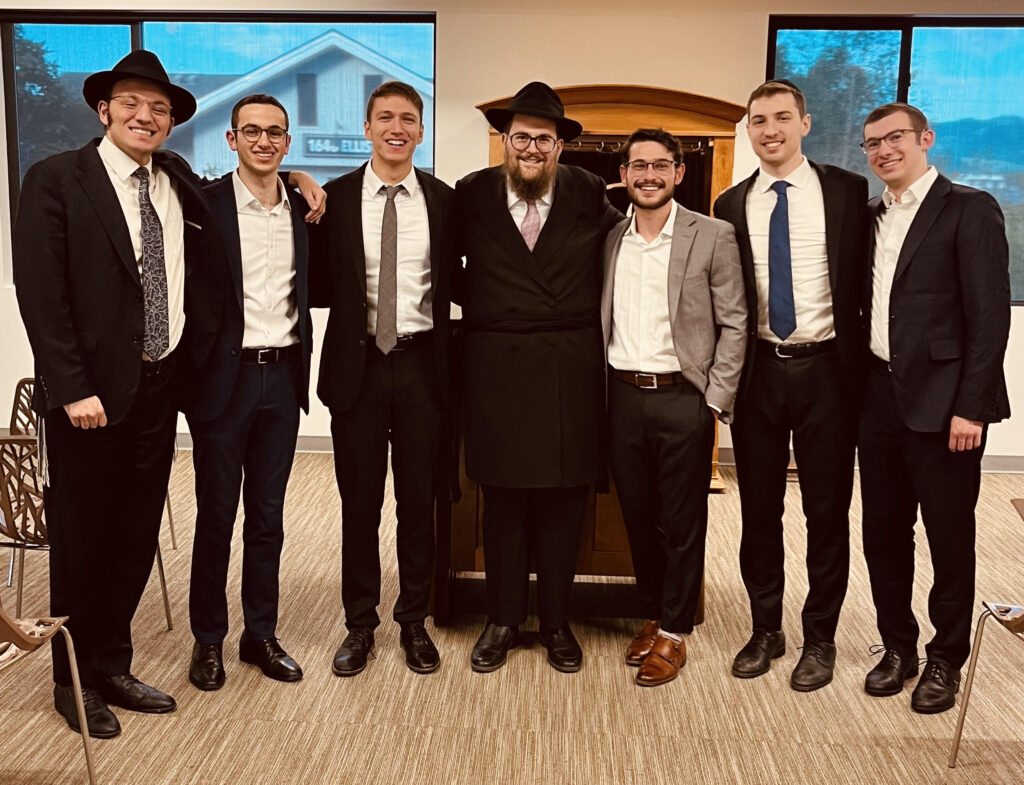
Rabbi Chaim and Yeshiva Week
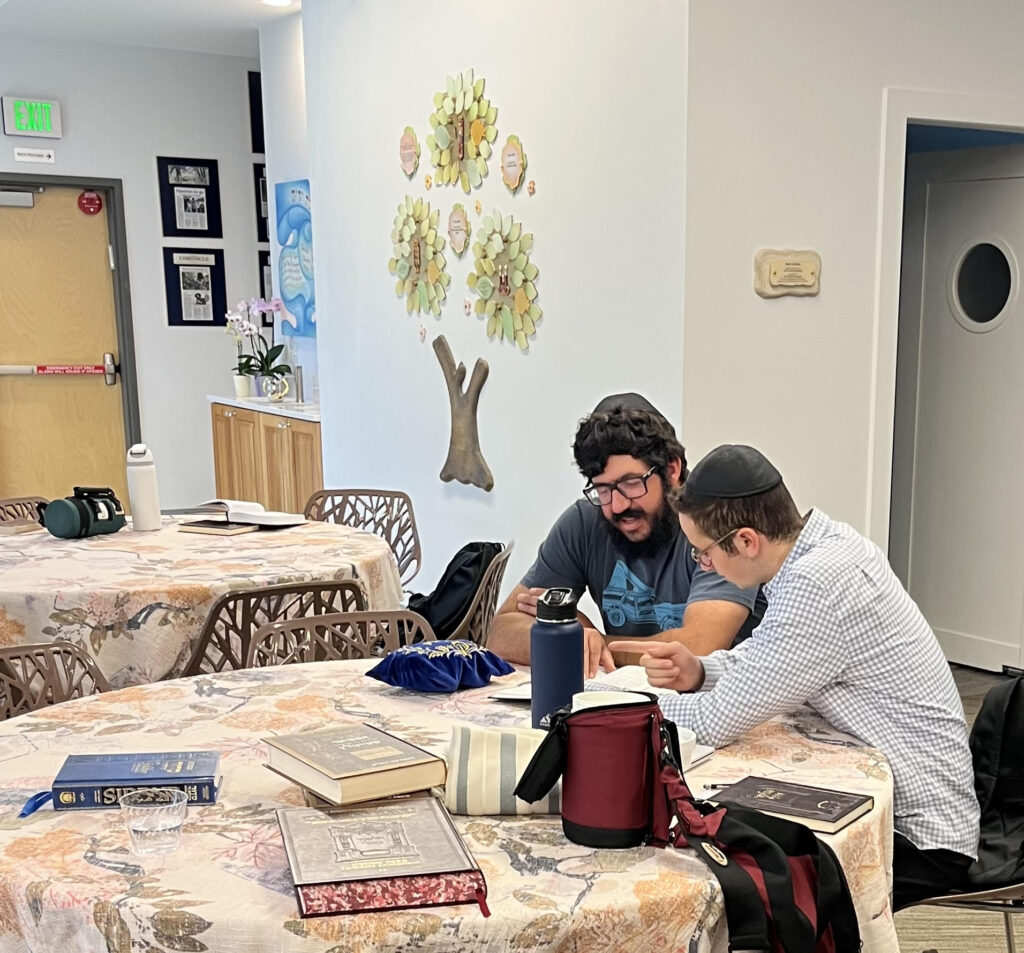
Abie Shaoul learning with Moshe Ben Moshe
It’s been a busy week.
Shabbos was packed full of visitors and we conducted two shiurim (parashah and Tanya), the kids were home from school, including Chaya, who is back from Chicago for a bit, we had minyanim on the Rebbe’s yahrzeit, visited a Jewish patient in the hospital, and provided kosher dinners for IDF soldiers on a retreat in Montana (more on that next week), and all our other regular activities. Yet, the most exciting part of the week was Yeshiva Week.
Yes, you heard me correctly. Yeshiva Week. Here’s the story:
In December of 2025 I received a WhatsApp message from Josh, a YU student, asking me if I would like to host a Yeshiva Week with a group of six YU students who would come to Bozeman and be available to learn with chevra in our community. They didn’t hide their side hustle, which was a chance to explore Yellowstone and see some nature, and wondered if I would fly them out for a week.
We went back and forth figuring out all the details, finding the best dates for the program, and booking tickets. Last week, the guys started rolling into Bozeman. Josh Diament, Stephen Olshin, Mordechai Fox, Ryan Friedman, Abie Shaoul, and Levi Langer. They are friends and a diverse representation of Klal Yisrael. One wanted to use the mikvah on Shabbos morning, another had a black hat, another is of Syrian descent following Sephardi customs, etc. Each of them added a special flavor to our community. Each had his own unique journey in kedushah and how to live with friends with different minhagim.
Each time I walked into shul, I heard the bachurim learning with the locals. I heard Rav Yishmael’s thirteen forms of extrapolating Torah law being studied with Robert, Shemiras HaLashon studied with our own Moshe Ben Moshe, Pirkei Avos with Mitchell, Rambam with Menny, and Chumash with Liam. All week long I heard the Kol Torah, the divine sound of Torah, emanating from our Chabad Center.
Sitting in my office and hearing the bachurim debating the meaning of the Gemara in Ben Sorer U’Morehwas geshmak. After spending time with these guys, I think their parents along with YU should be very proud of them. They were without a doubt some of the most refined, focused, and caring bachurim I’ve ever met, displaying a deep love for Torah and Yiddishkeit. At Shabbos lunch, we sang together for over an hour, including songs from Lubavitch niggunim to Carlbach and Eitan Katz, uplifting everyone in attendance with their warmth and heart.
Spending time with them also gave me insight into the YU world, including some of their hashkafos, and I’m certain they learned a ton about Chabad hashkafah by spending time with us. I’m so glad I took them up on their offer to join us. It’s so important that different segments of Klal Yisrael get to know each other by spending time together and learning from each other. We may not agree on Yom HaAtzmaut, but we sang Keli Ata together beautifully. Of course, the relationship of the Rebbe with the Rav, Rabbi Soloveichik, dates back to their time in Berlin and remained deep until the Rav passed in 1993.
Interestingly, in this week’s double parashah, Chukas-Balak, the Torah tells us how Jews will remember their journey to Eretz Yisrael. The verse says, “Concerning this it is said whenever people recount the wars of Hashem, ‘What He gave at the Sea of Reeds, and the valleys of the Arnon River.’” So, just as we celebrate our survival at the Yam Suf, we will also remember our survival through Hashem’s incredible miracles of moving mountains to remove the Amorite threat.
The Gemara in Kiddushin says a more homiletical explanation for this verse: Rabbi Chiyya bar Abba says: Even a father and his son, or a rabbi and his student, who are engaged in Torah together in one gate become enemies with each other due to the intensity of their studies. But they do not leave there until they love each other, as it is stated in the verse discussing the places the Jewish people engaged in battle in the wilderness: “Therefore it is said in the book of the wars of the Lord, Vahev in Sufa [b’Sufa], and the valleys of Arnon” (Numbers 21:14). The word “vahev” is interpreted as related to the word for love, ahava. Additionally, do not read this as “in Sufa” (b’Sufa); rather, read it as “at its end” (b’sofa), i.e., at the conclusion of their dispute they are beloved to each other.
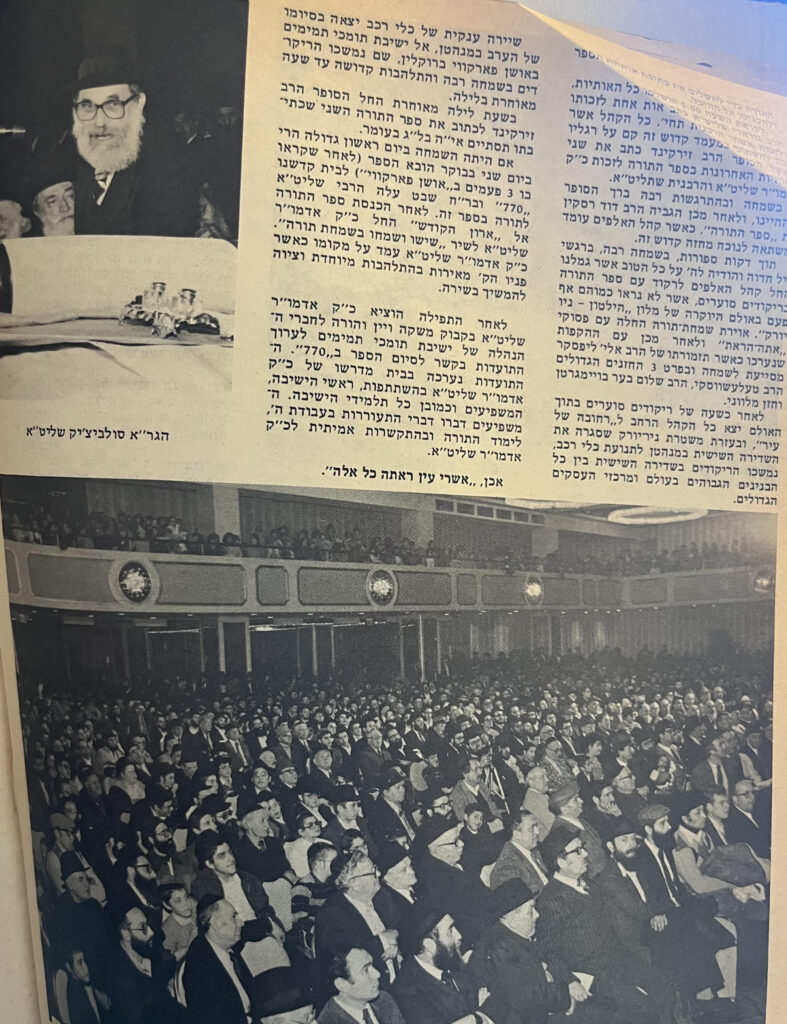
To me it’s basic. We must be able to debate Torah fiercely and then know how to still be fellow Jews who treat each other with utmost respect and see value in someone else’s path that perhaps different from our own. Just last Shabbos, I was reading an old edition of the Israeli magazine, Kfar Chabad, from the winter of 1982. In particular, I read an article about the first Hachnasas Sefer Torah (Torah inauguration ceremony) for a Torah scroll dedicated to the central Chabad Yeshiva Tomchei Temimim that took place with 15,000 attendees at the Hilton Hotel on Sixth Avenue in Manhattan. The two guest speakers were Rav Pinchas Taitz of Elizabeth and Rav Aharon Soloveichik of Chicago. Rav Taitz spoke about his conversation with the previous Lubavitcher Rebbe, Reb Yosef Yitzchak Schneerson, when he visited American in 1929 in which he told Rav Taitz that “We must work overtime with the Jewish students on university campuses” and how visionary that was for him to say so long ago.
Rav Soloveichik, who came from Chicago for the event, addressed the crowd by saying that “Lubavitch and Brisk/Volozhin share an ancient bond. Lubavitch has merited to combine orah (light) and simcha (joy) in their Torah study and spreading of Torah across the world. Lubavitch instills a love for Torah but also a devotion to sharing Yiras Shamayim and love for fellow Jews everywhere.”
And then, paraphrasing from the Gemara in Shabbos, Rav Soloveichik said that in Lubavitch, “They are bringing to light novelty in Torah that hadn’t been introduced even in the study hall of Yehoshua Bin Nun.”
I share this because I think there’s a special bond between Lubavitch and the Soloveichik family (and Brisk Rabbonim) and it should be noted so future generations don’t forget that divisiveness is not a Jewish way of life, and all of us—from Lubavitch to Lakewood, Brisk to Satmar, YU to Belz—need to celebrate each other’s gifts to Klal Yisrael.
On the Gemara’s idea of “peace at the conclusion of a fierce debate,” I saw a fascinating anecdote. In the 18th century, a harsh debate erupted in Germany as the Yaavetz (Rav Yaakov Emden) accused Rav Yonasan Eibshitz of being a member of Shabtai Tzvi’s (Yemach Shemo’s) messianic cult. Almost every Gadol in Europe took a side in this war (mostly siding with Rav Yonasan), with the Pnei Yehoshua siding with the Yaavetz and the Vilna Gaon and the Baal Shem Tov siding with Rav Yonasan. The sefer Derech HaNesher quotes Rav Ezra, one of the Chasam Sofer’s students, who writes that his teacher was careful not to put the seforim of the Yaavetz and Rav Yonasan on the same shelf next to each other. He wouldn’t even put the Pnei Yehoshua next to Rav Yonasan’s Kreisi Upleisi or Urim VeTumim.
One day, to his surprise, his student saw the sefarim adjoined on the shelf. When he asked the Chasam Sofer what had changed, he replied, “I was notified from the heavenly abode that they made peace in heaven and now it’s settled.”
Let’s not wait until we’re in heaven to make peace with other types of Observant Jews. Let’s not use Torah as a tool to divide, and if you find yourself immersed in a bubble that sees everyone else as “other,” get out of your bubble and go hang out with other Jews who may not wear the same hat as you.
Rabbi Chaim Bruk is co-CEO of Chabad Lubavitch of Montana and spiritual leader of The Shul of Bozeman. For comments or to partner in our holy work, e-mail [email protected] or visit JewishMontana.com/Donate.