
Musings Of A Shliach From Montana
By: Rabbi Chaim Bruk
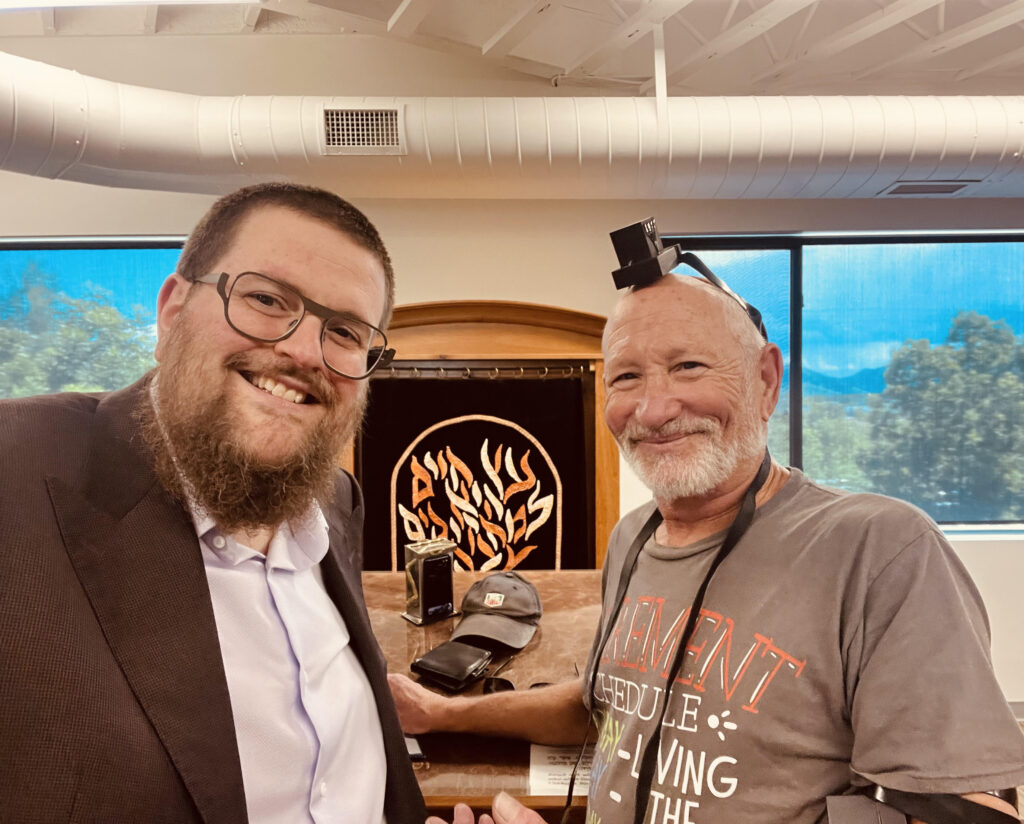
Rabbi Chaim and Brian laying Tefillin last week
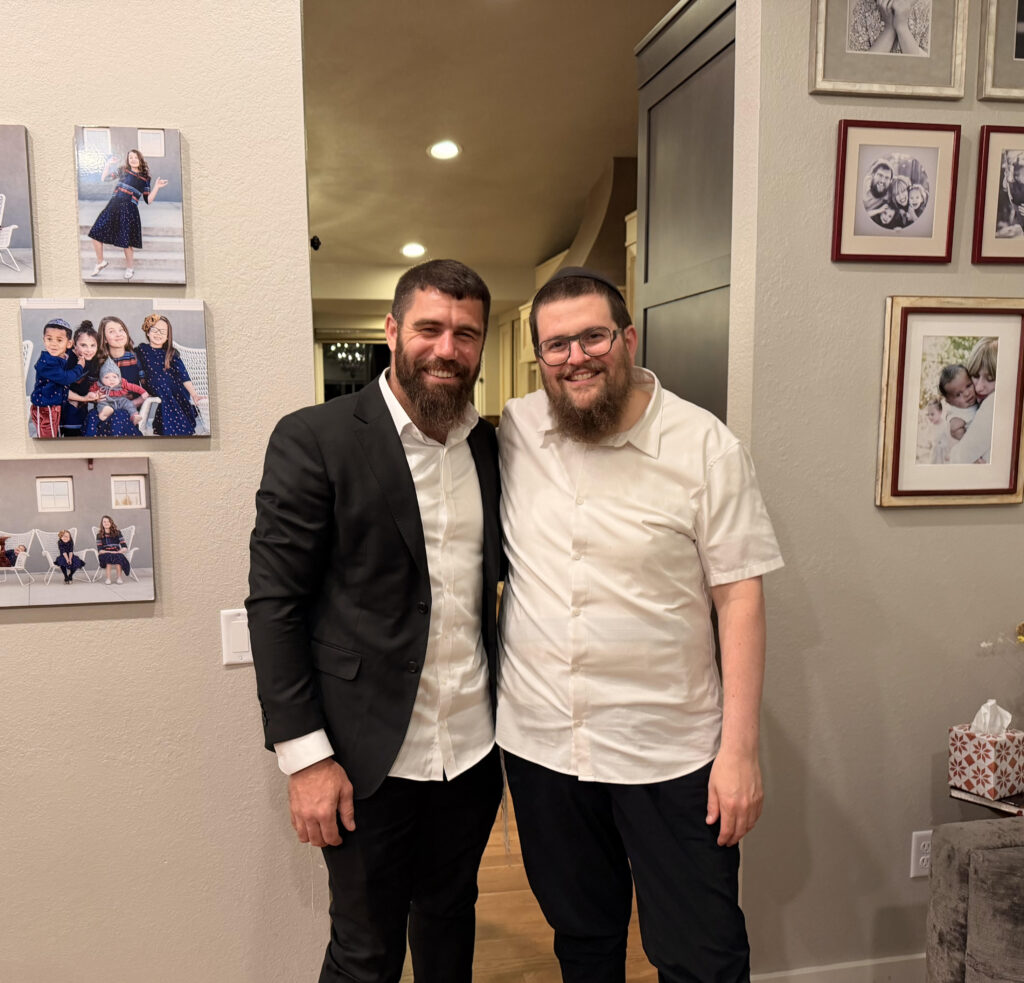
Rabbi Chaim Bruk and Sgt. Mordechai Shenvald

Zeesy and Charna Rochel at Camp Simcha Special 2026
I’d like to give you an inside scoop: I have a lot on my plate. Between my family and shlichus, I put in an average of 80 hours each week. I don’t always have the koach, inner strength, and energy to write this weekly column. Writing takes thoughtfulness and sometimes my brain is so preoccupied that writing becomes hard. I’m sure I’m not the only writer who feels this way; it’s just life.
On that note, this week was one of those weeks. As you know, I brought Menny to New York on June 22 so he could attend summer camp. I dropped him off at the bus in Monsey loaded with all his camp gear, then headed back to Brooklyn to attend the simcha of a dear friend before flying back home the next morning. While enjoying the simcha at The Club on Ocean Parkway, I received the first call from the camp director. This was four hours after Menny arrived in camp. In that initial conversation, it became clear to Chavie and me that while Menny has his struggles, it wasn’t a good fit. So, after four days into what was supposed to be a month at camp, he headed home.
I was tasked with letting him know that he’d be coming home early. When I shared with him the news, the first words out of his mouth were, “Thank you, Abba.” Our kids are no angels, they have their challenges, and Chavie and I don’t pretend that they are perfect, but hearing those words “Thank you, Abba” told me all I needed to hear in that moment: Menny was better off at home even though he’s thirteen and there’s nothing for him to do at home during this long summer break. Yes, he needs to know where he can do better in his behavior, but ultimately, the fact that I paid a fortune for camp and will get no refund is not his issue, it’s mine. He needs to know that his home is always the happiest place for him, his foundation for stability, and that his parents are always there for him even if we may be unhappy about some of the side effects.
In essence, that is how Hashem sees His relationship with us. We are His kids who sometimes make mistakes. If we mess things up while dabbling in our independence, Hashem may not be happy about it, but He understands our weaknesses and still wants us safe at home. When He exiled us from Eretz Yisrael, it was like sending us to summer camp. He wanted us to learn from our mistakes, to grow from our distance, and to figure out how to live as a Jew even when we’re not home, but ultimately, he wants us to come back home to His city of Zion.
Menny is a good kid. He’s kind, sensitive, curious, fun, athletic, witty, cute, and adorable. But instead of being in camp, he’s tagging along with Chavie and me on our errands, getting heavy doses of his beloved World Cup, and yes, driving us a bit crazy, but he’s safe, he’s loved, he’s appreciated, and he knows it and that’s a great comfort. During the Three Weeks, we focus so much on our relationship with HaKadosh Baruch Hu, our Heavenly Father. Hashem’s eternal love for his children is tangible. He loves us, He believes in us, He admires us, and He wants what’s best for us. But He also wants us to behave properly. So, both can be true at the same time. We are always welcome at home, and we need to learn how to behave even when we’re away from home.
Last week, amid a busy workday, three different groups of traveling Jews popped into our Chabad center to purchase kosher chicken and meat. One Israeli owns a souvenir shop near Yellowstone and needed to load up (and he also purchased a few mezuzos). Another young man studies at Derech in Eretz Yisrael and started his journey to Orthodoxy with me teaching him bar mitzvah lessons during Covid (he was in town visiting with family), and the third was a couple from Southern California traveling via RV who needed more provisions. This last couple were super sweet. They not only purchased the protein that they needed, but also left a kind donation, unsolicited, and then I had the zechus to lay tefillin with the husband, Brian, a real beautiful Jew. Each time I have the opportunity to do a mitzvah with a fellow Yid, I feel like it’s another child of Hashem coming home to visit.
It’s hashgachah pratis that Zeesy is now at Camp Simcha Special, her two favorite weeks of the year. Her counselor, Charna Rochel, flew out to get her from Bozeman and escort her to camp, and she’s having a blast. I often think of how the staff treat the campers at Camp Simcha, the TLC, non-judgmentalism, the love they exude, and the personal touch even though or perhaps because, they have special medical needs. I think that that’s how Hashem sees His children. Yes, we have challenges; we don’t always operate like “regular” Jews; we don’t always function as we should, but we are His kinderlach and He loves us with every fiber of His infinite being.
Kids are complicated and it’s complicated for Hashem too. On the one hand we read how the Prophet Yirmiyahu forewarns the Jews about shaping up or they will ship out of Israel and suffer big time, but on the other hand we are also comforted by the romantic prophecies expressed by the same Prophet: “Go and cry into the ears of Jerusalem and saying, Thus said Hashem, I remember thee, the kindness of thy youth, the love of thine nuptials, your following Me in the desert, in a land not sown.” Or: “Restrain your voice from weeping and your eyes from tears, for your work will be rewarded, declares Hashem. They will return from the land of the enemy.” He wants us to do better, but like a good dad, He never gives up on us and always wants us to come home again.
In this week’s double parashah, Matot-Masei, we read about the halachos of annulling vows. The Torah teaches that a father could annul the vow of an unmarried daughter. In Likutei Torah, the Alter Rebbe explains that just as a biological father’s great love for his children compels him to do everything in his power to encourage them to follow the proper path, including annulling vows that he deems hurtful to the child’s well-being, so does Hashem’s love for us “compel” Him to give us the fullest possible way to keep the Torah and the mitzvos, including annulling any vows or addictions we may have that keep us connected to a world of unholiness. He helps us disconnect from our negative traits and habits and not get stuck in our unhealthy choices.
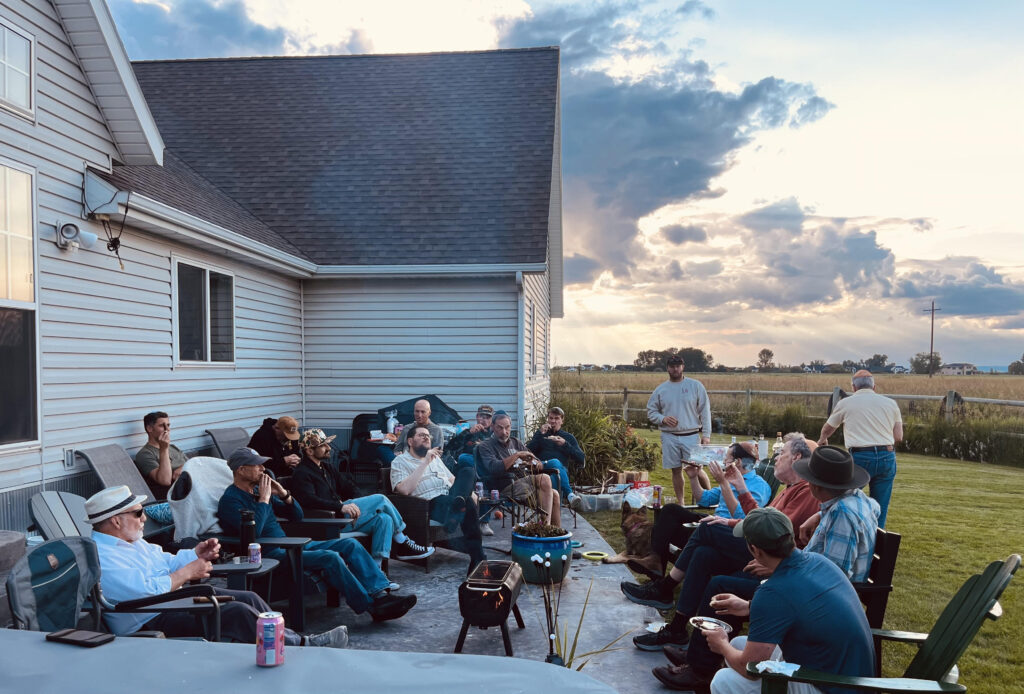
While sitting and farbrenging with the guys at our monthly Mensch Club last week, we discussed Climate Change and the fear-mongering that is the staple of the news media on all subjects, all the time. In that discussion, while looking at the twenty guys sitting around the fire, I realized how much Hashem appreciates that in 2026, almost 2,000 years since the destruction of the second Beis HaMikdash by the Romans, Jews are sitting in the farthest reaches of Montana discussing how to be more in sync with Hashem’s values and how to live with more bitachon, trust in G-d. The more time you spend with Hashem’s children the more you love them.
Just this past Shabbos, we had the honor of hosting Sergeant Mordechai Shenvald, 36, an IDF Armored Corps reservist who was hit by an RPG after October 7. Though eleven of his twelve pairs of ribs were broken, and his lungs were punctured, and everyone thought his injuries were fatal, he miraculously survived. He was here to see Yellowstone, and hearing him speak in our shul on Shabbos and chatting with him privately after Havdalah, I came to know another hero of our people. His love for Am Yisrael, his love for Hashem, and his love for his family is awe-inspiring. He is also a great musician who knows that he’s very blessed to be alive and speaks openly about the PTSD that he and his fellow soldiers experience, which came out during the Fourth of July fireworks in Bozeman. In fact, as a musician, he’s so widely known that he’s called “the wounded fiddler.” Mordechai utilized music for his recovery and he has played to great acclaim at hospitals and national events like the Knesset’s Songs in Their Memory ceremony.
I could only imagine how blessed his parents, Rabbi and Mrs. Elazar Shenvald, felt to have him alive and see him recover from one surgery after another. And I believe that’s how Hashem sees His children too. He may not like the particular tattoo, but He loves when His kid comes home for a moment of warmth. n
Rabbi Chaim Bruk is co-CEO of Chabad Lubavitch of Montana and spiritual leader of The Shul of Bozeman. For comments or to partner in our holy work, e-mail [email protected] or visit JewishMontana.com/Donate.