
Musings Of A Shliach From Montana
By: Rabbi Chaim Bruk

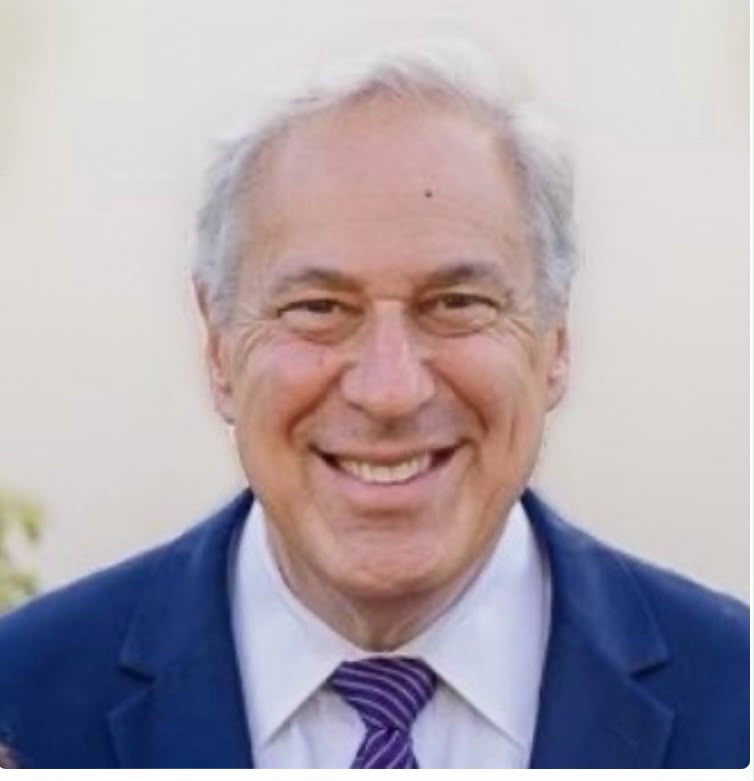
Rabbi Chaim riding his new bike

Rabbi Chaim donating doubles last week
It was 10:45 p.m. and we had just finished Havdalah after a busy Shabbos in shul that was packed with locals and visitors when a visiting Lubavitcher bachur asked me point blank: “Do you really believe Mashiachis coming? Like do you think he will come in your lifetime?”
I paused to appreciate the sincerity of his question, then responded, “Of course. I wouldn’t do what I do, wouldn’t live where we live, if I didn’t believe we were inching towards Mashiach.”
This Shabbos is Shabbos Chazon, the Shabbos of Vision. Rabbi Levi Yitzchak of Berditchev taught that it’s on this Shabbos that the soul of every Jew gets to see a glimpse of the third Beis Hamikdash, the third Holy Temple, giving us a glimpse into the Messianic era which we wait for daily. This Shabbos allows us to envision not just a theoretical Mashiach, but a practical reality of a Mashiach world and all the good and holiness that comes with it.
Pause. Imagine. Yearn. Pray. Align.
Truthfully, I think the world around us, which is gloomy and outright evil at times, discourages us about the coming of Mashiach. How could Mashiach come into such a crazy, chaotic, psychotic world? Do we really think it will change and transform?
When we study Yetzias Mitzrayim, the Exodus from Egypt, it seems pretty clear that the Jews were in bad shape physically and spiritually, yet the moment the time came for redemption, when Hashem said enough is enough, they came out swiftly with miracle after miracle. So, why does Mashiach have to be any different? Why do we doubt the possibility of a quick transition?
Instead of just sitting around waiting for Mashiach to come, we can start by living with a “Mashiachreality.” This is a paradox since it entails immersing ourselves in the real world (not assimilating, chas v’shalom) with real people, including our gentile neighbors and friends, bringing a high-level awareness of Mashiach to them along the way. We can’t keep this Mashiach awareness just with ourselves and our families, we can’t contain it to just three Amidah prayers each day, we can’t save wanting Mashiach for when things go bad in our lives and we’re screaming out for Mashiach in the ER or crying in our pillow. We have to live with it, internalize it, and share its tidings with those around us.
Yes, I believe that I will see Mashiach and merit that era.
About ten days ago, I purchased a bicycle to do something I haven’t done in years. I’ve always loved biking, but with 8-9 months of winter and a short summer, I never got around to getting my own bike and enjoying it in Big Sky Country. With Menny home from camp, I finally bit the bullet and bought a Cannondale Trail. It’s been incredible to ride through the Bozeman neighborhoods, over to the library, bouncing through the trails, up and down the hills, all-around town. It’s a great workout, it’s great for mental health, it’s great family time, and it’s also a great way to be immersed in our community, meeting wonderful neighbors and locals along the way.
I think that sadly too often, leaders are aloof. They don’t want to be immersed in the Klal, in all the nitty gritty of life. They don’t want to know what’s happening in the “real world.” I’m not saying a Rav needs to be at every cocktail party and community fundraiser. But to be a Rav, to be a leader, one must know what’s going on in the community, what they’re up to, and the realities on the ground with all the good, bad, and even the ugly. On a local level, this isn’t only about the Jewish community, but for me it’s feeling the pulse of Joe the Plumber and all his or her friends around town. The people who live in our community need us to “get it.” Immersing ourselves helps us gauge what’s needed and how to best educate, inspire, and guide the community.
Chavie, whose birthday was on Friday, the 25th of Tammuz, is the one who really amplified this for me, as she always shows up for women in the community as a friend. She genuinely cares about what’s going on in their lives even if she doesn’t relate to it directly, and she shows up for them in the most beautiful way possible in friendship and support. She doesn’t do it because she has to or because she’s a Rebbetzin, but because she really cares from the heart. In a world plagued by tech addiction, we both interact with humans face to face all the time and it’s still the healthiest way to be there for people when they need love and support. Sometimes it’s just about showing up. When I went to donate blood last week, I took Menny along with me so he could see the values I hold dear. It also allowed for me, a frum man, to interact with the phlebotomists as a Jew and educate them as to our lifestyle with comments and discussion during the blood donation.
In this week’s parashah, Devarim, we read the verse, “I commanded your judges at that time, saying, ‘Hear disputes between your brothers. Judge justly between every man and his fellow, even in cases between people who heap up accusations.’” A rav or dayan needs to know the real story to rule on real life issues. The Ben Ish Chai shared that his grandfather of righteous memory, who was a prominent rav, once had a Jew and gentile come before him to adjudicate a case. The gentile demanded payment from the Jew, but the Jew categorically denied owing him any money. The Rav realized that the Jew was lying and was even willing to lie under oath, so he told them that he needs to step away to research the case so he could issue a ruling. The Ravstepped away and secretly went upstairs to the women’s section and overheard the Jew and gentile conversing. The gentile asked the Jew how he could lie under oath, to which the Jew responded, “What should I do? I’m, broke and don’t have the funds to pay you.”
The Rav ran back downstairs and told the Jew to pay the gentile what he owed, and he would not allow him to take the oath. This is the meaning of “Hear disputes between your brothers,” listen to how they are talking, what they are saying, and you’ll find the liar and the truth-teller. Be on the ground, stay in the loop. It keeps us all on a straight line. A Rav can’t just read the holy books; he needs to know the holy and unholy people and their actions.
Recently, a visitor from Lakewood shared with me that he approached his shul about starting a downstairsminyan for bachurim over bar mitzvah so they could have a place to daven where they feel at home, get called up for aliyos, and where they get to celebrate their G-d, but they turned him down. So, he opened his own shul and it prospered big time. When leaders look down at the congregants, when leaders don’t understand what’s really going on, when the kehillah can’t speak to the Rav about real life challenges in marriages, raising children, addictions, past behavior, etc., then they will find their help elsewhere and it won’t be from Torah and it won’t be pretty.
Moshe Rabbeinu taught the Torah in all seventy languages of humanity because we all need to learn to make the Torah’s message accessible to all. He didn’t give the shiur in Hebrew, Yiddish, or Ladino and demand everyone figure it out; instead, he made it available to each of them so they could enjoy Hashem’s wisdom. If we want to start experiencing the Mashiach-reality with G-d awareness, we need to stop making it an idea that is far-fetched and used as a crutch in times of crisis. Rather we should make it real for Jew and gentile alike, and we can only do that when we engage in the community.
Rabbi Chaim Bruk is co-CEO of Chabad Lubavitch of Montana and spiritual leader of The Shul of Bozeman. For comments or to partner in our holy work, e-mail [email protected] or visit JewishMontana.com/Donate.