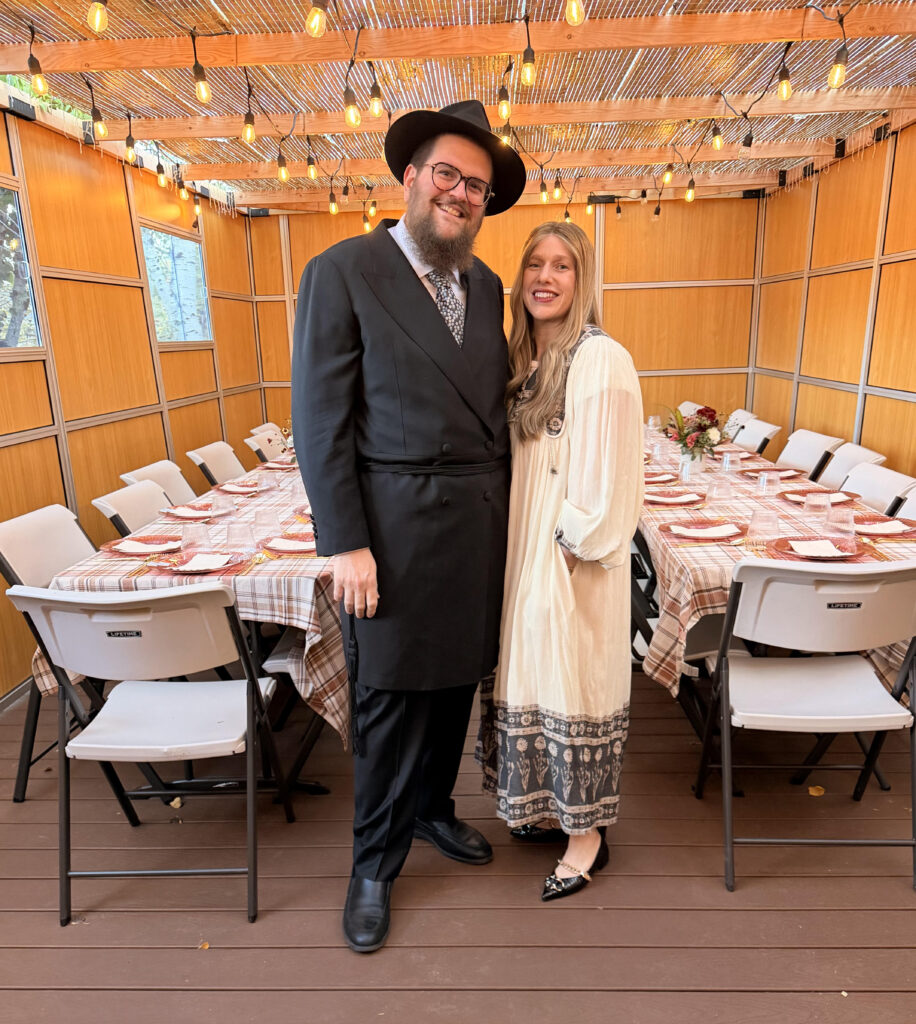

Musings Of A Shliach From Montana
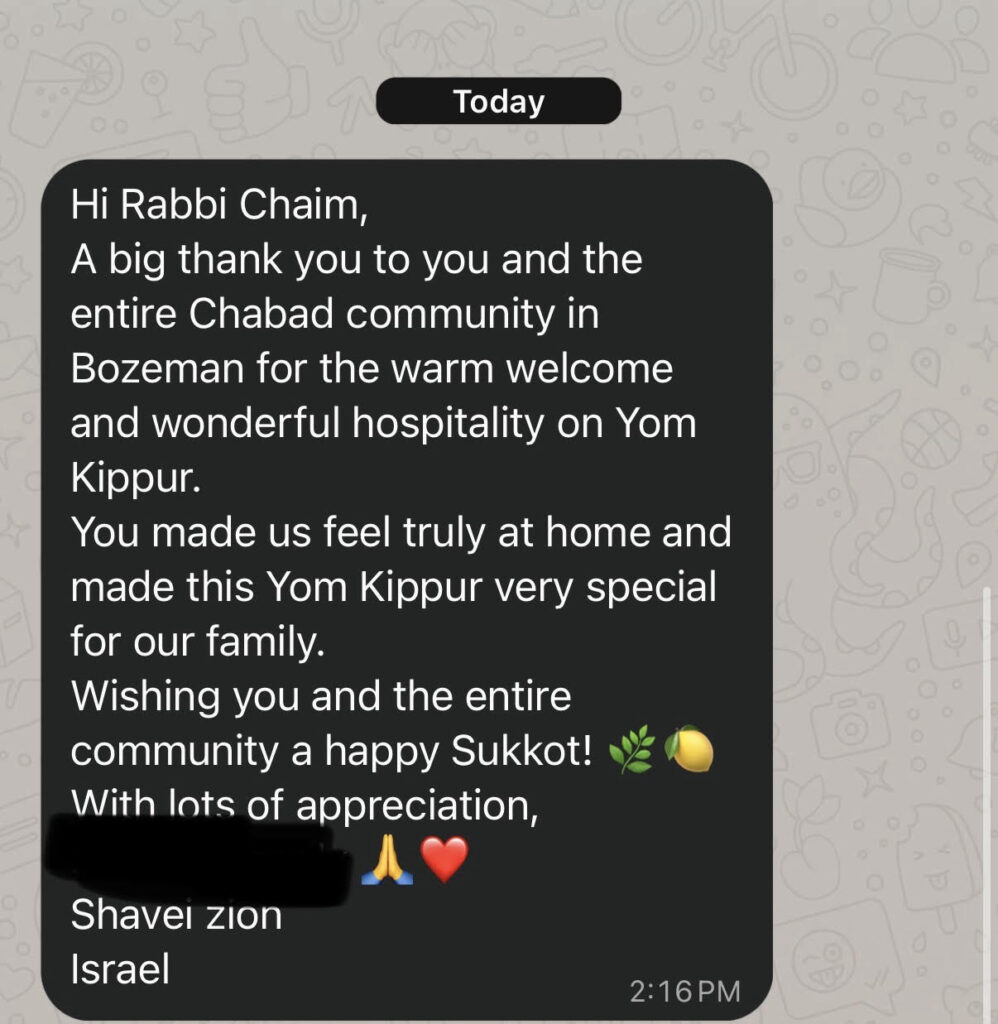
Note from the Israeli family from Shavei Tzion
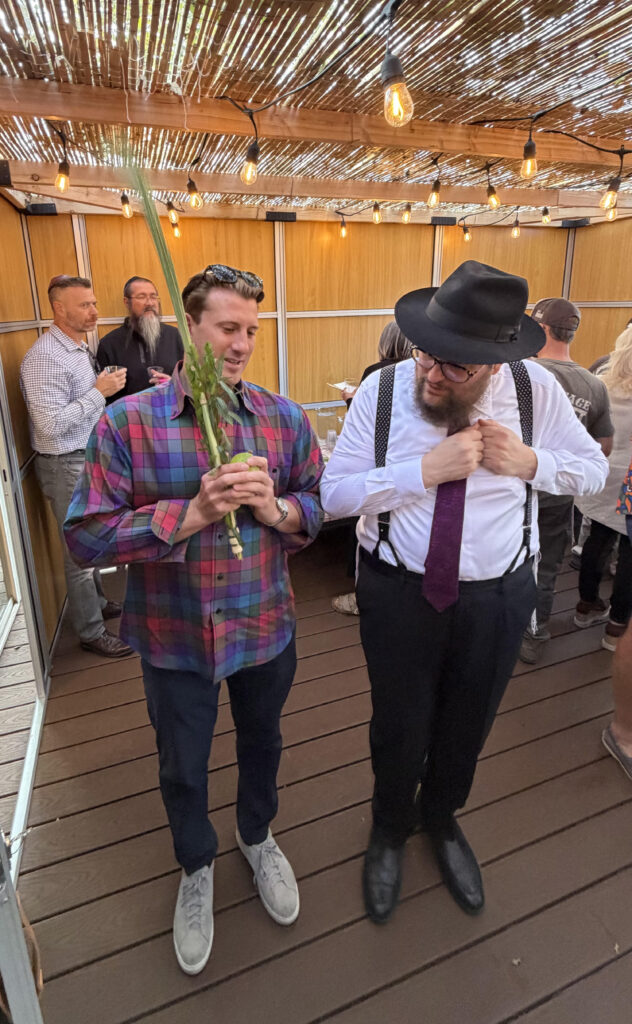
Rabbi Chaim bentching lulav and esrog with Doran, a member of our growing community
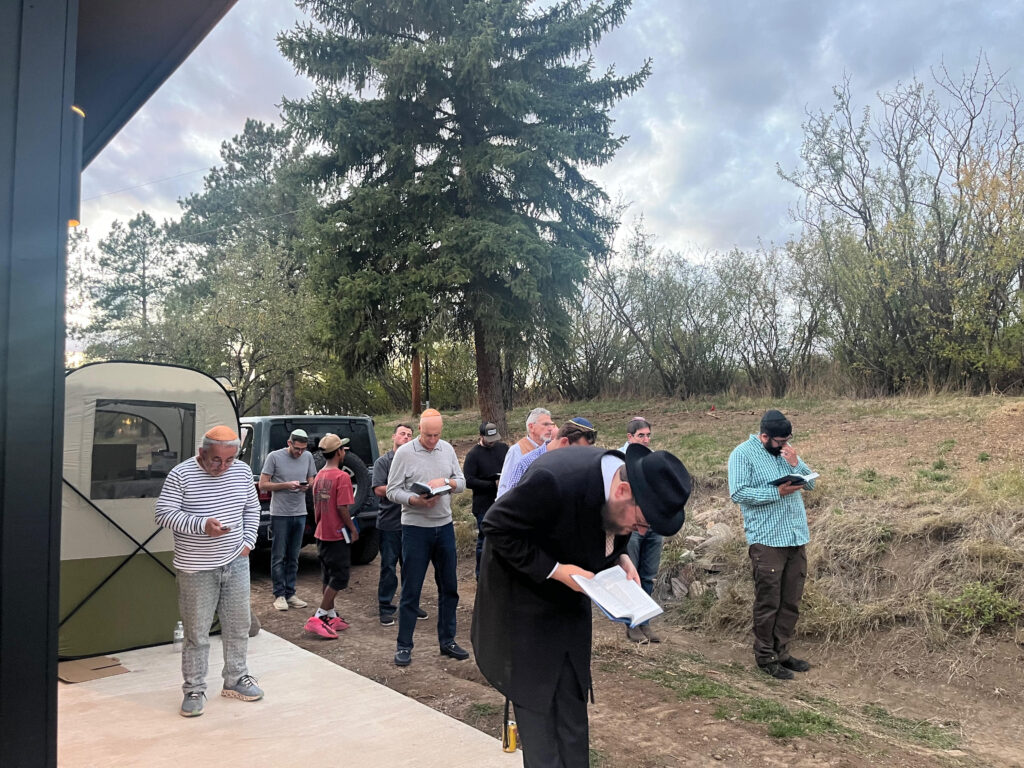
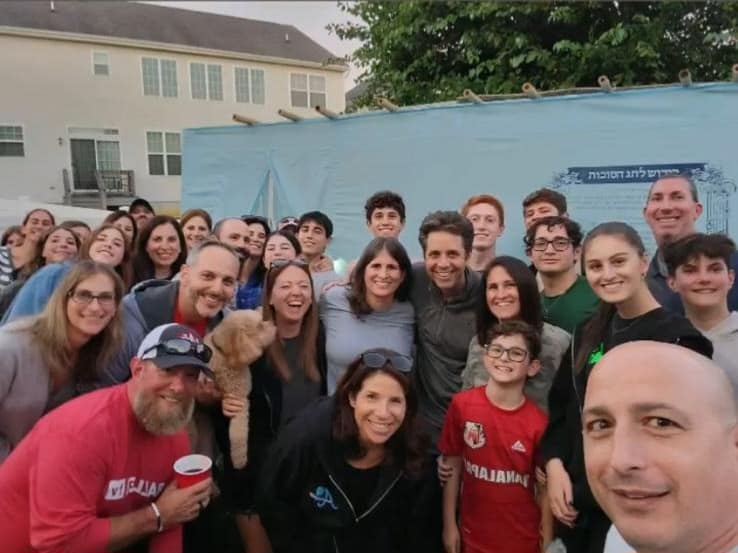
The Mincha Minyan at Dimitri and Karla’s Chanukas HaBayit in Bozeman
I hope you had a great yom tov season. We sure rocked it in Montana. It feels somewhat overwhelming to share all the details with you regarding our Sukkos in Bozeman, as moments of inspiration transpired almost hourly, but I will do my best to fill you in on our Zman Simchateinu experience and hopefully it does for your soul what it did for mine.
After an uplifting Yom Kippur with so many beautiful souls coming together for the various tefillos, including many who fasted the entire Yom Kippur for the first time, we made our way towards the Festival of Joy and joyful it was. We hosted minyanim on all four days of yom tov, including during the prayer for rain and Yizkor on Shemini Atzeres and the amazing Simchas Torah morning minyan with three Torahs and Hakafos. We had Birkas Kohanim on all four days of chag with two local Kohanim blessing us. Sixteen local Jews ordered their own lulav and esrog set to use throughout Sukkos. One local family who are on a journey towards being more observant erected their own sukkah for the first time. Another local Yid, also on a journey to greater Yiddishkeit just went into contract on a home that is walking distance from the shul. Another local couple, who wouldn’t be described as frum as of yet, were going away for the first days of yom tov, but made sure to take along their lulav and esrog so they could have it with them throughout the chag. Menny and I also had the merit on the day before Sukkos to join the Jewish community of Billings in attending the bris of our colleagues Rabbi Shaul and Mushky Shkedi’s newborn.
Hour after hour, day after day, Jews were lighting up with their heritage. Yet, there were a few memorable moments I’d like to share:
On erev Sukkos, I received a WhatsApp message from an Israeli family who were with us for Yom Kippur. They are from Shavei Tzion near Nahariya and are traveling throughout the U.S. over most of the chagim. This is what their message said: “Hi Rabbi Chaim, a big thank you to you and the entire Chabad community in Bozeman for the warm welcome and wonderful hospitality on Yom Kippur. You made us feel truly at home and made this Yom Kippur very special for our family. Wishing you and the entire community a happy Sukkot. With lots of appreciation….” This family was one of eleven different groups of Israelis that were traveling throughout September that joined us in Bozeman for the various services, meals, and celebrations.
I’ve observed throughout this past summer that the visiting Israelis are pretty exhausted. It’s been an incredibly rough few years for our brothers and sisters in Eretz Yisrael and they need all the TLC that they can get. Anytime we can help them be more comfortable, have more amenities, make it a little easier, we are happy to help. Israelis are not an easy fit for an American shul that runs on time, where we don’t talk during davening, and have an overarching American decorum, but our community embraces the Israelis and we even joke with one of our congregants that he’s running a “hostel” for them because he really helps them enjoy every minute in Montana.
On that note, a family from Rinatya, a moshav in central Israel, joined us for Simchas Torah Hakafos and dinner. Before they left back to their hotel, the grandfather said to me, “We have 1,000 people at Hakafot Shniyot in our moshav, we serve all the kids ice cream and popcorn, but the spark of holiness experienced here puts that to shame.” I asked him what about our Hakafos inspired him to say that, and he said: “Walking through the doors in Bozeman and suddenly you’re transported to a holy reality where Judaism is so uplifting, where our people are celebrating; it’s something out of this world and it’s what makes our people so special.”
There was a newlywed couple who were married one year ago, but despite two years in Gaza, the husband was whisked back to “reserves” one week after his wedding, so only now they made it to Montana for the delayed honeymoon. They were joining us for the second day, but about two hours before yom tov, they messaged me and asked if they could make a berachah on the lulav and esrog, as they hadn’t had the chance the entire Sukkos. Here we are, just a few hours before the end of Hoshana Raba and this amazing couple who have done so much for our nation grabbed the last chance at the mitzvah and made the berachah with a Shehecheyanu. I know that Hashem had so much nachas from the first lulav shake hours before the Hakafos of Shemini Atzeres.
This week’s parashah is Bereishis, when we begin the Torah all over again from Genesis. On the words “Bereishis Bara” Rashi says that this verse calls for a Midrashic interpretation because, according to its simple interpretation, the vowelization of the word Bara, should be different. Thus, the wording teaches us that Hashem created the world for the sake of the Torah, which is called: “the beginning of His way” (Prov. 8:22), and for the sake of Israel, who are called (Jer. 2:3) “the first of His grain.” This Rashi of course follows the first Rashi of the Torah, which recognizes that the Creator of the world created the land of Israel for the Jews.
This is a paradigm shift in how a Jew must see himself in the world. While we should always live with humility and the recognition that Hashem is our Protector and Guide, we must never feel inferior to those around us, never show meekness in the face of adversity or outright hatred. Since the very reason for the world’s Creation is simply because Hashem had a desire for His chosen nation to study His Torah and do his mitzvos, and if we internalize this, we will naturally develop a strong and healthy Jewish backbone.
Our value in this world is not dictated by wealth, power, success, or connections, but by the fact that the world’s existence depends on our choices in the realm of holiness.
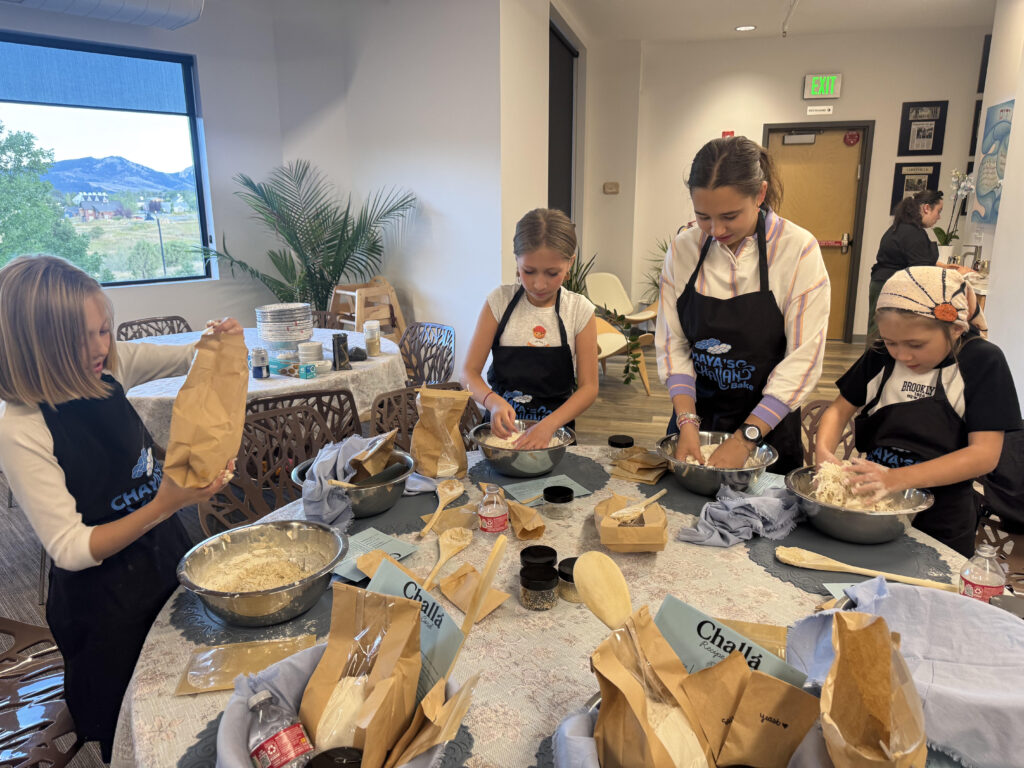
I felt that on the second day of Chol Hamoed, when over 100 Jews joined us for “Sushi and Scotch in the Sukkah.” Seeing so many Jews come out to celebrate, including over twenty kids who did a Sukkos craft, was just so special. In addition, the next day, the third day of Chol Hamoed, Chavie and I and the kids attended the Chanukas HaBayit of a new couple who moved to town. We placed mezuzos, they had a pop-up sukkah, they ordered glatt kosher food from Los Angeles, and we even had a minyan for Minchah in their driveway. It’s so moving to see souls on fire—proud of their Judaism and connecting with their heritage. On the fourth day of Chol Hamoed I met with a local Jew in his 80s and before our meeting ended, I offered to help him make the berachah on the lulav and esrog. He had never seen a lulav set before, never made a blessing on it before, and so his Shehecheyanu took on a whole new meaning at the age of 84.
Later that day, I visited a Jew who is also 84 years old and is dying of yene machlah. Born in Brighton Beach but living in Montana since the early 70s, this Yid lives with gratitude, telling me: “For 82 years, I had an amazing quality of life, rode my bike five miles each day, so why should I complain?” He doesn’t want chemo or radiation; he just wants to enjoy whatever months he has left according to the rules of nature, to spend it with his children, grandchildren, and great-grandchild. I asked him gently if he’d be open to saying Viduy, the confession prayer we recite before one’s passing and he said, “Absolutely.” So here I was in between celebrations and joyful moments, between amazing meals and community events, sitting near Dennis’el, as his Bubby called him, and praying with him these heavy words: “I acknowledge before You, Hashem, that my recovery and my death are in Your hands. May it be Your will that You heal me with total recovery, but, if I die, may my death be an atonement for all the errors, iniquities, and willful sins that I have erred, sinned, and transgressed before You, and may You grant my share in the Garden of Eden, and grant me the merit to abide in the World to Come which is vouchsafed for the righteous…. Master of the universe, may it be Your will that my passing be in peace.”
I am now sitting at my desk, exhausted and elated because Hashem has allowed me to serve His incredible nation and I have the zechus of being a shliach of the Rebbe, zt’l, to Big Sky Country.
Am Yisrael Chai.
Rabbi Chaim Bruk is co-CEO of Chabad Lubavitch of Montana and spiritual leader of The Shul of Bozeman. For comments or to partner in our holy work, e-mail [email protected] or visit JewishMontana.com/Donate.