
Musings Of A Shliach From Montana
By: Rabbi Chaim Bruk
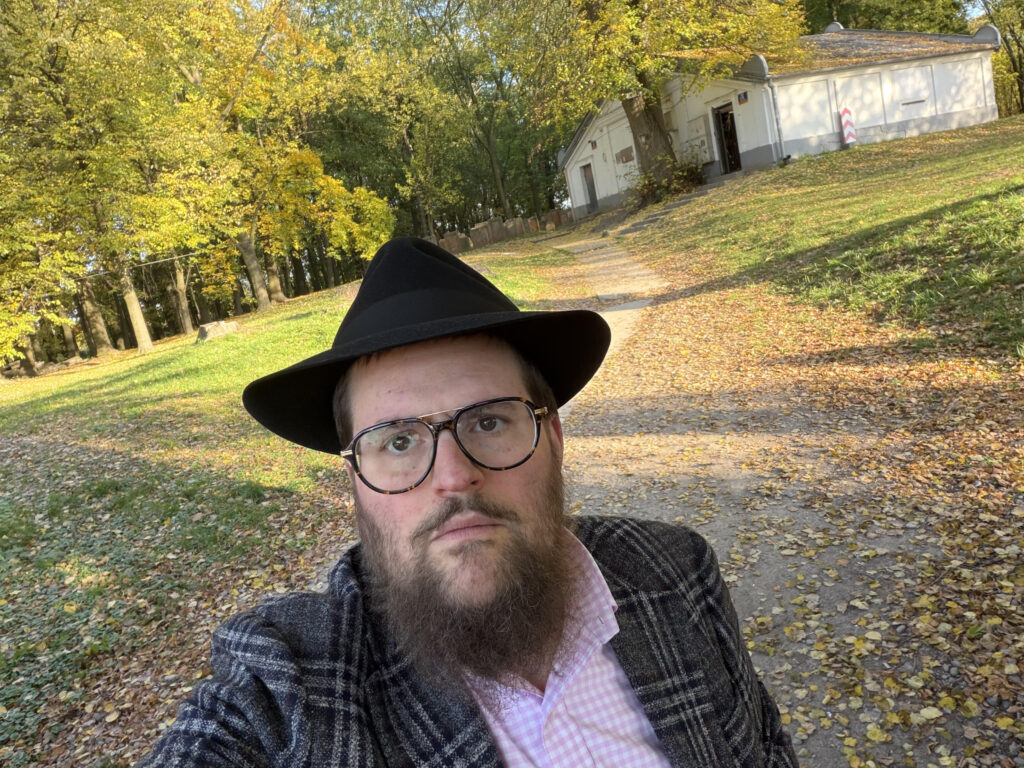
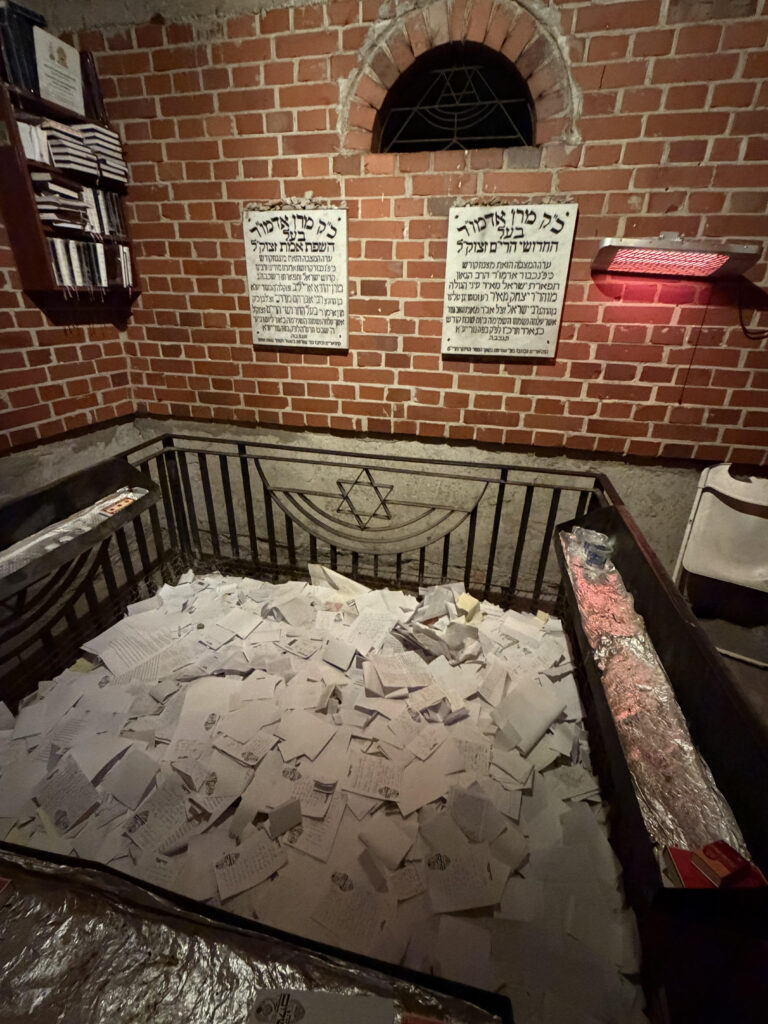
Rabbi Chaim taking a selfie by the Noam Elimelech
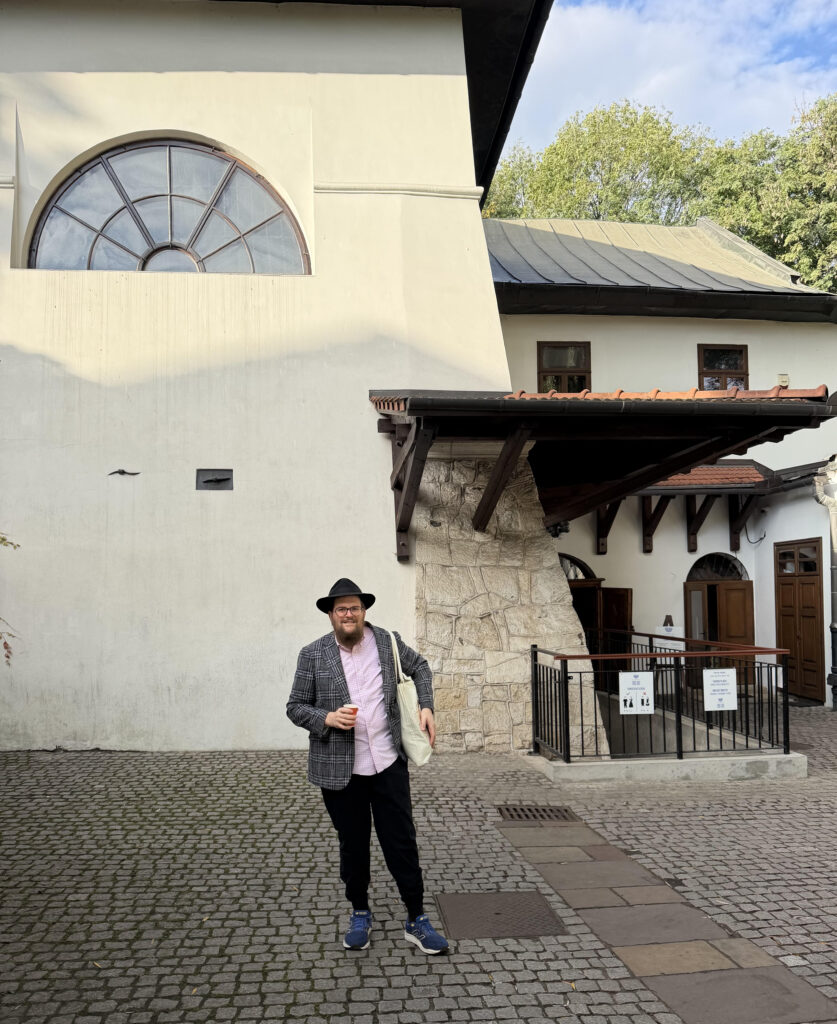
Rabbi Chaim standing outside the Rama Shul in Krakow
Some things remain etched in one’s memory forever.
I’ll never forget my brother Yanky’s bar mitzvah. It was January of 1996, just after my 14th birthday, and our family traveled to Israel for the simcha. Yanky is thirteen months younger than me, and he chose to celebrate it in Israel. The trip had its excitement: Clinton and Gingrich were having their powwow over the U.S. budget, so the government was shut down for a long time and we only got our passports the day of the trip, there was a big snowstorm in New York the day before, so when we got to Israel, all our duffle bags were drenched and reeked, we flew TWA, which was always unique. The whole trip was drama-laden.
I vividly recall how my mother chose not to join us for a day or two because she didn’t want to spend all day visiting kevarim, resting places of holy people and family members. My father loved shlepping us to Rashbi in Meron, Rebbi Meir Baal Hanes in Tiberias, the Rebbe’s brother, Reb Yisroel Aryeh Leib, along with the Arizal and other Mekubalim in Tzfat, and many others, including Tannaim and Amoraim. I didn’t mind because I always loved learning about Gedolim, and in addition, we had a fun driver. But I also understood my mother’s position.
Lubavitcher Chassidim are not really into visiting kivrei tzaddikim. I know that sounds funny, considering how much we go to the Rebbe’s Ohel in Queens, but before the Rebbe passed away, we’d visit the Ohel of his father-in-law Rav Yosef Yitzchak twice each year on erev Rosh Hashanah and on Yud Shevat, the day of his passing, but that’s it. So, while the Rebbe would visit the Ohel very often, the Chassidim didn’t. We were never into traveling to Poland, Russia, Ukraine, Hungary, Belarus, Lithuania, Slovakia, and all the other countries that are filled with kivrei tzaddikim. The Rebbe was very supportive of rehabilitating the resting places of the Chabad Rebbes and his father’s kever in Almaty, Kazakhstan, but that was out of respect to the tzaddik not for constant visits (since the Rebbe’s passing many Lubavitchers do travel to kevarim, but that’s a new phenomenon).
When I travel with family, I will make a quick stop if I am near a kever of a tzaddik, like I did while traveling through Slovakia in August at the kever of the Chasam Sofer and Ksav Sofer, but I don’t shlepp my kids for hours on end to visit a kever. People were shocked when I told them that I was in Hungary and didn’t stop at Reb Yeshaya Steiner of Kerestir, zt’l, affectionately known as Reb Shayale, but it would have been six hours round trip by car and my kids were not up for that. They enjoy a water park and kosher ice cream far more than a kever. Before you get upset at me, hang tight: I’m not, chas v’shalom, belittling the power of kivrei tzaddikim; I’m quite familiar with the power of spirituality and potential berachos that result from such visits, I’m just saying it was never really my thing.
Yet, on a recent trip to Poland, that changed, and as a Yid who seeks to grow spiritually, it’s okay to change, especially for the better. I love history and geography, and while driving through Poland a few weeks ago, I asked the driver to take me to as many of the kivrei tzaddikim that we could squeeze in during my super short time on the ground. So, at each location, I stopped, said a Kapitel Tehillim, mentioned my family and community, and moved on.
In this week’s parashah, Chayei Sarah, we read about the effort that Avraham Avinu invested to find a resting place for his beloved wife, Sarah. Later in Sefer Bamidbar, when the spies are sent to scout out the land of Israel, Kalev ben Yefuna stops at Me’arat HaMachpelah in Chevron, the resting place of our patriarchs and matriarchs, to pray to Hashem that he doesn’t get sucked into the negative plot of the ten spies (excluding Yehoshua). The Midrash tells us that when the Babylonians entered the first Holy Temple to destroy it, Hashem told Jeremiah to go to Chevron and pray at our Avos and Imahos to ask for their intervention during this horrible time.
According to the Ramban, the Torah tells us where Sarah is buried so we will always know where to find it and to remember to always treat it with reverence and respect. So, we clearly don’t go to a kever to daven to the holy person buried there (that would be idolatry), but to Hashem directly, hoping that the prayers will be answered in merit of the tzaddik buried there. It’s believed that davening at such a holy place, your tefillos will arrive to Hashem quicker. I love my time at the Rebbe’s Ohel; it’s close to Five Towns and is a place of deep connection for me as a Chassid, and I encourage those of you who want to connect with kedushah to visit it when you can. Going there gives you an opportunity to have your tefillos reach the highest places in the merit of the tzaddik, and there are pushkas around to increase your zechuyos.
Back to my Poland trip: As part of my ancestral trek, I visited the resting place of my great-grandfather the Chiddushei Harim, the first Rebbe of Ger, and his grandson the Sfas Emes, who are both buried in Gora Kalwaria, about an hour south of Warsaw. I got there at night and for $4, the gentile caretaker opened the cemetery gates for me, and it was super special for me to be with my ancestors who I grew up hearing about every week and whose Torah commentary I love studying. I also visited Peshischa; it was a very foggy morning, and it took about two hours to get there from Warsaw, but my Zayde, the Yid HaKadosh, along with his student Rav Simcha Bunim, are buried off the beaten path. There was a code written in Hebrew and I was able to get in to visit with my relatives.
In addition, I had the great honor of stopping in Dinov, where I davened by the kever of the BneiYissaschar along with his son and grandson. I then stopped in Lancut, where I davened by the Ropshitzer and at Reb Eliezer, another son of the Dinover. I then went to the busiest Jewish spot in Poland by far, the resting place of Reb Elimelech of Lizhensk, where I also was able to FaceTime back to Bozeman to a local friend Will who is a grandson of the Noam Elimelech. A quick stop in Sokolow, where my driver brought me to two kevarim of rabbis that I hadn’t heard of, including Reb Elimelech of Rudnik. In Krakow, I stopped at the cemetery behind the Rama shul, and it was such a special opportunity to visit the resting places of Rama, the Megaleh Amukos(who has a grandson in our shul), the Bach, the Tosafos Yom Tov, and others. I even ran across to the newer cemetery and visited the resting place of the Maor VaShemesh.
It felt really special for me to visit such holy places and to have a better picture in my mind of where everything is and the distances of each of these Chassidic courts. Seeing the highway signs going to Krasna or Sanz is really cool, and gave me a glimpse into how life in Jewish Poland played out in yesteryear. As we celebrate the parashah of Me’arat HaMachpelah, I encourage all of you to explore them, allow your curiosity to shine. And if you haven’t yet visited the Rebbe’s Ohel, please head over to 226-20 Francis Lewis Blvd in Cambria Heights, open 24 hours a day, to recite a tefillah. You’ll be grateful you did.
Rabbi Chaim Bruk is co-CEO of Chabad Lubavitch of Montana and spiritual leader of The Shul of Bozeman. For comments or to partner in our holy work, e-mail [email protected] or visit JewishMontana.com/Donate.