



Noach: Rebuilding After Destruction
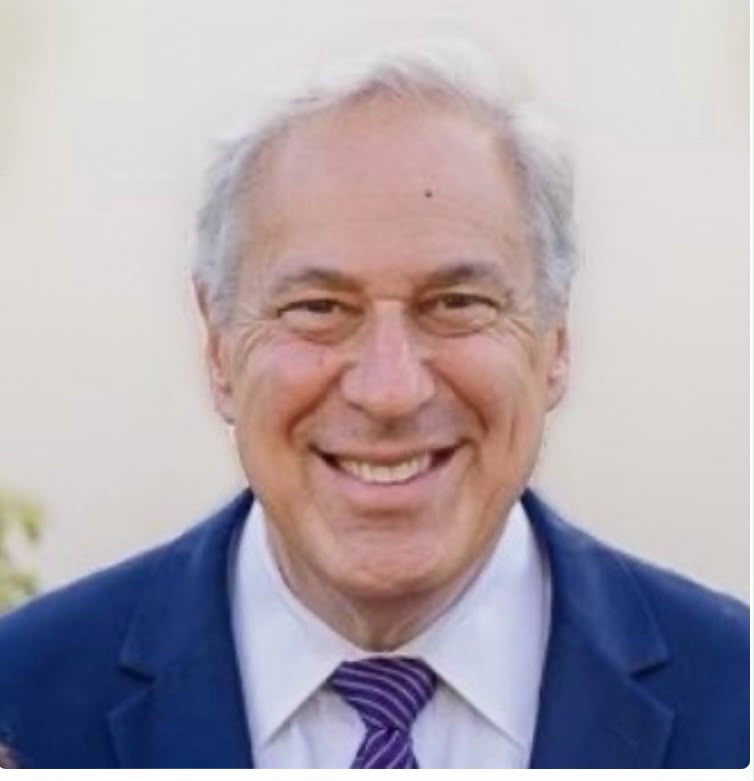
[Editor: Rabbi Hauer, zt’l, passed away during yom tov. The following article was written two years ago in the aftermath of October 7 and we wanted to share it with you. In this piece, he describes the people of Israel running themselves ragged caring for their fellow Jews, a description that would be most fitting of the Rav himself. While a lot has changed since then, Rabbi Hauer’s message still resonates deeply and is a charge to us all.]
I am writing to you today from Yerushalayim where, ever since arriving on Wednesday evening, it is apparent that Israel today is filled with pain, love, grief, regret, determination, faith, and hope.
I saw the pain in the shivah houses, where family members gathered to mourn their loved ones as they watched security footage that showed their loved ones rushing into harm’s way to save others. I saw the pain in the eyes of the displaced who are struggling with unimaginable trauma after lying for hours in the hope of rescue, after managing to escape the terrorist attack while so many others who were dear to them were lost, rachmana litzlan.
The pain is visible in the before and after photos shared by the inhabitants of these beautiful communities that now lie in ruins. And the pain is certainly palpable in the exhaustion of the parents who live in torturous limbo as they await news of their children.
The love is everywhere, as everyone seems to want to do as much as they can to demonstrate their concern for others. While the government and the army are struggling to meet the steep rise in the demand for supplies and services, individuals and organizations are rushing to do everything they can to benefit the victims and everyone who was directly affected. This is also visible in America, where the Jewish community has rallied to provide tremendous support. In Israel, this rush to provide support is even more visible, where there are no visible boundaries between communities.
Regret—charata—is everywhere, but in the best spirit of teshuvah, it is accompanied by determination, kabbalah al ha’atid. To the army and intelligence, what happened on Shemini Atzeres was an epic failure that has led these same institutions to commit to reclaiming their superiority and defeating Hamas decisively. To many in the broader society, the newfound unity in crisis has crystallized the tragic folly of a year spent on the brink of civil war over internal squabbles. What they see now as little things, they will never allow to divide them again. To others, observant and non-observant, it has led to a reconsideration of our reliance on our own power and strength, kochi v’otzem yadi, in place of Hashem.
Most inspiring is how faith and hope prevail. Our capacity for resilience draws on feeling supported by Hashem and by living with a mission and purpose. These are the strengths of the Jewish people, especially in Israel. No one is running away from their land or even their border community. They may have to be out of harm’s way until the situation is resolved, but they are determined to return and are confident that the day will come swiftly. And while confidence can sometimes be unnervingly arrogant, here it seems to draw from a strong sense of destiny and netzach Yisrael.
When considering all this, many have invoked Noach and the destruction that came from the flood. While there are many angles of comparison, allow me to share one.
While the Torah praises Noach effusively, our Sages read between the lines and are somewhat critical of him, comparing Noach unfavorably to both Avraham and Moshe. They went so far as to blame Noach for the flood, classifying this disaster in the words of Yeshayahu (54:6) as the “Mei Noach,” the Waters of Noach (see Zohar I:106a), because he had not worked or prayed to avert it. This stands in contrast to Avraham’s response to the impending destruction of Sodom and to Moshe’s reaction to Hashem’s anger at the Jewish people after the Golden Calf. Noach, by contrast, when told of the impending destruction of the world, simply accepted it and built himself the teivah.
But Noach does not remain that way. By the time the waters subside, what is left is a diminished Noach, coughing and spitting up blood (Bereishis 7:23). He had spent an entire year worrying about everyone but himself, literally running himself ragged to make sure that each of the world’s animals was fed the proper nourishment when it needed it.
As the world would eventually descend from Noach, Hashem needed him to shift from focusing on himself to focusing on others. Olam chesed yibaneh: the world is built on kindness (Tehillim 89:3). It cannot come from a self-centered individual. But because Noach was pressured into this service by the circumstances of the flood and did not embrace that focus willingly, he experienced it in a way that weakened him and made him less of himself, ach Noach.
The past two weeks have seen Klal Yisrael running themselves ragged 24/7, not because of anything that threatened them personally, but only because they have an unquenchable desire to help others who are struggling and in pain and danger. Like Noach, they are exhausted. But, as descendants of Avraham and Moshe, they are not diminished. Quite the opposite. When Klal Yisrael was activated by the tragedy of Shemini Atzeres, they were waiting for the opportunity to give and to help. Especially after the experience of this past year of division, that desire to give and nurture was overwhelming. As we have watched this powerful response of giving, we are seeing the Jewish people grow in stature rather than shrink, as the kindness of Avraham has granted them his descriptive as well: ha’adam hagadol b’anakim, a giant in humanity.
Worlds have been destroyed, but they will be rebuilt by a powerful drive for kindness, a clear-eyed determination born of regret for all the divisions among us, and by a firm faith in netzach Yisrael, the eternal Jewish people.
Evidently, both our father Avraham and our teacher Moshe were unable to take comfort in their own physical and spiritual safety when Hashem assured them of a promising future, if others did not share in that future.
The pain is overwhelming. The people have experienced so much loss. There are 50-80 funerals being held daily of the more than 1,500 killed by the horrific acts of Hamas, while the thousands of wounded face the complexities of life-changing injuries, treatment, and rehabilitation. Many have experienced clusters of loss, including multiple members of their family, army unit, and community. Thousands live in limbo awaiting news of the fate of their relatives, the 203 captives in the inhuman hands of Hamas. Hundreds have seen the homes and communities they built with love and devotion ravaged and destroyed, and hundreds of thousands have become refugees within their own country. The events of Shemini Atzeres were unspeakably traumatic to those who experienced them firsthand, as well as to the entire country, whose sense of security has been upended. While throughout Israel’s existence tragic loss has been a part of life, these days it is devastatingly commonplace. But the love is overwhelming. n
Rabbi Moshe Hauer, zt’l, served as executive vice president of the Orthodox Union (OU), the nation’s largest Orthodox Jewish umbrella organization.