
Noach: Second Chances
Reb Shlomo Lorincz was known to Klal Yisrael as a brilliant shtadlan, a respected member of the Knesset for more than thirty years, and above all, a confidant of the Gedolei Torah in Eretz Yisrael. Many speeches that Rabbi Lorincz gave during his decades in the Knesset were looked over by the Chazon Ish and later by the Brisker Rav, who considered him their faithful emissary. A multi-volume memoir, B’mechitzasam, is a sweeping account of some of the political drama and religious struggles in the State of Israel. A ben Torahthrough and through, he carried the refinement of the Mir in Poland into every chapter of his life. Politics may have brought him a platform, but Torah remained his lifeblood.
After stepping back from public life, Reb Shlomo discovered new sweetness in limud haTorah, and published Milu’ei Shlomo, a sefer discussing sugyas in Gemara that he learned with his chavrusah and neighbor, Rav Simcha Wasserman, zt’l.
After the murder of his family (including his father and teacher, the great Rav Elchonon, Hy’d), Rav Simcha Wasserman and his wife spent their lives spreading Torah and rebuilding yeshivos and kollelim in the United States and Eretz Yisrael with incredible sacrifice and dedication. For years, Reb Shlomo and Rav Simcha sat together, immersed in learning, their voices carrying the timeless music of chavrusah–shaft.
On the 2nd day of Cheshvan, 1993, Hashem summoned Rav Simcha back to the “Yeshiva shel Maalah.” Just ten days later, his Rebbetzin, Faiga Rochel, followed him. As she and her husband had no children, in her final days she whispered aloud a prayer that pierced the hearts of those who overheard it: “Hashem, who will keep our memory alive? Who will come to daven at our kevarim?” After the passing of his precious friends, Reb Shlomo gathered his children together and revealed something that stunned them. Though he owned a family plot on Har HaZeisim, the Mount of Olives in the Old City of Jerusalem, he had purchased a new chelek on Har HaMenuchos—so that he could be buried, together with his rebbetzin, alongside Rav Simcha and Rebbetzin Faiga Rochel.
He explained this to his children with the conviction of a man who had once persuaded governments, yet now speaking only as a father and eternal friend: “Rav Simcha and the Rebbetzin had no children. Who will come to daven by their kevarim? You, my children, will. Each time you come to us, you will stop and say a kapitel Tehillim at their kever too. This way, they will never be alone!”
And so it was.
Rav Simcha had been niftar on the second of Cheshvan, and his Rebbetzin soon after. Seventeen years later, Reb Shlomo himself left this world—on Rosh Chodesh Cheshvan. According to minhag Yerushalayim, children don’t visit the cemetery on Rosh Chodesh. Therefore, each year the Lorincz family goes instead on the following day—the second of Cheshvan, Rav Simcha’s yahrzeit.
In this way, with breathtaking hashgachah pratis, Reb Shlomo’s final wish, and Rebbetzin Wasserman’s prayers, were fulfilled: Every year, the Lorincz family gathers not only to honor their father’s memory, but to remember and honor his beloved chavrusah, Rav Simcha and Rebbetzin Wasserman.
As the world unraveled around them, becoming emptied of life and creation, Noach and his family were sealed in the Ark. Inside, while the flood waters raged, there was no rest. The Midrash tells us that Noach and his family were busy day and night, feeding the animals that they had corralled onto the teivah, each creature receiving according to its need.
Rav Simcha Wasserman would often remind his talmidim that the teivah was more than a floating shelter constructed to save humanity and perpetuate Creation; it was an incubator of values, specifically to train Noach in the middah and modality of chesed. The world was rebuilt not through brilliance, strength, nor innovation, but through acts of kindness, tending to the needs of others, including the animals. The world is created and recreated through chesed and caring, as Rav Wasserman is quoted in the book Reb Simcha Speaks: “The Torah begins with chesed and ends with chesed. A life of Torah means living for the other—making their needs our own.” May we be zocheh to continue to rebuild the world with kindness and merit long and fulfilled lives, with good friends and good news to share. n
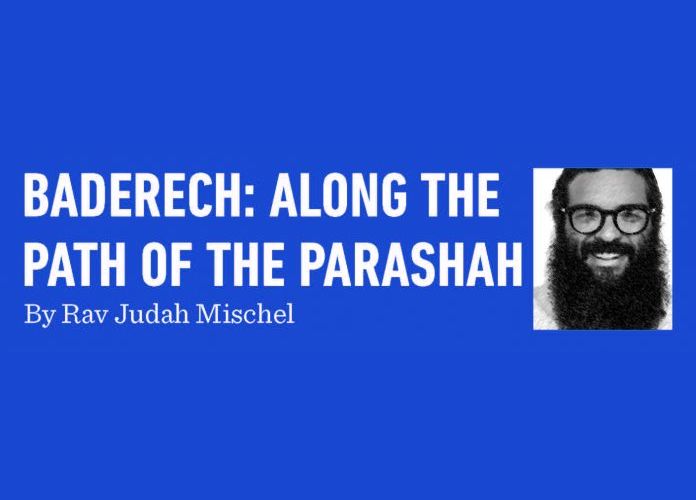
Rav Judah Mischel is executive director of Camp HASC, the Hebrew Academy for Special Children. He is the founder of Tzama Nafshi and the author of the “Baderech” series. Rav Judah lives in Ramat Beit Shemesh with his wife Ora and their family.