
Once Again, The Radical Left Comes For New York’s Suburbs
By Assemblyman Ari Brown (R-Cedarhurst)
All across suburban New York, communities have spent generations building something deliberate: downtown business districts that support local merchants, neighborhoods designed around traffic realities, parking needs, schools, sewer capacity, and a quality of life that people moved there to protect. Yet every time Albany declares a crisis, the answer somehow sounds the same—take power away from the people who actually know their own communities best.
That is exactly what is happening again with Assembly Bill A.10632, the so-called REVIVE Act.
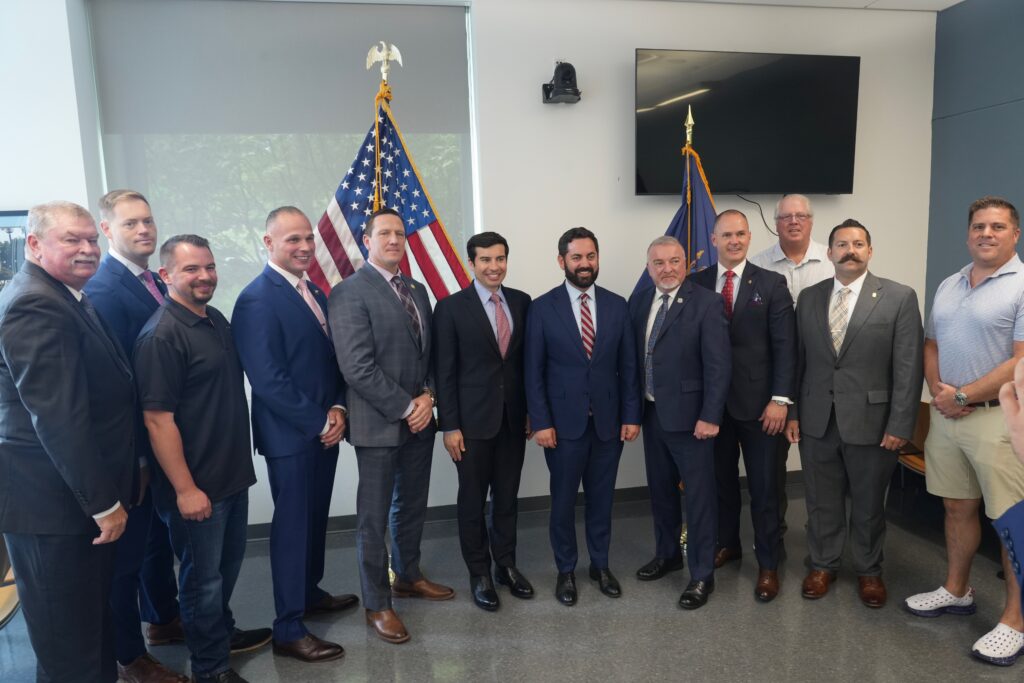
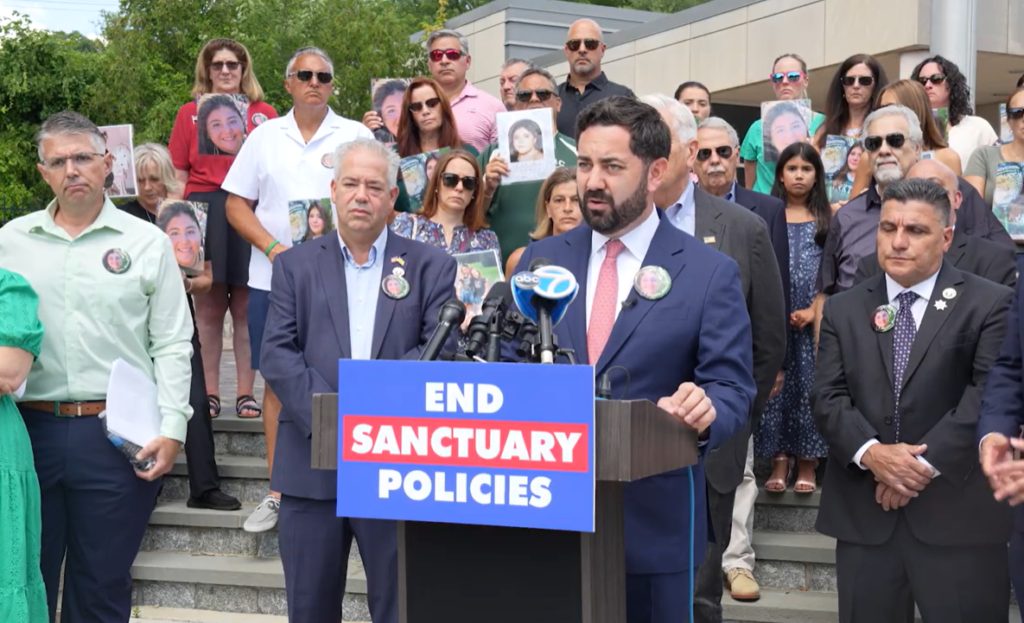
I stood this week with Assembly Republican Leader Ed Ra, John Ferretti, Steven Rhoads, and Patricia Canzoneri-Fitzpatrick to make one point unmistakably clear: home rule matters, local control matters, and suburban communities should not be forced to surrender zoning authority because Albany has once again decided that one sweeping mandate fits every town and village in New York.
Once again, the radical left is coming for New York’s suburbs under the banner of solving a crisis they themselves helped create. They call it housing policy. In reality, it is another attempt to strip decision-making away from local governments and force suburban neighborhoods to absorb policies designed for dense urban environments. More and more, the pattern is clear: they want Long Island and suburban New York to function like New York City, whether local residents want it or not.
We will not let them do it.
Under Section 531 of the bill, if a commercial property is fifty percent vacant for just one year, Albany effectively opens the door to residential conversion.
One year.
In the real world, that is not unusual. A shopping center loses an anchor tenant. An office building has leases expire. A landlord is refinancing. Renovations are underway. Negotiations are happening. In commercial real estate, one difficult year can happen for countless reasons. Yet under this bill, one temporary downturn can become the trigger for permanently changing the future of a property that a community may have spent decades planning around.
A business district is not accidental. It is part of a tax base. It is part of traffic planning. It is part of how a village or town sustains itself. Albany should not be allowed to erase that because of a temporary vacancy.
Then comes one of the most dangerous provisions: Section 532(4)(a), which says that if a municipality does not complete review of a project under 150 units within 60 days, the project is automatically approved.
Automatically approved.
I have spent five decades in construction and development, and as former Vice Chairman of the Town of Hempstead Industrial Development Agency, I was involved with virtually every major project in the Town of Hempstead, the largest township in the country. No serious engineer, planner, architect, or developer believes a project of that size can be responsibly reviewed in sixty days.
Steel, drainage, sewer capacity, utility demand, traffic flow, stormwater retention, and emergency access are not details that can be rushed because Albany wants an artificial deadline.
In my own village, we are reviewing a 100-unit project right now, and full-time engineers have already spent six months working through every issue because responsible review takes time.
The bill gets even more detached from suburban reality when it limits parking to one space per dwelling unit. That may satisfy urban theory, but suburban families do not live that way. Many households have two or three cars. Adult children often remain at home. Visitors come. Streets were never designed to absorb endless overflow parking.
And then perhaps the clearest sign of Albany’s thinking: design hearings may occur, but they are non-binding.
Residents may speak. Boards may review. Experts may object. But none of it has to matter.
That is not public input. That is process without authority.
Republicans will keep holding radical Democrats’ feet to the fire every time they try to force New York City-style policies onto suburban communities. Long Island is not New York City, and we will keep fighting every attempt to weaken local control, override local voices, and chip away at the suburban way of life families worked generations to build. n
Campaign Finance Concerns For Hochul
By Bruce Blakeman
County Executive and Gubernatorial Candidate
Kathy Hochul was just exposed handing out millions in taxpayer dollars to nonprofits—and like clockwork, those same groups turn around and land on her campaign donor list. That’s not charity, and it’s not a coincidence—it’s a cash-for-favor pipeline that reeks of Albany pay-to-play.
A Times Union investigation found that Hochul has accepted more donations from 501(c)(3) nonprofits than any state or county candidate in New York since 1999—even though federal and state law strictly prohibits these tax-exempt organizations from contributing to political campaigns. Making matters worse, many of these groups, such as Abilities First Inc., have received millions of dollars in state funding.
New Yorkers are paying the highest taxes in America just to keep this rigged system running Hochul’s campaign gets richer, insiders get richer, and the people who actually pay the bills get squeezed. It’s time to end this cash-for-favor cycle in Albany and make New York affordable for hard working men and women.