Out-Of-Sync
By: Dr. Alan A. Mazurek
This is one of those times of year when Israel and Chutz La’Aretz, the diaspora, are “out-of-sync.” This means we don’t read the same weekly Torah portion. As most are aware, in Israel we celebrate only one day of Shavuot, so the day after was a regular Shabbat, and we continued with the weekly parashah reading of Naso. Outside of Israel, Diaspora Jews celebrated two days of yom tov and the Shabbos became the second day of Shavuot. This caused the regular parashah to be pushed off to the following week, resulting in the reading this Shabbos of Naso in Chutz La’Aretz and Beha’alotecha in Israel.
This lack of synchronicity will remain until July 18 with parashas Devarim, Shabbat Chazon, where we all get back on the same track due to the splitting of Matot and Massei into two separate Shabbatot in Israel, while the two are combined into one Shabbat in the diaspora. I will not delve into the great variety of interesting rules and reasons why we don’t combine the parshiyot earlier, but would rather like to briefly present a history of why this happened in the first place and its implications for Jewish unity, the centrality of Israel, and some of the other ways that Jews in Israel and the diaspora are truly “out-of-sync.”
Public Torah readings on Shabbat, Chazal tell us, were ordained by Moshe Rabbeinu (along with Monday and Thursday). Ezra Hasofer added the Torah reading on Shabbat afternoon and the concept of three aliyot l’Torah on each of those three days. But who actually designated these weekly Torah portions is unclear; it appears to have originated in Bavel during the Babylonian exile, perhaps in the late 6th or 7th century CE. The skipping and doubling of parshiyot account for calendar fluctuations and various rules.
Meanwhile, the Jewish community in Israel had established a triennial Torah reading cycle, an offshoot most likely of the ancient Mosaic tradition described above. It divided the Torah into smaller portions, sedarim, between 154-175, allowing the Torah to be completed every 3 to 3 and 1/2 years. Thus, the Israel and diaspora communities were out-of-sync for hundreds of years and in fact, Rishonim such as Rashi and Rambam were well aware of this. There is evidence that this disparity even persisted in certain communities, such as Egypt until late in the 12th century CE, but the Babylonian innovation of an annual cycle had gained strength and became predominant thereafter.
Which leads to the question of why. If Bavel is part of the galus and Israel is our land, why was the custom in Israel relegated to second class status? Shouldn’t Bavel and all lands outside of Israel have adopted the Israeli custom? In fact, it’s well-known that Babylonian Talmudic scholars, as brilliant as they were, were occasionally referred to in the Talmud as being “not too sharp,” certainly when compared with the scholars in the land of Israel. So why didn’t they defer to Israel when it came to the weekly Torah reading?
Two likely reasons are proposed. One is that as time went by and Christianity arose in the Roman Empire, the early Christians continued the reading of the Torah along the triennial schedule. The other is that the Babylonian Jewish community had innovated the annual schedule and also wanted to distinguish themselves from this renegade Christian community. The most likely reason is that most Jews now lived in the diaspora and this intensified the desire to make the annual schedule of Torah readings more dominant. Therefore, in order to facilitate achdut, unity, the minhag of the annual reading of the Diaspora Jewish communities was adopted, even in Eretz Yisrael.
Israeli poskim made it clear that any discrepancy between inside and outside Israel as to which parashahis read due to any calendar differences would be decided in favor of Israel. For example, as Rabbi Haim points out, quoting the Tikkun Yissaschar, a 16th century Sephardic posek from Tzfat:
“If residents of Israel were to split these earlier parshiyot to harmonize with residents of the Diaspora it would make the “primary ones” (those living in Israel who observe one day of yom tov) dragged along to follow the halakhic practice of the “bnei ha-minhag” (non-Israeli residents who observe the custom of yom tov sheni). It is incorrect to relegate the primary ones to secondary status, and, if we were to separate those earlier parshiyot, it would elevate those outside of Israel by making the residents of Israel follow them. (Sefer Ibur Shanim, p. 32b).”
It is therefore clear that both the Jewish community in Israel and in the diaspora had to make concessions to each other. First, to make the annual Torah reading schedule almost universal, but if conflicts arose, Israel’s status would take precedence. Sounds like a wonderful exhibition of achdut, doesn’t it? But things have changed, specifically after October 7. And I think it’s time to stop trying to reconcile the Israeli and Diaspora communities.
I can recall constant conferences within the broader Jewish community on dealing with how we must “manage the increasing schism between the Israeli and Diaspora communities.” Israel must be more “understanding” of the more liberal proclivities of the Diaspora communities, they said, and be less “rigid” on religious belief and halacha and more “accepting” of all kinds of Jews. Yet, despite all these efforts, the gap continues to not only widen, but to become more antagonistic between the two communities.
The sad truth is that many Jews in America, Europe, and Asia are increasingly distant from any form of Orthodox Judaism due to their liberal and progressive proclivities. While I realize this is a broad generalization, it is nonetheless true. The only exceptions to this are the Chassidic, Yeshivish, and modern Orthodox; they lean more Conservative politically as well as in their religious beliefs.
As the percentage of the world’s Jews increasingly reside in Israel, maybe it’s time to stop worrying about the Diaspora and those who are “out-of-sync” and increase rapprochement with those Jews who are “in sync.” The whole point of Judaism is not to wander in the midbar, but to enter the promised land. And unlike our scrupulously religious forbears, who never had the chance to make aliyah, we are blessed to live in a generation where this can be easily accomplished. Come home and get back in sync!
Shabbat Shalom.
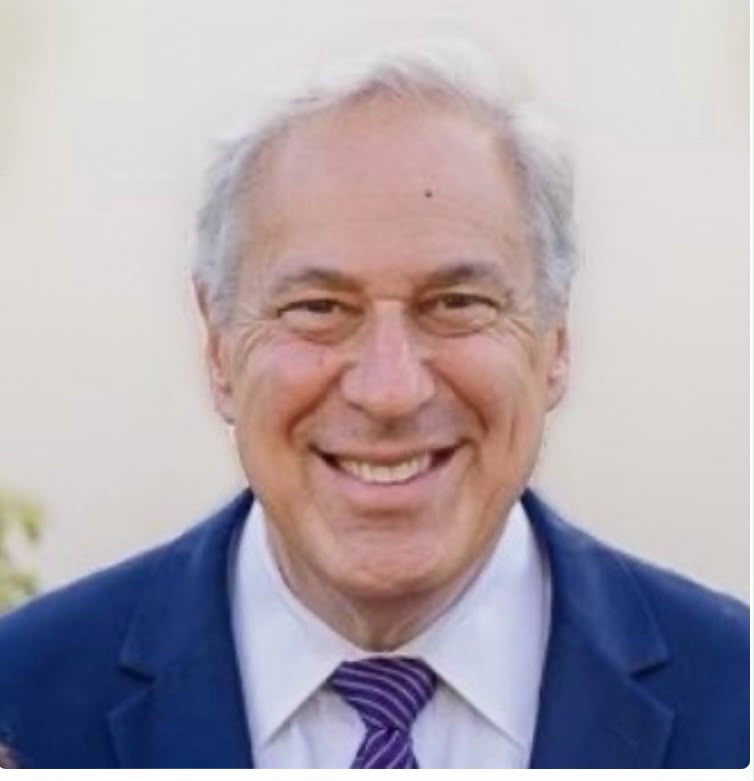
Dr. Alan A. Mazurek is a retired neurologist, living in Jerusalem and Florida. He is a former chairman of the ZOA.