
Pinchas: Many Chapters
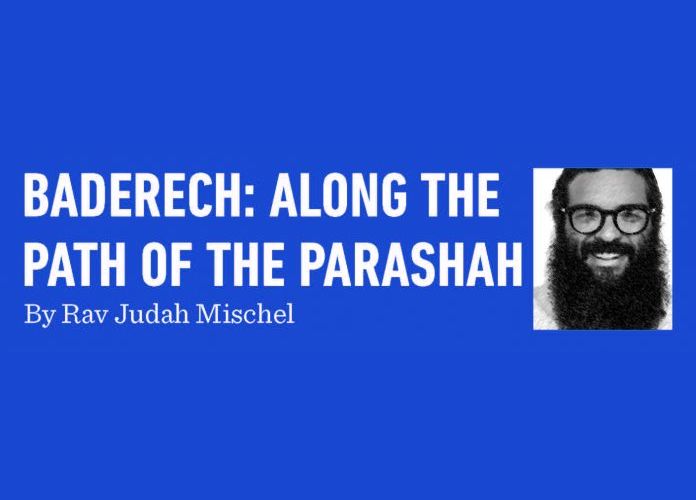
By: Rabbi Judah Mischel
Rav Yitzchok Zilberstein, shlit”a, Rav of Ramat Elchanan, is a celebrated Torah gadol and a posek at Mayanei Hayeshua Hospital in Bnei Brak. Rav Zilberstein is the author of dozens of popular sefarim, among them Aleinu Leshabeach and Veha’arev Na on contemporary halachic challenges and scenarios he has encountered.
While at a sheva brachos for the son of a renowned talmid chacham in Bnei Brak, Rav Zilberstein heard the following maaseh from the baal simcha about a dramatic day in Europe, before the War.
There was a cheder student who struggled to maintain the behavioral standards expected by the school. He was known to be wild and unfazed by disciplinary actions, making his rebbeim furious whenever he got into trouble. One day, the melamed heard a strange bleating sound coming from the shul adjacent to the cheder. When he went to see what was going on, to his great shock, a goat jumped out of the aron kodesh. When the melamed returned to class, all eyes were on the usual culprit. The menahel soon arrived, and the boy admitted to the prank, but the menahel decided this was the final straw and announced that he would be expelled from cheder.
Frowning and standing as tall as he could before the menahel, the child retorted, “With all respect due to my Rebbe, the Menahel, I will not leave the cheder. And, please know that I hereby summon you to a Beis Din!
Everyone was stunned to silence while the young boy strode out the door and down the street to the Beis Din, where he begged the secretary for an audience. Bewildered, the menahel and melamed followed behind.
When the door to the Beis Din opened to the unlikely crew, the boy stepped forward and confessed, “Your Honor, I understand that what I did was wrong and I deserve to be punished. But kicking me out of yeshivah will not only affect the rest of my life, it will also affect my future offspring. Did the menahel consult with them? Did he take their lives and spiritual well-being into account?”
The menahel and Av Beis Din stared at each other in surprise. While he may have been a trouble-maker, the boy was clearly very sharp. Needless to say, he was given another chance, and he soon settled down in cheder. In fact, from that day on, he began to focus his unconventional intensity and lack of inhibition upon his Torah study, and excelled above many.
“And I am the great-grandson of that trouble maker!” said the baal simcha with emotion.
Almost forty years after the initial counting of Am Yisrael in the Desert, everyone from the dor hamidbarhas passed away. A new generation has grown up and is ready to enter Eretz Yisrael in their stead. In the wake of the mageifah, the horrific plague which Pinchas has ended, Hashem now instructs Moshe and Elazar to conduct another census and engage in chalukas ha-Aretz, to divide and assign portions of the Holy Land as tribal inheritances:
“The land, moreover, is to be apportioned by lot… Each portion shall be assigned by lot, whether for larger or smaller groups…. The inheritance shall be apportioned between the numerous and the few, according to lot….” (26:56)
Instead of allowing power, influence or coalition politics to determine where each Shevet would go, Rashi explains the Torah’s intent in making it according to a lottery system: “The Land was divided by means of the Divine Spirit.” Similarly, when Yehoshua leads the nation into Eretz Yisrael, it is in accordance with Hashem’s word.” (Yehoshua, 19:50)
Rebbe Yissachar Dov of Belz (Imros Kodesh, Pinchas) adds that the portions of Eretz Yisrael were assigned according to unique spiritual character traits that matched the qualities of the geography. Each location corresponded to the shoresh haneshama, the spiritual root of each tribe. Only the Ribbono shel Olam, in His infinite wisdom knew the true hidden potential and ability of each tribe. Only Hashem knew the strengths and talents hidden beneath the occasional appearance of “troublemaking,” identifying the deeper spiritual stature of each tribal founder and their offspring needed to be accomplished through Ruach HaKodesh.
Our sedra describes the first Shevet to receive their inheritance: “Reuven, bechor Yisrael, Israel’s firstborn: the descendants of Reuven were the Chanochi family from Chanoch; the Palui family, descendants of Palu…(26:5).”
Rashi notes the spelling of the family names in this verse, and offers that it is in response to the nations who had cast aspersions on their lineages. Our enemies had attempted to denigrate them, saying, “How can they trace their lineage by their tribes? Do they really think that the Egyptians did not exploit their mothers? If the Egyptians mastered the bodies of the Hebrews, all the more so did they exercise authority over their wives.” For this reason, proclaims Rashi, the Ribbono Shel Olam appended His Name to the names of these families, adding the letter “hey” to one side and the letter “yud” to the other side, as if to say, “I bear witness that these are the sons of their fathers!”
In relation to the Tribes, David Hamelech too refers to Hashem as a testifying Witness: “There ascended the tribes, the names of Hashem (yud-hey) testimony to Israel” (Tehillim 122:4). Hashem’s Name (yud-hey) is again testifying for them. Whatever question may be raised regarding the holiness and purity of our identity, Hashem Himself vouches for us. It is for this reason throughout the text that the names of the families begin with a hey and end with a yud.
As we recognize the Creator’s willingness to testify on our behalf, to stand up for us in court and proclaim His belief in us, how can we not become patient, humble, and kind in the way we see and judge others? Each of us lives out a story consisting of many chapters. Only Hashem knows how many chapters there will be and how the narrative will end. May there always be a sweet and happy ending, with revealed good in store for us all!
“The grandchildren of Haman learned Torah in Bnei Brak…” (Gittin 57b)
Excerpted from Baderech: Along the Path of the Torah, forthcoming (Mosaica Press, Elul 5786).
Rabbi Judah Mischel is Executive Director of Camp HASC, and Mashpiah of OU-NCSY. He is a member of Mizrachi’s Speakers Bureau (www.mizrachi.org/speaker.