
Shabbos HaGadol: Present Tense
In a small village near the town of Kolbasov there lived a simple Jew who made his living from the kretchma, the little inn that he rented from the local Poritz. Down on his luck, the Yid was unable to make his monthly payments and the Poritz, a brutal and unforgiving landlord, resorted to violence to extract the debt. Try as he may, the Yid could not come up with the money he owed. After missing the deadline, a bunch of goons showed up at his door on Shabbos morning just days before Pesach to “send a message” to the poor fellow. As the Yid stood at a safe distance, they tore apart the humble building, smashed his modest possessions, and dumped all his Shabbos food on the ground. “If you don’t pay up by tonight,” they hissed, “we’ll do the same stuff to you.”
Dismayed, the Yid ran to the beis midrash, his only refuge in the world. Exhausted, he squeezed into a back corner as it was packed with congregants listening to the Shabbos HaGadol derashah of the Rav of Kolbasov, the Oheiv Yisrael, Rebbe Avraham Yehoshua Heschel.
“There are two kinds of berachos addressing the redemption of Am Yisrael,” said the Rebbe. “One of them we say before the Amidah. It is in the past tense, praising the Ga’al Yisrael, Hashem, ‘Who redeemed Israel.’ The other berachah is part of the Amidah itself, composed in present tense: Goel Yisrael, ‘He Who redeems Israel.’ The first berachah is a reference to the past geulah from Mitzrayim. The second berachah, however, is in the present tense, because it refers to the redemption that is going on right now, right here, in this very moment, for every single one of us…. And even if there’s a Yid who can’t pay his rent, and the Poritz is breathing down his neck threatening him, and his house was torn apart and he has not a kopek to begin paying his debts, Goel Yisrael! The Ribbono Shel Olam is redeeming him right now from all of his tsuris! Even this Yid is going out of exile, at this very moment!”
No one present could have recognized the hashgachah pratis of the Rebbe’s words except the innkeeper, who was certain that this was Hashem speaking directly through the Rebbe to him. This Divine intervention filled him with hope and joy, and he ran out of shul dancing wildly and shouting, “The Rebbe says Goel Yisrael, He Who redeems Israel right now! Goel Yisrael! Hashem is saving even me—at this very moment!”
As he was dancing his way toward his home, he bumped right into the Poritz, who was out for a walk with his wife. “Ugh,” he grimaced toward his wife. “This is the man we roughed up today who owes us a ton of money.” But as the Poritz watched him dancing away, laughing and shouting Hebrew phrases, his wife frowned and clucked disapprovingly at him. “No. It looks like the poor guy is having a breakdown. He must have cracked from all your pressure and your little band of low-life thugs. Have mercy on this Zhid, he is so pitiful….”
“Okay, Okay,” said the Poritz, rolling his eyes. “Jew, come back! I have something to tell you.” The Yid couldn’t keep his explosive joy completely under wraps, but he turned around and came back. The Poritz thought for a second and said, “I’ll tell you what we’ll do. I’ll speak with my brother who owns the distillery in Kolbasov. They’ll give you some whiskey on credit. You could sell it. Maybe your luck will change, and with the profit, you can pay off the debt you owe me.”
Indeed, within the few days between Shabbos and Erev Pesach, the Yid sold so much whiskey that he was able not only to pay the rent he owed to the Poritz, but to purchase all his yom tov needs and even help some of his struggling neighbors as well.
On Erev Pesach, still with a dance in his step, the Yid went to Reb Avraham Yehoshua to tell him the good news. But before he could speak, the Rebbe smiled and said, “May the Goel Yisrael, One Who is redeeming Israel right now, bless you with a joyous Zeman Ge’ulaseinu, Season of Our Geulah!
“All of the blessings above and below are dependent upon the Seventh Day.” (Zohar, Yisro)
Pesach draws its sanctity from the Shabbos before Pesach, Shabbos HaGadol. This day is called “the Great Shabbos” because it contains within it the holiness of Shabbos as well as the sanctity of Pesach. The blessings of Shabbos HaGadol and the days preceding yom tov give us another chance to believe in Hashem’s salvation and to begin again. With emunah we can become filled with joy, even if our external circumstances are excruciatingly difficult. For Hashem is certainly the Goel Yisrael, redeeming even us, in the present tense, at this very moment!
Good Shabbos and Chag Kosher V’Sameach.
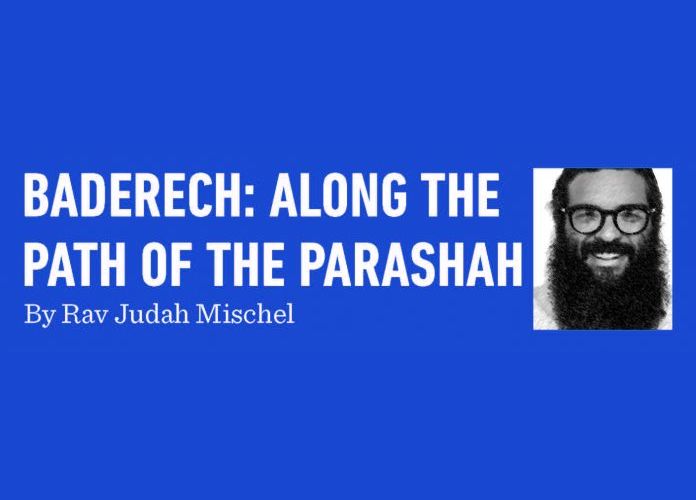
Rav Judah Mischel is executive director of Camp HASC, the Hebrew Academy for Special Children and the author of the “Baderech” series. Rav Judah lives in Ramat Beit Shemesh with his wife, Ora, and their family.