
Sheltering Together In Divine Presence
As the Ba’al Shem Tov haKadosh sat in his sukkah, a great tumult raged outside.
In the early days of the Chassidic movement, some of its revolutionary practices, as well as the spiritual awakening of the followers of the Ba’al Shem Tov, drew prejudice, strife, and legal controversy. While detractors and opponents were always on the lookout for an opportunity to attack the tzaddik and undermine the fledgling movement, this time it seemed there was good reason to make their claims.
The Ba’al Shem Tov had constructed what looked to be a highly questionable sukkah, stitching together a patchwork of materials that seemed to barely pass even the minimal halachic requirements. The rickety-looking hut relied on so many kulahs in Jewish Law and all the loopholes detailed in Masechet Sukkah, it was barely recognizable to the rabbis who were now gathering at the sukkah, ready for a confrontation, and to accuse him of blatant laxity in halachah.
A debate ensued between the scandalized scholars and the tzaddik. They summoned a variety of sources and opinions denouncing the sukkah, while the Ba’al Shem Tov calmly defended it on each count. Finally, the rabbanim of Brodt bluntly declared it to be pasul and a spiritual danger to the community.
Seeing that his explanations had fallen on deaf ears, the Ba’al Shem Tov closed his eyes, entered a meditative state, and began to pray. The rabbanim were unsure how to react. At that moment, a piece of paper fell from the s’chach, a note signed by no less than an angel from Heaven, Matat Sar haPanim, attesting to the validity of the sukkah: “The sukkah of the Ba’al Shem Tov is kosher!”
Opening his eyes, the Ba’al Shem Tov then began an instructional shiur, explaining the intricate laws of constructing a sukkah, listing the various “leniencies” that he had relied on, such as dofen akumah, gud achis mechitzah, gud asik, lavud, avir, and others. He also detailed how each particular halachah and its structural application related to a different spiritual state and level of observance.
“There are many different types of Jews in Klal Yisrael of varying levels of education, knowledge, and observance. The sukkah is kosher,” concluded the Ba’al Shem Tov, “and so are the Yidden.”
n n n
“For seven days… all who belong to the people of Israel will live in sukkos” (Vayikra 23:42).
…This teaches that it is fitting for all of Israel to sit in one sukkah (Sukkah 27b).
“One ought to bind themselves and be focused on being part of the entire klal…and strive to fill their home with great love and shalom, so that their love shines outward and spreads forth; in that way, it will be considered as if all of Israel dwells together in one sukkah” (Reb Nosson of Breslov, zt’l).
n n n
Z’man simchaseinu, the simcha of the Festival of Sukkos, flows forth from the Yamim Nora’im. Our exuberant joy is framed by the gravity and achrayus of our committed relationship with the Ribbono shel Olam. The celebration of Sukkos is an invitation for us to actualize our declarations and intent. It is a call to Divine intimacy, welcoming us into the ineffable embrace and union between Am Yisrael and Hashem Yisborach.
Knesses Yisrael, Hashem’s beloved kallah, is summoned to enter:
“The King has brought me into His chambers; we will be joyful and happy together” (Shir haShirim 1:4).
Beneath the stars and sky, under a canopy held up by poles and prayers, and the “chuppah” of s’chachhovering over us, we are a royal bride and Groom entering into a covenant of kiddushin, sanctity, and exclusive commitment. As a bride and groom fast in preparation for their new beginning, we fast on Yom Kippur. Just as they celebrate a week of “sheva berachos,” we celebrate seven days in the sukkah, rejoicing in our new state of union. At each of the seven festive meals we welcome panim chadashos, “new faces”: the Ushpizin Kadishin, different holy guests each night, who join us in celebrating our wedding.
The Navi describes the ananei haKavod as a chuppah that covers us from above and envelopes us in Divine love:
“Hashem will create a cloud by day and smoke with a glow of flaming fire by night hovering over the shrine and meeting place of Har Zion. Indeed, over all the glory shall hang a canopy, and it shall serve as a sukkah for shade from heat by day and as a shelter for protection against drenching rain” (Yeshayah 4:5).
The Ba’al haTurim (Vayikra 23:42) invokes the specific term chuppah and suggests an additional aspect to the ananei haKavod. They imply intimacy and loving connectivity, the manifestation of a marital bond in which two individuals become one. Sheltering together in Hashem’s Presence, we are bonded together and become one in the sukkah.
n n n
In the tradition of the Ba’al Shem Tov, the day after Yom Kippur is referred to as G-tt’s Numen, “G-d’s Name.” Having spent Aseres Yimei Teshuvah addressing the Ribbono shel Olam with the honorific haMelechhaKadosh, we begin to use the more intimate and familiar name, haKeil haKadosh. These four days between Yom Kippur and Sukkos are days of closeness, corresponding to the four letters of our Beloved One’s name, the Tetragrammaton. And perhaps this is the source for Rebbe Pinchas of Koretz’s statement that the days between Yom Kippur and Sukkos are a particularly auspicious time for a wedding (Imrei Pinchas 7:91). We are Hashem’s pure, radiant kallah, walking toward the chuppah, where we will circle Him with hakafos of joy, remove our veil, and see each other face to face.
There is much we can learn from the Ba’al Shem Tov’s sukkah. In cultivating and creating yichud, in building a shared dwelling place together, we are called to focus on the tov, the good that is there, not what is lacking. Yiddishkeit provides the tools to construct a life of holiness and joy and a home that is suffused with love, firm on the foundations of ayin tovah, inclusivity, and ahavas Yisrael. Such a home is surrounded by ananei haKavod all year ‘round, and is filled with mutual respect and peace.
It is indeed “fitting for all of Israel to sit in one sukkah”; there is nothing more beautiful—and precious to Hashem—than individuals uniting, coming together in love and friendship. May we all merit to celebrate together during these auspicious days, to give ourselves over to the purity of Yom Kippur and the intimacy of the sukkah. May all be blessed to build homes filled with ahavah v’achvah, shalom v’rei’us. n
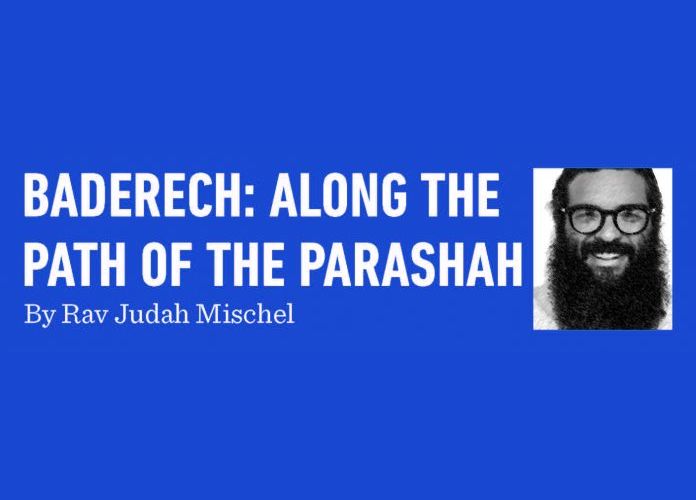
Rav Judah Mischel is executive director of Camp HASC, the Hebrew Academy for Special Children. He is the founder of Tzama Nafshi and the author of the “Baderech” series. Rav Judah lives in Ramat Beit Shemesh with his wife Ora and their family.