


The Child We Are Looking For
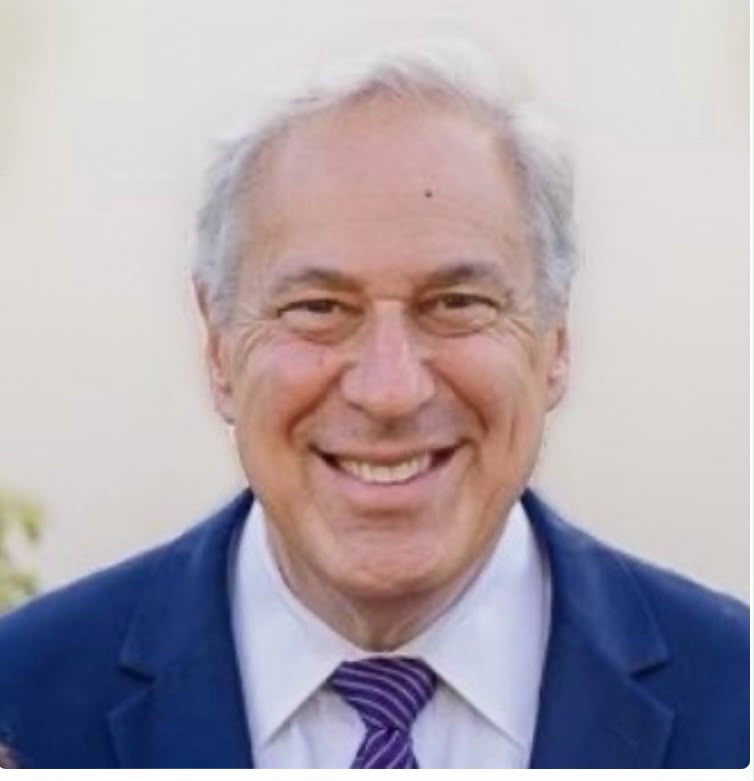
By Rabbi Benny Berlin
On the night of the Seder, we build an entire experience around a child who may not even be there.
The Rambam rules in Hilchos Chametz U’Matzah that the mitzvah of Sippur Yetzias Mitzrayim applies even when no child is present, and even when no one asks a single question. He derives this from the pasuk in Sh’mos, “You shall tell your child on that day,” and explains that “that day” obligates the telling even in the absence of a child. The mitzvah stands on its own. No audience required.
And yet, the entire architecture of the Haggadah is built around She’ilah U’Teshuvah, question and answer. We do the karpas specifically, as the Rambam himself writes, L’Hazkir Es HaTinokos, to prompt the children to ask. The Mah Nishtanah. The Arba Banim. The back-and-forth that gives the night its rhythm and its energy.
If a child is not technically required, why does the Haggadah so insistently center itself on the child and his questions?
The answer is that the Seder is not actually looking for a child across the table. It is looking for the child within us.
The Zohar describes two states of mind, Gadlus De’Mochin and Katnus De’Mochin, expanded awareness and contracted awareness. The adult state is one of knowledge, control, and mastery. We have seen this before. Done this before. Read this before. The child state is something else entirely. Vulnerability. Wonder. The willingness to admit that we do not understand.
We move between these two states throughout our lives. Both are necessary. But the Seder insists that we begin with the second.
We begin not by demonstrating what we know, but by introducing something that does not quite make sense. A strange vegetable. A dip before the meal. A break in the expected order. The confusion is deliberate. It creates a moment of honest disorientation.
Why are we doing this?
That question is not only for the child. It is for anyone willing to feel that something here is not yet fully understood.
The Rambam’s ruling, then, is not in tension with the Haggadah’s emphasis on questions. It resolves it. Even when no one is there to ask, the structure of the Seder itself creates the space for questioning.
A person can sit at the table and acknowledge. I do not fully understand how a nation of slaves walked out of the most powerful empire on earth. I do not fully understand what I am supposed to carry from that story into this year of my life. I do not fully understand why I return to this night, year after year, and insist that it is new.
The questions are real. The not-knowing is real. That is the Seder.
This is also what Kol Dichfin Yeitei V’Yeichol is inviting. We open the door not only to the hungry stranger outside, but to the hunger within. The questions not yet asked. The doubts set aside because there was no time, no space, no permission to linger in them. The Haggadah is not only reaching outward toward a guest. It is reaching inward toward the part of us that still needs to be fed.
The Mechilta notes that the mitzvah is framed as LeHagid, to tell, rather than LiLmod, to teach. Teaching assumes the teacher already knows.
Telling assumes only that something happened worth saying.
On the night of the Seder, we are not asked to be the authority in the room. We are asked to be the witness. And a witness who is no longer moved by what was seen is no longer testifying. He is reciting.
The two faces on the k’ruv, one older and one younger, capture this precisely. The Malbim notes that they are described as shavim zeh el zeh, turned toward one another, because neither face is complete without the other. The wisdom of age without the wonder of youth becomes rigidity. The wonder of youth without the wisdom of age becomes noise.
The Seder holds both at the same table and asks us to do the same.
We will spend this Pesach seated across from our children, watching them ask the questions we have printed for them. That matters deeply.
But the deeper invitation of the night is quieter, and more demanding.
To ask our own.
Because the child we are really looking for has been sitting at the table all along, waiting to be heard.
Chag Kasher V’Sameach. n
Rabbi Benny Berlin is the rabbi of BACH Jewish Center in Long Beach, New York. For more information, visit BACHLongBeach.com.