


The JITC’s 3rd Jewish Media Awards: The Greatest Night In Jewish Representation
By: Rochelle Maruch Miller
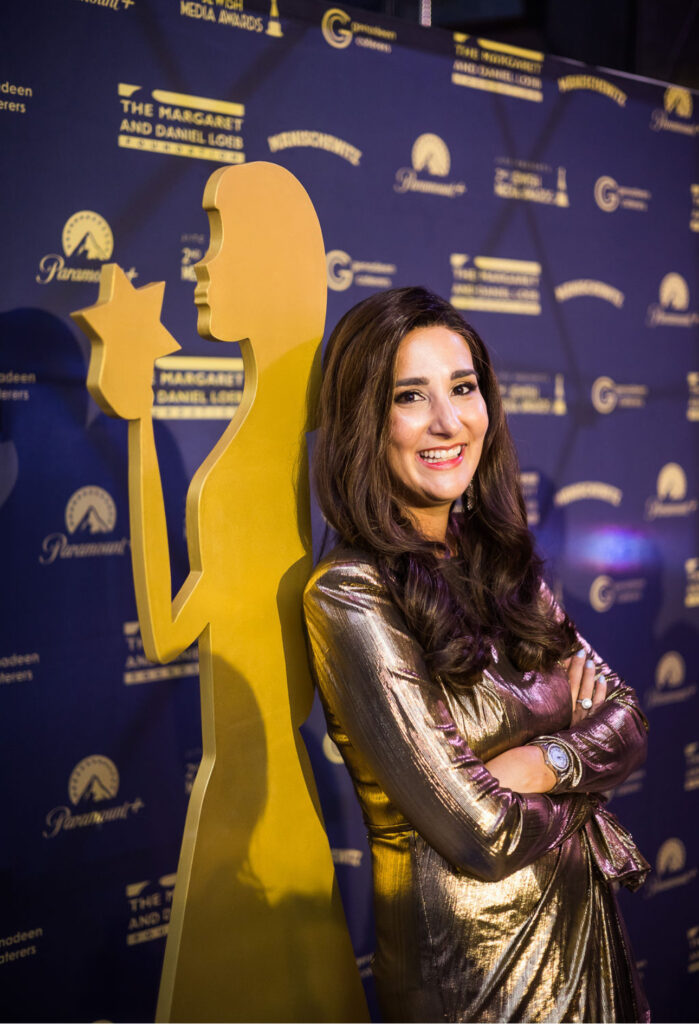
Allison Josephs, founder of JITC
Credit: JITC Media
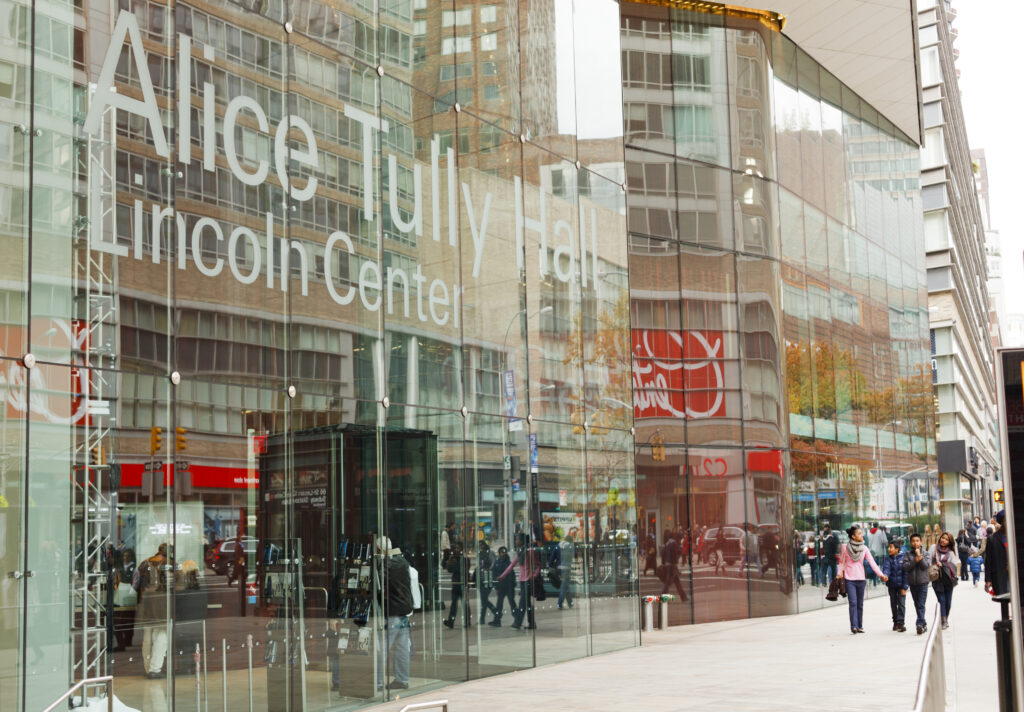
Lincoln Center’s Alice Tully Hall will host the JITC’s 3rd Jewish Media Awards on Thursday, Nov. 5, 2026
Credit: iStock
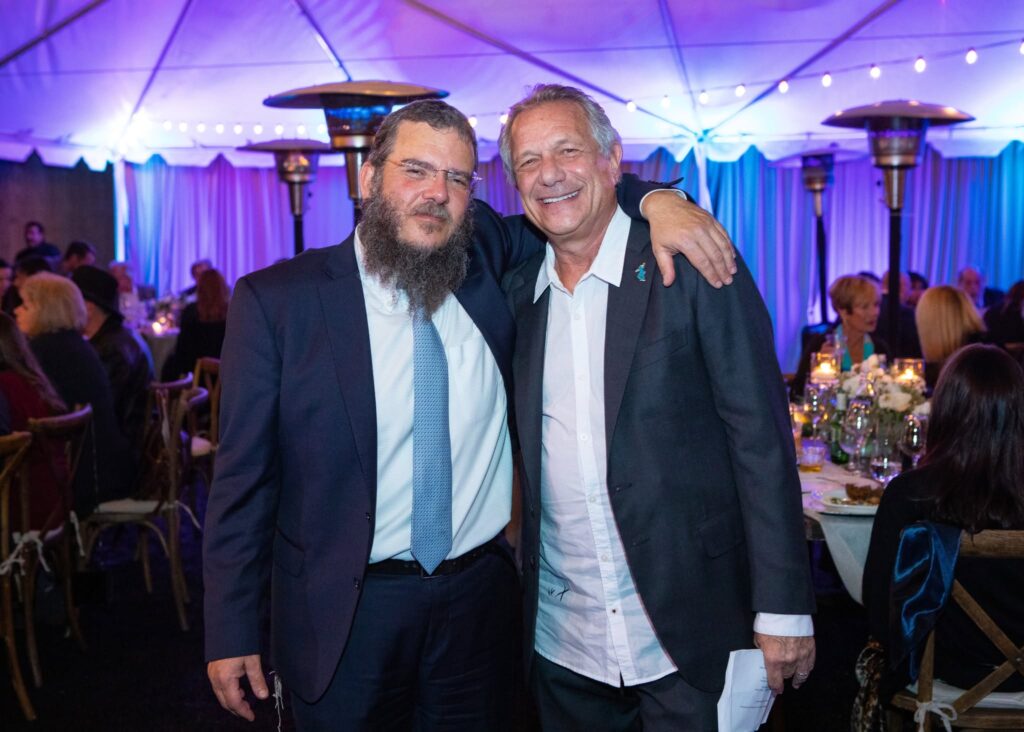
Kevin Bright with Rabbi Levi
Meir Kruter photography

Donny Deutsch
Courtesy of Donny Deutsch via Meir Kruter

Freida Rothman
Courtesy of Freida Rothman via Meir Kruter
On Thursday, November 5, 2026, the red carpet will be rolled out at Lincoln Center’s Alice Tully Hall, but the evening’s significance will reach far beyond the auditorium. The JITC’s 3rd Jewish Media Awards will be celebrating the richness of our heritage with a powerful proposition: that Jewish life deserves to be seen in its fullness, and the people telling our stories authentically deserve recognition.
The public is invited to participate in the extraordinary, unique evening, the equivalent of a Jewish Emmys or Oscars. The fabulous program, produced with Hollywood studio sponsorship, will include A-list presenters such as Judd Hirsch, Selma Blair, Patricia Heaton, Tovah Feldshuh, Barbie Pascual, and Debra Messing, with opportunities for the public to mix and mingle at the VIP pre-party and afterparty, where glatt kosher cuisine will be served while Jewish-themed clips from TV and film are shown and live music is played.
Along with Debra Messing and Patricia Heaton, our own community’s Jacob Steinmetz is expected to join the gathering. Hosted by the Jewish Institute for Television & Cinema, the JITC Hollywood Bureau, a division of Jew in the City, the awards will honor authentic Jewish representation and proud Jewish achievement. Modeled after the NAACP Image Awards, the program will bring a distinctly Jewish voice to a conversation about Jewish representation in the media and how it can be more authentically portrayed. In addition to Hollywood actors, sports and business leaders will also share the spotlight.
For Allison Josephs, JITC’s founder and executive director, the evening carries particular emotional weight. “Since October 7, Jews have been getting beaten down on social media, constantly being told how awful we are,” she explained. “The Jewish Media Awards will be an opportunity to bask in the richness of our heritage. It will be a night to celebrate the greatness of the Jewish people. And it will be a night to make history.”
That celebration has a practical purpose. Included in the audience will be industry insiders, people who can approve a project, shape a character, commission a script, or question a stereotype before it reaches the screen. Honoring thoughtful representation gives those decisions visibility and value.
“Celebrating great Jewish representation in Hollywood gives us the opportunity to make a tangible impact on how the industry depicts Jews going forward,” Josephs added. “Anyone who joins us and supports this event has a piece of that impact.”
For Orthodox Jews, the stakes are especially high. A television character may be the closest an unfamiliar viewer comes to entering an observant home. What appears on screen can become the viewer’s reference point for a community’s social customs, education, religious values, and relationship with the outside world. Orthodox Jewish characters deserve the same on-screen portrayal as other characters, showing their humor, outlook, ambitions, doubts, generosity, and capacity for growth. Religious observance should not automatically explain every difficulty or supply every punch line. A person who keeps the Sabbath should be allowed to inhabit a story as a complete human being.
Authenticity also requires room for uncomfortable truths. No community is beyond criticism, and no honest advocate should ask storytellers to conceal suffering or wrongdoing. The question is whether an individual story is treated as one experience within a varied community or made to portray a stereotype of everyone who belongs in the group.
JITC has helped move that question into professional settings where it can affect the television and film industry’s very work. Its contribution is visible in the development of an organized Jewish resource for an industry that makes decisions about Jewish stories every day.
The bureau includes a consulting practice that reviews scripts, guides casting decisions, comments on production details, and reviews rough cuts. Their consultants bring different Jewish backgrounds and areas of expertise to these conversations. According to JITC, members of their consulting team have advised on projects for companies ranging from FX, Nickelodeon, Amazon, Sony, Peacock, and Bravo.
Such access creates opportunities that public criticism alone cannot provide. A writer can ask a question while a character is still taking shape. A producer can seek context before a scene is filmed. A detail that would otherwise reduce religious life to an unfamiliar ritual can become an occasion for understanding the person who practices it.
In this sense, JITC is helping transform the landscape of Jewish representation by changing the process through which portrayals are developed and evaluated. The authentic Orthodox Jewish experience can finally enter the conversation through people who have an insider’s view.
The organization also conducts industry trainings at institutions and gatherings including the Television Academy, the Writers Guild of America, the Directors Guild of America, and Sundance. It has helped establish Jewish committees at guilds and secured the removal of antisemitic imagery from a production’s marketing materials. These are JITC’s achievements, evidence of the groundbreaking work behind the public celebration.
According to research conducted by the USC Annenberg Norman Lear Center’s Media Impact Project, they found that Orthodox Judaism was frequently portrayed as fundamentally “different,” while broader Jewish representation lacked diversity and often included little acknowledgment of Jewish identity. After analyzing 108 Jewish character across 49 episodes of 15 series, the researchers recommended more varied Jewish characters and greater attention to the authentic experiences of Orthodox Jews.
The study’s findings provided a concrete basis for asking better questions, such as: Who gets to speak? Which experiences are missing? Do characters have meaningful relationships with Jewish life or does their Jewish identity only appear when there’s a joke or a conflict that requires it? The significance of JITC’s research lies in identifying patterns that creators can examine and address. They are actively building ways to challenge these patterns with the goal of keeping the public better informed on the nuances of Jewish life and practice.
Their work now reaches into the creation of new stories. Launched in January 2026, JITC’s Jewish Roots Screenwriters Collective brings working film and television writers into a program rooted in Jewish texts, values, and culture. Participants develop characters and ideas, strengthen existing projects, and prepare to present pitches to financiers.
The approach recognizes that Jewish tradition is a creative resource. A story can draw on responsibility, forgiveness, family obligation, or moral courage without becoming a lecture. Authentic Jewish elements can give a character greater depth and offer audiences an experience they might not have encountered before.
For Orthodox viewers in particular, that possibility matters. The warmth of a Shabbos table, the discipline of religious commitment, and the kindness of a community can belong within compelling drama. These experiences need not be stripped of complexity to be portrayed with respect.
The awards extend that work by recognizing stories that are already being told. Launched in 2022, the Jewish Media Awards honor creators and industry leaders whose work reflects Jewish identity with care. This year’s announced Keter Shem Tov honorees include The Pitt, Dancing with the Stars, Doc, Tehran, Nuremberg, Red Alert, One Day in October, and Guns & Moses.
The range of honorees invites audiences to consider Jewish representation across different genres and formats. Jewish experience can occupy a place in contemporary entertainment, historical storytelling, and narratives shaped by Israel. No single production can represent an entire people, and the breadth of the program helps make that point.
JITC will honor creatives, executives, talent, and studios whose work furthers authentic representation of Jews and Judaism. The Third Jewish Media Awards will recognize TV shows and films made by studios like Paramount, Warner Bros., Sony, Fox, and Disney, who are all corporate sponsors of the event.
“We are thrilled by the brand alignment and monetary support we’ve received from the studios in so short a time since our launch,” Allison Josephs shared. “Studio participation creates an opportunity to sustain relationships with people whose decisions influence what audiences eventually see. The lasting value of the evening will depend, in part, on what those relationships make possible after the applause.”
Jew in the City’s Orthodox All-Star Awards, now folded into the Jewish Media Awards, adds another dimension. They celebrate Observant Jews whose accomplishments place their Torah commitment in public view.
This year’s honorees include baseball player, Jacob Steinmetz; comic book creator, newspaper cartoonist, and Batman franchise manager, Jordan Gorfinkel; as well as jewelry designer Freida Rothman. Their fields differ, but each offers a visible example of professional ambition alongside Jewish commitment.
For our Five Towns community, Steinmetz’s recognition will be particularly meaningful. In 2021, the Arizona Diamondbacks selected him in the third round of the Major League Baseball draft, 77th overall, making him the first practicing Orthodox Jewish player drafted. He later represented Israel in the 2023 World Baseball Classic, pitching on an international stage at just 19.
His story continues to unfold in professional baseball. The ambition to reach the Major Leagues demands discipline and persistence. Steinmetz’s commitment to Torah observance gives his pursuit an additional significance for the community watching him. For a young Jewish athlete, his example makes an important question feel more concrete: What is possible while remaining faithful to the commitments that shape my life? That question has value well beyond baseball.
Gorfinkel and Rothman bring related questions into entertainment and business. A career associated with one of popular culture’s most recognizable franchises and a jewelry company bearing its founder’s name offer different expressions of career achievement. Honoring them places observant Jewish lives within a wider picture of creativity and enterprise.
Expanding people’s assumptions is the goal of representation in the media and business. A young person might discover a role model. A colleague might rethink their religious commitment. An audience member might recognize a connection to Judaism where they previously only saw their differences.
This year’s new Chaverim Award for Jewish Unity gives that connection a deeply personal form. Kevin Bright, executive producer and director of Friends, and Rabbi Levi Cunin, spiritual leader of Chabad of Malibu, will be honored for a friendship that crosses differences in background and observance.
Bright directed more than 50 episodes of Friends, including its finale, and received a Primetime Emmy for Outstanding Comedy Series as executive producer. His professional achievements are familiar to millions. The friendship being recognized offers a more personal and cherished measure of his life.
“Even though our perspectives and backgrounds are very different, when Levi and I met, we hit it off immediately,” Bright recalled. “Many people would think, ‘How can you have a relationship with an Orthodox rabbi? What do you have in common?’ and my answer was, ‘Everything.’”
That answer belongs at the heart of an evening devoted to representation. Friendship requires the willingness to encounter another person beyond a label. Bright and Cunin offer an example of Jewish unity grounded in affection and mutual respect, with room for differences that remain real.
Their recognition also turns the evening’s message inward. Jewish communities have their own assumptions about one another. The work of seeing people more fully begins close to home, in the conversations and relationships that allow unfamiliar lives to become familiar.
Donny Deutsch, renowned American advertising executive, television personality, and regular commentator on MSNBC’s Morning Joe, will receive the Lion of Israel Award, for using his large platform to demonstrate and advocate steadfast support for Israel. He is a distinguished honoree in a stellar program that recognizes public advocacy alongside creative achievement and religious commitment.
Together, these honors give the evening its range. They acknowledge the responsibility of telling Jewish stories, the courage of living visibly as a Jew, and the importance of standing alongside other Jews.
The production itself is intended to keep those stories at the center. Josephs credits Disney animator and director Saul Andrew Blinkoff, a former All-Star, with making the audience experience cinematic.
“This is not a gala with long, boring speeches,” Josephs noted. “It is a glamorous awards show like the Emmys or the Oscars, at an iconic venue, but with a focus on meaningful content, with inspiring clips from the winning shows, acceptance speeches from stars and producers, live music, a mentalist, and great food at the on-sight afterparty.”
She described the response to the shows Saul Blinkoff has produced: “People would walk out saying it was the proudest they’d ever felt to be Jewish.”
That is the evening’s most compelling promise. Jewish pride can nourish the confidence to speak, create, and participate openly. It can give a young person permission to imagine a future in which achievement and heritage enrich each other.
At Alice Tully Hall on Thursday, November 5, the red carpet will welcome celebrated names. The deeper invitation extends to everyone who believes that Jewish life deserves to be encountered with curiosity and care.
The richness of our heritage is already there: in our homes, our friendships, our learning, and the lives we build. The evening asks the people who shape the screen to look more closely, listen more carefully, and help that richness become visible.
The JITC Jewish Media Awards is an enchanted evening and a not-to-be-missed experience. Help JITC champion authentic and nuanced portrayal of Jews, Judaism, and Israel in the entertainment industry while you celebrate and are inspired by the richness of our tradition on the greatest night of Jewish representation. For sponsorship opportunities, VIP tickets, and ticket information, please visit jitchollywoodbureau.org.
Rochelle Maruch Miller is a contributing editor for the Five Towns Jewish Times. She is a journalist, creative media strategist, lecturer, and educator, and writes for magazines, newspapers, websites, and private clients. She welcomes your comments at [email protected]. Read more of Rochelle Maruch Miller’s articles at 5TJT.com.