





The Special Protection of Yiddish Identity
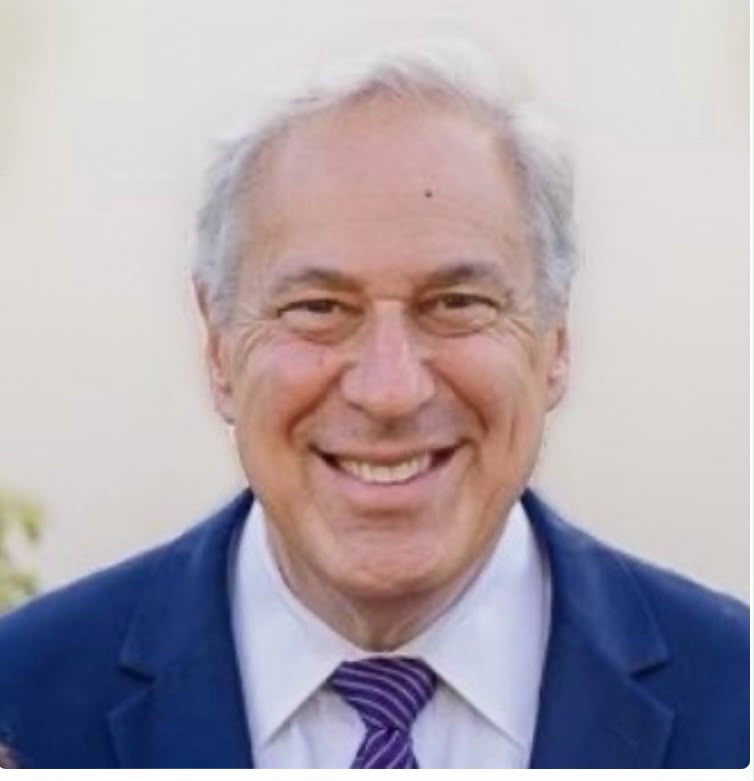
By R’ Mordechai Young
A friend of mine from elementary school named Rafi came from a traditional, but non-observant family. He liked yeshiva and attended until eighth grade. But by then his parents thought by his behavior that he didn’t appreciate yeshiva, so they sent him to public school for ninth grade.
Needless to say, Rafi didn’t like the idea. He still visited his religious friends and spent time with them on Shabbos, and seriously considered becoming religious as an adult. But he didn’t know how to pursue it exactly. Also, he was limited by his family situation in how much he could keep Shabbos. He was concerned that if he continued to go to public school, he will make the wrong friends and end up marrying a non-Jewish girl when he grew up. He didn’t know all the laws of Judaism, but he was sure he didn’t want to lose all Jewish identity, so he begged and pleaded with his parents to send him to yeshiva for high school.
In this week’s parashah, Sh’mos (3:22) Hashem tells every lady to ask her neighbor and any woman living in her house for articles of silver and gold and for clothing, of which they are to put on their sons and daughters. And so, they will plunder the Egyptians. The Kli Yakar points out later in parashas Bo (11:2) that it doesn’t mention clothes. Then there is a third pasuk (12:35), where clothes are mentioned again. Our parashahstates to put the clothes on your sons and daughters, but the Kli Yakar asks why the pasuk states what to do with the clothes, but says nothing about what to do with the silver and gold?
The Kli Yakar answers that the taking of the clothes happens after Makas Bechoros, which has a concern of plague-like factors. So, there is a fear of a dangerous reaction (i.e., taking clothes from a house inflicted with plague). The clothes could be infected. The Kli Yakar uses this to explain why it was not mentioned, i.e., taking clothes in the middle pasuk because the Mitzrim were happy to have their clothes taken to the desert to get them aired out. Hashem thought the Yidden would still be afraid to wear the clothes, so He put the clothing on the children, and by so doing, Hashem guaranteed that no harm would come to them. One of the zechusim we had to leave Mitzrayim was not changing our Yiddish clothes. So, how can we be instructed to take Egyptian clothes? I looked for an answer and found in Siftei Chachamim (12:35), which states that it was difficult for the Mitzrim to give their clothes away. The Egyptians knew the Yidden did not wear the same clothes as them, so when they gave their clothes to the Yidden, they knew they would change them in order to not wear Egyptian clothes, and the Mitzrim would never get them back. This answers the question: There was no problem in wearing the clothes because they would physically alter them and they would no longer be considered Egyptian clothing.
But then I thought about another answer. The problem with wearing Egyptian clothing was that we would lose our special protection of wearing our own clothing so as not to mingle with the non-Jews. We see this from looking at the other zechusim that led us out of Egypt. We kept our Yiddish names and language. The common denominator is to keep our distinct Yiddish identity. So, taking the clothes to the Midbar, a place devoid of Egyptians, would pose no problem. I found this idea, Baruch Hashem, afterwards in the Chasam Sofer when I was looking up another question! In sefer Bereishis (35:4), Yaakov Avinu told the family after they killed the people of Shechem to change their clothes. Rashi says that it was because the clothes from Shechem might have been used during avodah zara. In Mitzrayim there was an abundance of avodah zara, so there should also be a problem with taking their clothes. The Chasam Sofer explains that it was not a concern of avodah zara (unlike Rashi). He proves this by the pesukim there that Yaakov told them to get rid of the avodah zara. The clothing was not mentioned with getting rid of it, so you see it was not a problem of avodah zara. The ten sons of Yaakov were careful not to wear clothing of the goyim. Once the town of Shechem didn’t exist anymore, they were allowed to wear their clothes. There would be no concern of mingling with goyim because there were none living near them. Only when they needed to travel to Luz and found other people there. So, Yaakov told them to change their clothes. Another possible benefit to taking the Egyptian clothes would be to give us chizuk, to make the idea of us leaving concrete. We find a similar idea with Yaakov Avinu bringing cedar wood down to Egypt to be later used in the building of the Mishkan. It gave us strength to know that we would eventually leave Mitzrayim and have a Mishkan to serve Hashem. We learn from the parashah about the great zechus of keeping to our holy Yiddish identity. Have a great Shabbos! n
R’ Mordechai Young is available as a remedial rebbe and tutor. He can be reached for comments at [email protected].